
A shift to heating our homes by heat pumps would put massive pressure on the electricity grid.
Articles on Carbon
Displaying 81 - 100 of 178 articles

It’s the World Health Organization’s first update of global air quality guidelines since 2005. We know far more today about the serious risks these pollutants pose to human health.
The shipping sector’s emissions are equivalent to some industrial countries: here’s some innovative ways to help reduce them.
Electric vehicles are poised to take over our roads: so how do we make sure this change doesn’t exacerbate social and energy inequality?
This is the first time researchers have calculated the amount of carbon released from the world’s decaying wood. They found insects play an enormous role.
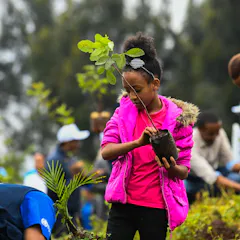
Planting a massive number of trees can help slow climate change, but it is only part of the solution.

We are not at risk of running out of oxygen due to climate change, but ocean creatures are – and that will harm the whole planet.
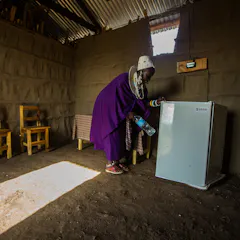
Hybrid energy systems that combine renewable and non-renewable fuel systems could be the key to sub-Saharan Africa’s energy transition.
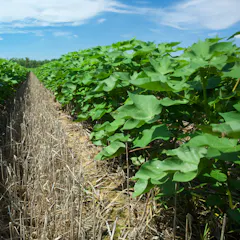
Drilling instead of tilling the soil to plant seeds could help the ground store more carbon.
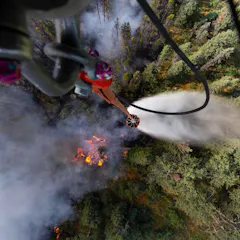
A new study finds more deciduous trees like aspen are growing in after severe fires in the region, and that has some unexpected impacts.

Permanently protecting large, mature forests is a faster and cheaper way to stabilize Earth’s climate than complex carbon capture and storage schemes, and more effective than planting new trees.
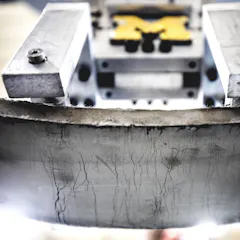
Researchers are developing ways to lock captured CO2 into cement. It could help rebuild America’s crumbling infrastructure and deal with climate change at the same time.
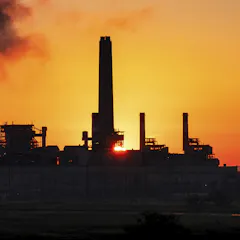
An appeals court described the EPA’s effort as ‘a series of tortured misreadings’ of US law.
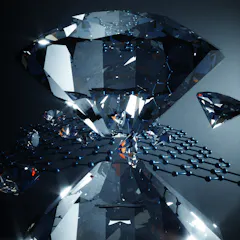
Our research marks the first case of both normal diamonds, as well as Londaleite, being produced in a lab setting using only intense pressure.
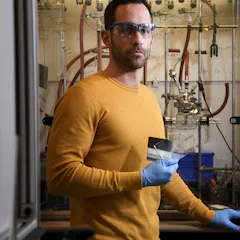
Similar arrangements already support the National Park Service, the National Institutes of Health and other federal agencies.
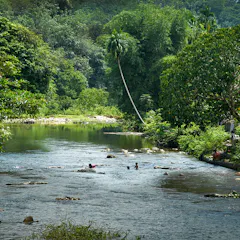
Conservation and development scheme REDD+ has manifested as a series of models, which increases its perceived success and enables it to continue despite not delivering on its wide-reaching promises.
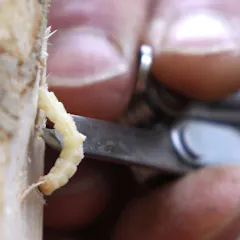
With trees infested by the emerald ash borer deemed essentially worthless, a team of designers wanted to see if the decaying wood could be repurposed as a building material.
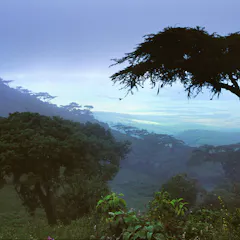
In general, the larger the tree, the more carbon it stores.

The findings will help determine the age of whale sharks, protecting the endangered animals into the future.

Insect populations are falling as what they eat becomes more like iceberg lettuce and less like kale.
Top contributors
-

Adjunct professor, Carbone boréal, Université du Québec à Chicoutimi (UQAC)
-
Chief Research Scientist, CSIRO Environment; Executive Director, Global Carbon Project, CSIRO
-
Professor and Climate Scientist, Department of Geography, Planning and Environment, Concordia University
-
Professor Emeritus of International Environmental Policy, Tufts University
-
Distinguished Professor of Climate Science, Simon Fraser University
-
Professor - Industrial ecology and climate change mitigation, Université du Québec à Chicoutimi (UQAC)
-
Royal Society Research Professor of Climate Change Science, University of East Anglia
-
Professor of Environmental Policy and Associate Pro-Vice-Chancellor (Interdisciplinary Research), University of Leeds
-
Professor of Communication, Public Policy & Urban Affairs, Northeastern University, Northeastern University
-
Professor, School of Economics, The University of Queensland
-
PhD candidate and research Fellow in the Economics of Climate Smart Cities research programme, University of Leeds
-
Professor of Science Communication and Chemistry, University of Hull
-
Associate Professor of Ecology, School Of Biological Sciences, University of Utah
-
Géochronologue et paléoclimatologue, chargé de recherches CNRS - Centre de recherches pétrographiques et géochimiques (Nancy) et Laboratoire de glaciologie (Bruxelles), Université de Lorraine
-
Distinguished Professor of Marine Science, King Abdullah University of Science and Technology