
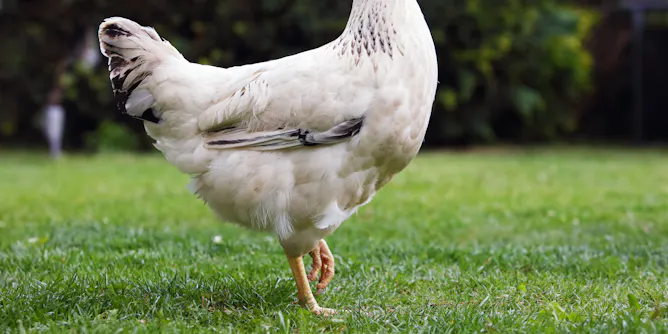
There was once a chicken called Miracle Mike who lived for 18 months without a head: it’s all to do with nerves.
Articles on Biology
Displaying 321 - 340 of 496 articles
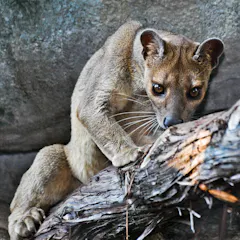
The fossa, Madagascar’s largest predator, is a cat-like carnivore that eats everything from insects to lemurs. Because they are rare and elusive, scientists know very little about them, including how many there are.
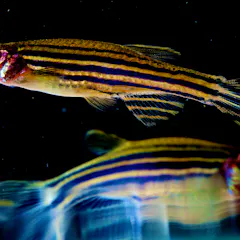
Zebrafish are known for their black and gold stripes, but researchers are still figuring out how pigment cells interact to form these patterns.

From wealth, to the natural world, to genes and intelligence, a podcast exploring the theme of inheritance.
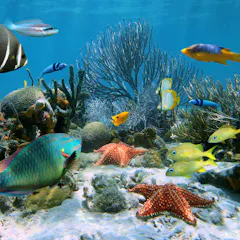
Most animal groups adopted their shapes quickly but some kept evolving.

Born in Italy in 1909, Levi-Montalcini avoided being transported to Auschwitz as a young woman and rose to prominence as a neurobiologist. She was a co-recipient of the 1986 Nobel Prize for Medicine.
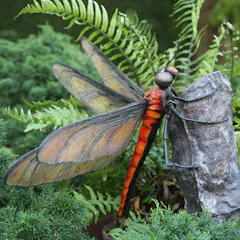
They hovered in the skies of the Earth 300 million years ago… The giant dragonflies will soon be the stars of the paleontology gallery of France’s Natural History Museum in Paris.

Was Darwin inspired by the tropical wildlife of his travels to discover natural selection? Actually, pigeons, worms and barnacles were far more prominent in his thinking.

New research on reversing ageing in human cells could be the first step to new anti-degenerative drugs.

Basic research can be easy to mock as pointless and wasteful of resources. But it’s very often the foundation for future innovation – even in ways the original scientists couldn’t have imagined.
Machine learning is changing the world in ways that we are just beginning to appreciate. But could it change the way we do science and the reasons why we do science?
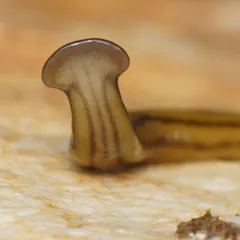
Several giant terrestrial Plathelminth species have invaded France and its overseas territories, threatening biodiversity. Thanks to participatory science, the invasion is finally recognized.
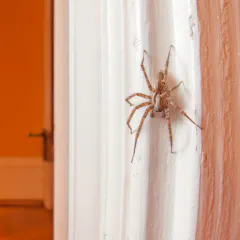
Why you should consider a live-and-let-live policy with the spiders you encounter in your home.
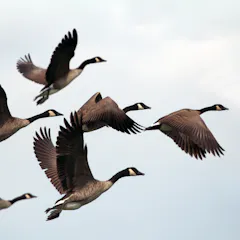
CC BY-ND40.5 MB (download)
A podcast on intuition: from how it works in the body, to how to harness it, and the story of two scientists who followed a hunch – about quantum biology.
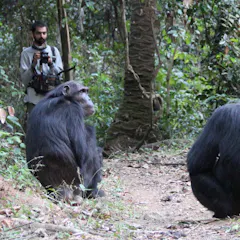
Do chimpanzee talk to each other? Scientists follow and record chimpanzees in the wild to find out – and to fill in details about how human language might have evolved.
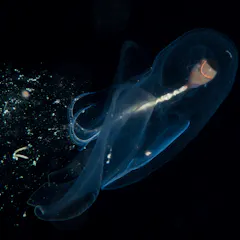
Biologists are finding new evidence that these ocean invertebrate grazers don’t just ingest whatever they catch. They can actually be picky eaters – and their choices might influence ocean food webs.

New research shows just 1% of E. coli bacteria’s genetic mutations are lethal.
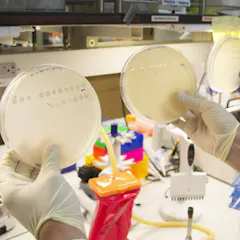
A core idea in molecular biology is that one gene codes for one protein. Now biologists have found an example of a gene that yields two forms of a protein – enabling it to evolve new functionality.

Some recent bad behaviour has been explained as being alpha but the scientist who coined the phrase discredits that theory. Instead, Prof. Sosteric suggests alphas are raised on toxic socialization.
Humans have long been trying differentiate themselves from the rest of the biological world. Is it because we’re superior, or just insecure?
Top contributors
-

Doctoral Student in Biochemistry, University of Washington
-
ARC Future Fellow, Behavioural Ecology, Macquarie University
-
Emeritus Strategic Professor in Palaeontology, Flinders University
-
Investigador Científico, Estación Biológica de Doñana (EBD-CSIC); The University of Western Australia
-
Senior lecturer, School of Biological Sciences, University of Bristol, University of Bristol
-
Postdoctoral Fellow, EPFL – École Polytechnique Fédérale de Lausanne – Swiss Federal Institute of Technology in Lausanne
-
Biologist
-
Professor of Entomology, North Carolina State University
-
Principal Lecturer in Wildlife Conservation, Nottingham Trent University
-
Fellow, Keele University
-
Lecturer, Macquarie University
-
Senior Lecturer in Molecular Biology, University of Sydney
-
Professor of Biological Sciences, University of Maryland, Baltimore County
-
Chercheur à l’Institut de systématique, évolution, biodiversité (ISYEB), Muséum national d’histoire naturelle (MNHN)
-
Mark Elgar is a Friend of The Conversation.
Emeritus Professor of Evolutionary and Behavioural Ecology, The University of Melbourne