

The extraordinary story of a stingray, its discovery and its uncertain fate in the Yemen war.
Articles on Biology
Displaying 261 - 280 of 496 articles
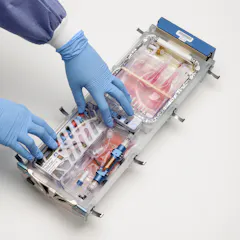
Why are scientists trying to grow organs at the International Space Station? People live on Earth not in zero-gravity. A stem cell expert explains why it is useful to do these experiments in space.
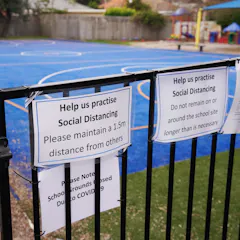
Recent cases among school children has prompted some to wonder: should we close schools again? The short answer is: no.
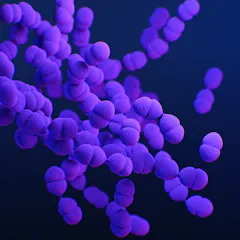
S. pneumoniae, the bacteria responsible for pneumonia, causes about one million deaths each year. Now we know how it uses the sugar raffinose to spread through the body to cause disease.
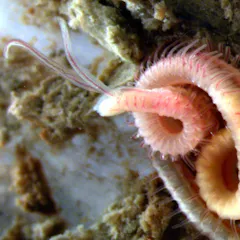
Mud blister worms make their homes in the shells of oysters and other shellfish, where they weaken their hosts.
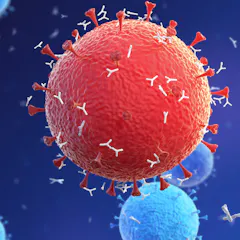
An antigen test was given emergency use authorization by the FDA in early May. A biochemist explains how COVID-19 antigen tests work.
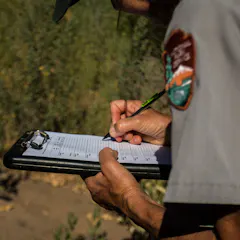
The COVID-19 pandemic is interrupting scientific field work across North America, leaving blank spots in important data sets and making it harder to track ecological change.

Biohackers and other ‘connoisseurs of science’ have important social and scientific contributions to make.
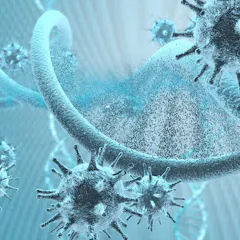
Researchers from Oregon Health and Science University found that variations in genes that code for parts of the cellular alarm system might play a role in how well people fight off COVID-19.

Researchers are turning microbes into microscopic construction crews by altering their DNA to make them produce building materials. The work could lead to more sustainable buildings.
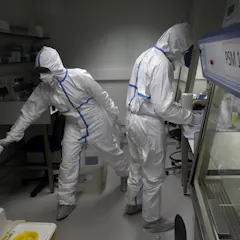
A molecular biologist explains who should get tested, how the tests work and what the US government is doing to make tests available during a rapidly changing crisis.

Insect populations are falling as what they eat becomes more like iceberg lettuce and less like kale.
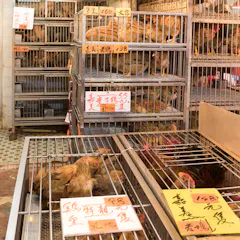
In the real world, new diseases emerge from complex environments. To learn more about how, scientists set up whole artificial ecosystems in the lab, instead of focusing on just one factor at a time.
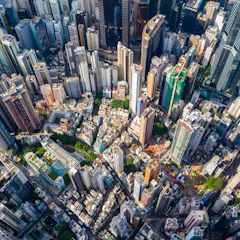
The answer lies in determining what we are and what we want to become.
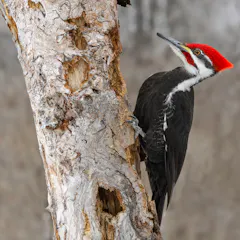
Pecking holes in a solid wood tree trunk would give you a headache, if not serious brain damage. What special assets allow a woodpecker to do it?
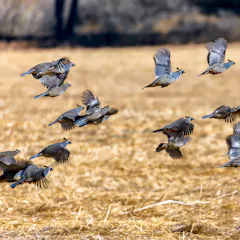
Are molecules, chairs, genes and humans really just the sum of their physical parts? A team of philosophers are trying to find out.
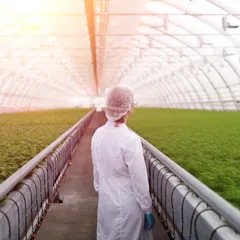
Synthetic biology lets us explore places where evolution has never gone, to help meet humanity’s food needs in a future shaped by climate change.
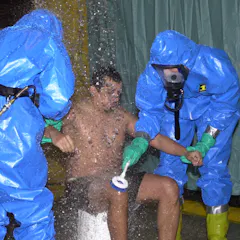
Talk of bioterrorism might provoke fears of smallpox and anthrax, but mundane threats like salmonella may pose greater danger. And experts say that the U.S. is not prepared for an attack.
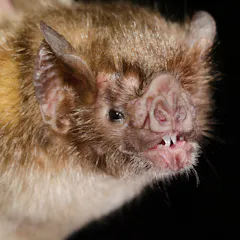
Vampire bats form social bonds similar to human friendships – and they’re good friends to those in need.
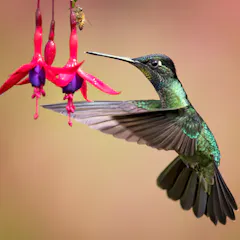
How many genes do you really need? Are there any that we can lose? Researchers are now identifying species that have streamlined their genome to adapt to a particular lifestyle.
Top contributors
-

Doctoral Student in Biochemistry, University of Washington
-
ARC Future Fellow, Behavioural Ecology, Macquarie University
-
Emeritus Strategic Professor in Palaeontology, Flinders University
-
Investigador Científico, Estación Biológica de Doñana (EBD-CSIC); The University of Western Australia
-
Senior lecturer, School of Biological Sciences, University of Bristol, University of Bristol
-
Postdoctoral Fellow, EPFL – École Polytechnique Fédérale de Lausanne – Swiss Federal Institute of Technology in Lausanne
-
Biologist
-
Professor of Entomology, North Carolina State University
-
Principal Lecturer in Wildlife Conservation, Nottingham Trent University
-
Fellow, Keele University
-
Lecturer, Macquarie University
-
Senior Lecturer in Molecular Biology, University of Sydney
-
Professor of Biological Sciences, University of Maryland, Baltimore County
-
Chercheur à l’Institut de systématique, évolution, biodiversité (ISYEB), Muséum national d’histoire naturelle (MNHN)
-
Mark Elgar is a Friend of The Conversation.
Emeritus Professor of Evolutionary and Behavioural Ecology, The University of Melbourne