
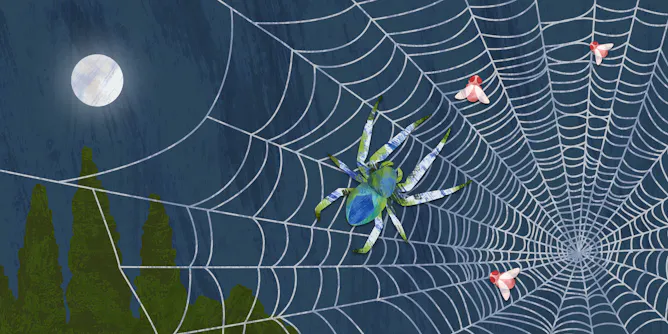
Some spiders produce silk than can actually be stronger than steel and 50 times as light.
Articles on Biology
Displaying 341 - 360 of 495 articles
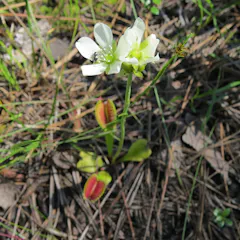
Venus flytrap plants have ‘traps’ that snap shut on insect prey. But they also rely on insects for pollination. New research suggests how the plant avoids eating its allies.
Canada’s female scientists are superstars in their fields yet most Canadians have never heard of them. On International Day for Women in Science, it’s time to give them the recognition they deserve.
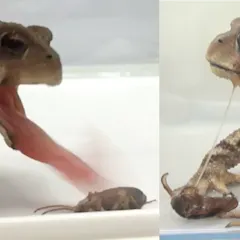
Meet the brawny bug with a concoction so caustic it’ll make a toad vomit.

Sexual violence against women is not the result of a few odd bad elements. Sexual violence is part and parcel of heterosexual masculinity.
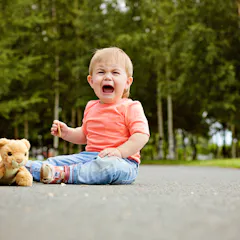
At less than 2 years old, children of mothers with increasing depressive symptoms can show signs of added stress and quicker cellular aging.
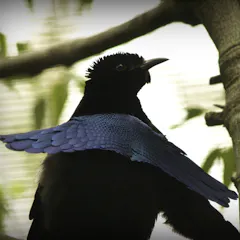
Male Birds of Paradise have patches of super-black plumage that absorb 99.95 percent of light. New research identified their feathers’ microscopic structures that make them look so very dark.
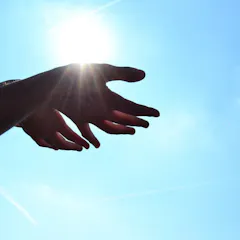
A conversation between a biologist and a philosopher on the relationship between man and divinity.
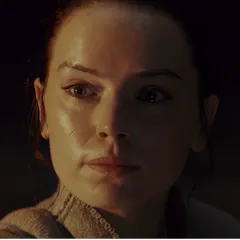
Star Wars: The Last Jedi leaves many questions about the saga in a galaxy far, far away unanswered. Fortunately, biology may offer a insights on the Force, midi-chlorians, clones, and Rey’s lineage.
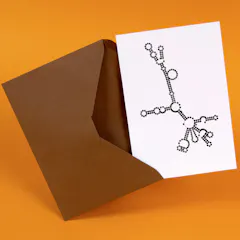
One big challenge for gene therapies is delivering DNA or RNA safely to cells inside patients’ bodies. New nanoparticles could be an improvement over the current standard – repurposed viruses.

Biologists’ growing reliance on computers advances the field – but comes with new risks. The first step toward improved cyberbiosecurity is increasing awareness of possible threats.
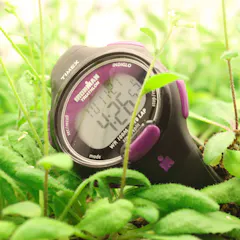
Precisely calibrated timekeepers are found in organisms from all domains of life. Biologists are studying how they influence plant/pathogen interactions – what they learn could lead to human medicines.
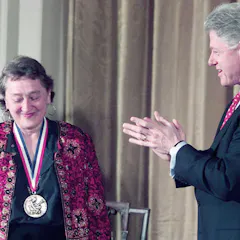
Lynn Margulis (1938-2011) was a courageous scholar whose remarkable work on the role of symbiosis in evolution stands as a magisterial contribution of science.

An ancient sexual conflict over mitochondrial inheritance may be responsible for the evolution of the two sexes as we know them.
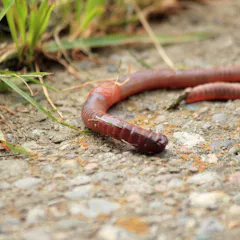
The short answer is no. But worms can use different parts of their body to do some of the jobs that our tongues do - like tasting and crushing food.
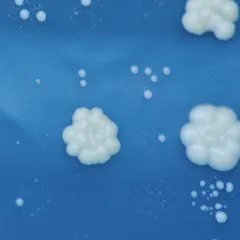
By exploiting the way yeast cells mate, researchers have figured out a quicker, easier way to identify on- and off-target drug interactions.
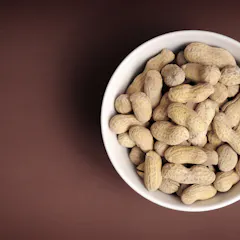
Younus, age 9, wants to know how people become allergic to food.

A stable environment that teaches men to be men and women to be women could be helping to enforce gender across generations.

His anti-PC ‘manifesto’ might be filled with nonsense, but that doesn’t mean James Damore’s thoughts have no value, or that he should have been fired.
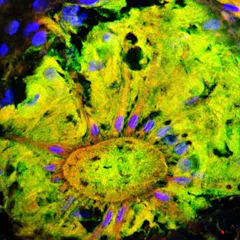
We’re used to thinking of our eyes detecting light as the foundation of our visual system. But what’s going on in other cells throughout the body that can detect light, too?
Top contributors
-

Doctoral Student in Biochemistry, University of Washington
-
ARC Future Fellow, Behavioural Ecology, Macquarie University
-
Emeritus Strategic Professor in Palaeontology, Flinders University
-
Investigador Científico, Estación Biológica de Doñana (EBD-CSIC); The University of Western Australia
-
Senior lecturer, School of Biological Sciences, University of Bristol, University of Bristol
-
Postdoctoral Fellow, EPFL – École Polytechnique Fédérale de Lausanne – Swiss Federal Institute of Technology in Lausanne
-
Biologist
-
Professor of Entomology, North Carolina State University
-
Principal Lecturer in Wildlife Conservation, Nottingham Trent University
-
Fellow, Keele University
-
Lecturer, Macquarie University
-
Senior Lecturer in Molecular Biology, University of Sydney
-
Professor of Biological Sciences, University of Maryland, Baltimore County
-
Chercheur à l’Institut de systématique, évolution, biodiversité (ISYEB), Muséum national d’histoire naturelle (MNHN)
-
Mark Elgar is a Friend of The Conversation.
Emeritus Professor of Evolutionary and Behavioural Ecology, The University of Melbourne