
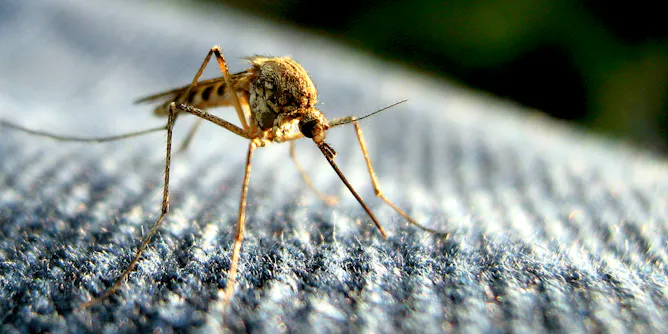
Simple and inexpensive gene-editing technology such as CRISPR has made the creation of genetically modified organisms much easier. But could nature still keep the upper hand?
Articles on Biology
Displaying 361 - 380 of 495 articles

How can life on Earth help us understand life in space? To answer this question, we compare biological clocks and geological rocks and find that they tick uniformly.
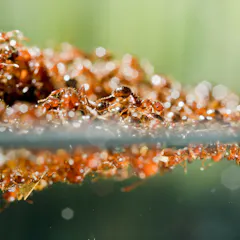
Researchers identified simple behavioral rules that allow these tiny creatures to collaboratively build elaborate structures, with no one in charge.
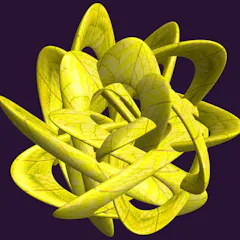
Today algorithms are ubiquitous, yet often misunderstood. Rather than mysterious entities, they’re closer to recipes, and the quality of the output depends on the input – in their case, data.
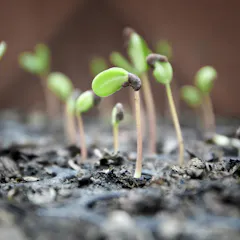
A seed contains nearly everything a tree needs to get growing. Just add a dash of water, a bit of warmth and the right location, and you’ll be seeing green in no time.
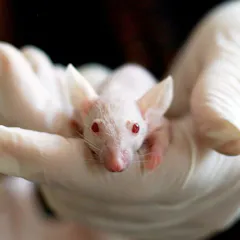
A new research paper reports dangerous side effects in CRISPR-edited mice. Some scientists are pushing back, placing blame for the unwanted mutations on the experiment, not the technique.
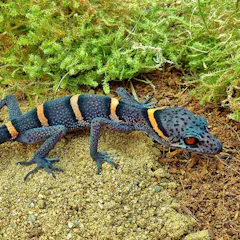
Biologists have a centuries-old tradition of publishing on rare and endangered species. But poachers are using open-access information to target valuable and fragile new species.
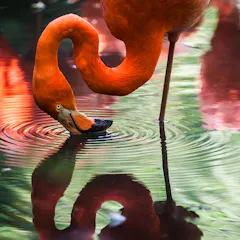
New research reveals how flamingos can stand – and even sleep – on one leg for so long.

These birds spend long periods, often asleep, standing on one leg. Is it passive biomechanics or active nervous system control of their muscles that allows them to do easily what’s impossible for us?
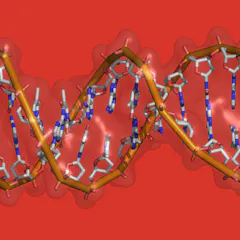
Researchers are starting to harness the potential of this much-hyped gene editing technique – with coming applications in medicine, biology and agriculture.
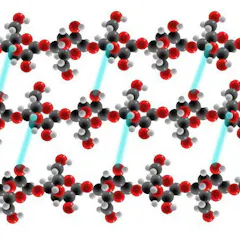
Bio-prospecting is the search for useful materials from natural sources. A biologist explains what we can learn from bacteria about breaking down plant material, and how we can use that knowledge.
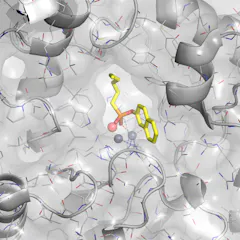
Scientists invented chemical weapons; some are now working to destroy them. New biomolecular design techniques let researchers design proteins that can destroy nerve agents in bodies.
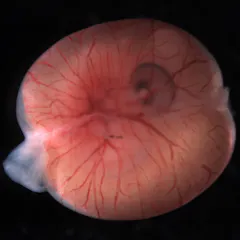
Taking the placenta as a case study, researchers are able to piece together how new organs evolve, by repurposing old tissues and using them to do new jobs.

How can the same basic genome produce such different forms in the two sexes of a single species? It turns out one gene can encode for various things, depending on the order its instructions are read.

Maths is often a quiet contributor to problems in subjects like biology.

Rats were less able to find food after only three days on a diet high in sugar and saturated fat. So could a bad diet also be affect the human brain?
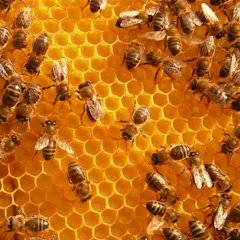
Every new batch of bees needs the equivalent of eight hectares of lavender fields to prosper.
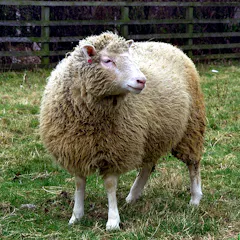
In 1997, scientists announced they’d created a healthy sheep cloned from another ewe’s mammary gland cell. Two decades on, the technique is being refined and applied to new challenges.
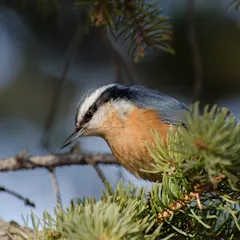
During bird irruptions, hundreds or thousands of a single species show up outside their normal territory. Most of what we know about irruptions comes from data collected by citizen scientists.
Modern medicine is increasing our lifespan. But as we survive diseases and live longer, more of us are succumbing to cancer.
Top contributors
-

Doctoral Student in Biochemistry, University of Washington
-
ARC Future Fellow, Behavioural Ecology, Macquarie University
-
Emeritus Strategic Professor in Palaeontology, Flinders University
-
Investigador Científico, Estación Biológica de Doñana (EBD-CSIC); The University of Western Australia
-
Senior lecturer, School of Biological Sciences, University of Bristol, University of Bristol
-
Postdoctoral Fellow, EPFL – École Polytechnique Fédérale de Lausanne – Swiss Federal Institute of Technology in Lausanne
-
Biologist
-
Professor of Entomology, North Carolina State University
-
Principal Lecturer in Wildlife Conservation, Nottingham Trent University
-
Fellow, Keele University
-
Lecturer, Macquarie University
-
Senior Lecturer in Molecular Biology, University of Sydney
-
Professor of Biological Sciences, University of Maryland, Baltimore County
-
Chercheur à l’Institut de systématique, évolution, biodiversité (ISYEB), Muséum national d’histoire naturelle (MNHN)
-
Mark Elgar is a Friend of The Conversation.
Emeritus Professor of Evolutionary and Behavioural Ecology, The University of Melbourne