

The days of freeze-fried astronaut ice cream are long behind us. What will humans eat on Moon colonies in the future? Carefully engineered space gardens could be the answer.
Articles on Biology
Displaying 181 - 200 of 496 articles
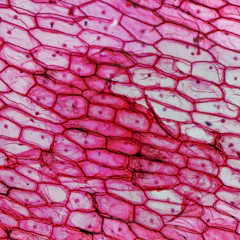
Cell membranes are a basic structure common to most living organisms – but they can be hijacked.

Lillipillies are one of Australia’s great gifts to the natural world. But the story of these homegrown heroes may be taking a grim turn.
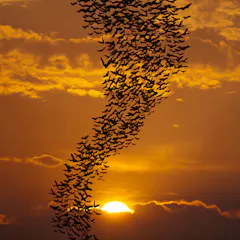
Humans have long struggled to understand the nocturnal world. As environmental change becomes increasingly acute, understanding their lives has never been more critical.

Research on Chernobyl frogs has shown that the ionising radiation caused by the accident triggered a process of natural selection among these animals.
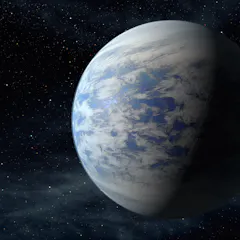
Newly discovered super-Earths add to the list of planets around other stars that offer the best chance of finding life. An astronomer explains what makes these super-Earths such excellent candidates.
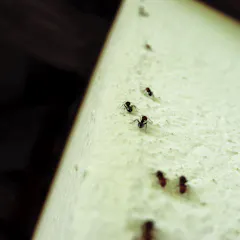
Ant feet are equipped with an array of tools – from retractable sticky pads to claws to special spines and hairs – enabling them to defy gravity and grip virtually any surface.
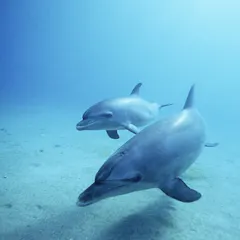
Using urine and signature whistles from other dolphins, a team of scientists has shown that dolphins use signature whistles like names and hold mental representations of other dolphins in their minds.
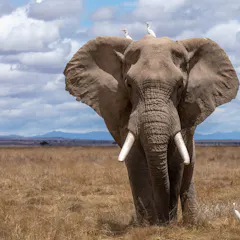
A new theory linking metabolism and size shows how evolution, not physics, is the driving force behind many of life’s patterns.
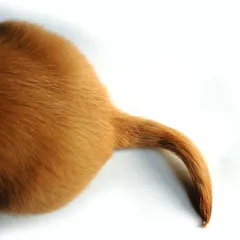
An anthropologist explains some of the many ways animals use their tails, from balancing as they walk to attracting a mate.
Some scientists believe the ‘free energy principle’ can explain the behaviour of all living things – but others say it paints the world with too broad a brush to be useful.
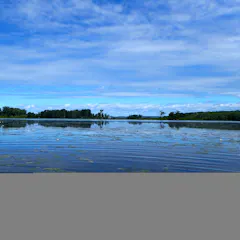
Wetlands can help limit the spread of the voracious round goby, an invasive species that has infiltrated the Great Lakes and has become widespread in the St. Lawrence River.
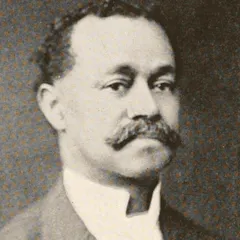
The son of a formerly enslaved mother, Charles Henry Turner was the first to discover that bees and other insects have the ability to modify their behavior based on experience.
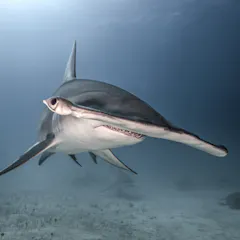
The first hammerhead shark was likely the result of a genetic deformity. A biologist explains how shark DNA reveals hammerheads’ history.
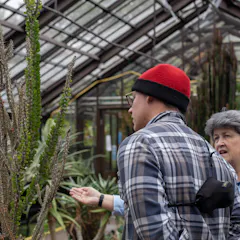
Botany is disappearing from university modules in the UK.

College science classes often fall short of helping students see connections across subjects. Can a new approach make a difference?
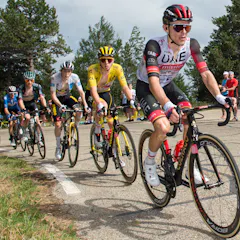
Three scientists explain the biology and physics of what goes into one of the world’s most grueling races, the Tour de France.

The ocean is often considered a silent universe. But many recent studies highlight the importance of the soundscape for many marine species, both large and small.

Fungi underpin life on Earth, but are far less well catalogued and understood than animals and plants. Three scientists call for including fungi in conservation strategies and environmental laws.
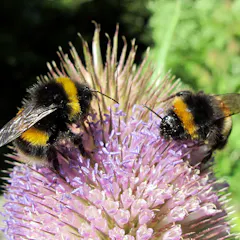
Bees offer insights into many scientific questions, from cooperating in close quarters to strategies for finding food.
Top contributors
-

Doctoral Student in Biochemistry, University of Washington
-
ARC Future Fellow, Behavioural Ecology, Macquarie University
-
Emeritus Strategic Professor in Palaeontology, Flinders University
-
Investigador Científico, Estación Biológica de Doñana (EBD-CSIC); The University of Western Australia
-
Senior lecturer, School of Biological Sciences, University of Bristol, University of Bristol
-
Postdoctoral Fellow, EPFL – École Polytechnique Fédérale de Lausanne – Swiss Federal Institute of Technology in Lausanne
-
Biologist
-
Professor of Entomology, North Carolina State University
-
Principal Lecturer in Wildlife Conservation, Nottingham Trent University
-
Fellow, Keele University
-
Lecturer, Macquarie University
-
Senior Lecturer in Molecular Biology, University of Sydney
-
Professor of Biological Sciences, University of Maryland, Baltimore County
-
Chercheur à l’Institut de systématique, évolution, biodiversité (ISYEB), Muséum national d’histoire naturelle (MNHN)
-
Mark Elgar is a Friend of The Conversation.
Emeritus Professor of Evolutionary and Behavioural Ecology, The University of Melbourne