
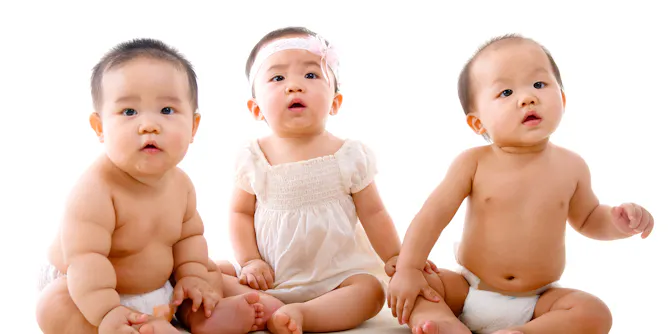
Chinese researcher, Jainkui He claims to have created the world’s first genome-edited twins. Such action would pose unknown risks to the lives of these children and to humanity as a whole.
Articles on Bioethics
Displaying 81 - 100 of 137 articles
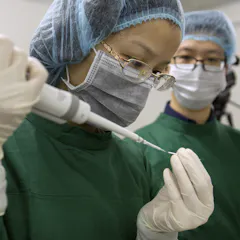
The announcement of the birth of babies with edited genes has been met by a deluge of scientific and ethical criticism. Public discussion focuses on risks and benefits – was breaking this taboo worth it?
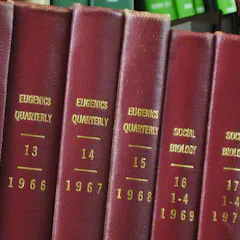
If those who survive are the fittest, does that also make them the best? And if so, is engineering ‘better’ babies just evolution, or another step in a long history of eugenics?

Some careful reasoning shows that comparing abortion with contract murder equates two acts that are far from obviously morally equivalent.
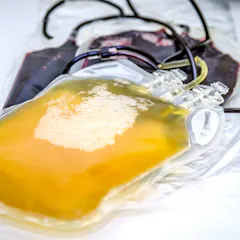
Canada suffers a shortage of vital blood plasma. Paying donors, through a non-profit like Canadian Blood Services, would secure a local supply without lining the pockets of corporate shareholders.
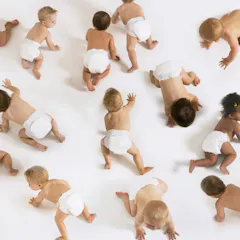
A philosopher’s take on the ethics of products that allow parents to lighten the skin colour of their unborn baby.
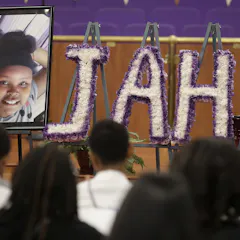
California teenager Jahi McMath’s family refused to accept the diagnosis of brain death. Her case opens up a number of questions – among them – what role did race play?
Data and privacy issues are tangled up in the DNA reports consumers get from big genetic testing companies – and the third-party sites they turn to in order to glean more from their raw DNA.
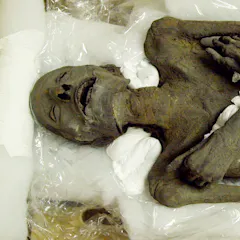
Are DNA samples today’s version of the human skeletons that hung in 20th-century natural history museums? They can provide genetic revelations about our species’ history – but at an ethical price.
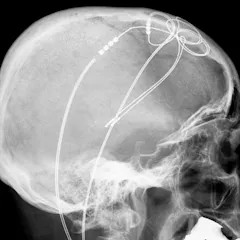
Where does responsibility lie if a person acts under the influence of their brain implant? As neurotechnologies advance, a neuroethicist and a legal expert write that now’s the time to hash it out.
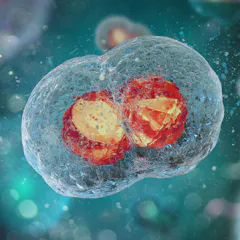
A new gene editing experiment explores human development. With this comes new ethical questions: How do scientists acquire embryos and how are their projects approved?

If opioids prevent significant suffering, then the solution to the prescription opioid problem cannot simply be to stop using them.
Americans have moved on from worrying about ‘test-tube babies’ – but there are still ethical challenges to resolve as reproductive technologies continue to advance.
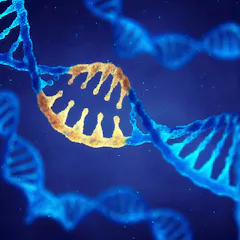
A team in the U.S. is said to have safely and effectively altered human embryos. The news is a reminder that citizens must be consulted on developments potentially affecting the future of the species.
William Isdale talks to Professor Julian Savulescu about the ethical implications of geneticaly modifying humans.

BCI devices that read minds and act on intentions can change lives for the better. But they could also be put to nefarious use in the not-too-distant future. Now’s the time to think about risks.

Henrietta Lacks’s ‘immortal’ cells changed medical research – although she never knew that.
A report released by the US National Academies of Science and Medicine underscores the potential of gene editing and acknowledges the sensitivities in managing the ethical dimensions.
A scientific breakthrough in a vacuum may be free of ethical implications. But many developments can be used for good or evil, or both. There’s a fine balance on what to control and to what extent.
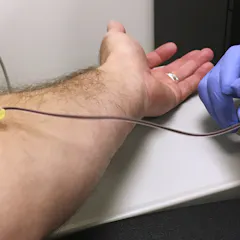
New regulations for research with human blood and tissue try to balance scientific progress with patient privacy.
Top contributors
-

Chen Su Lan Centennial Professor in Medical Ethics, National University of Singapore; Distinguished Visiting Professor in Law, University of Melbourne; Uehiro Chair in Practical Ethics, The University of Melbourne
-
Professor of Bioethics and Humanities, School of Medicine, University of Washington
-
Lecturer in Bioethics, Monash University; The University of Melbourne
-
Distinguished Research Professor, Emerita, Dalhousie University
-
Associate Professor of Pediatrics, University of Cincinnati
-
Professor of Bioethics & Medicine, Sydney Health Ethics, Haematologist/BMT Physician, Royal North Shore Hospital and Director, Praxis Australia, University of Sydney
-
Assistant Professor in Biomedical Ethics, National University of Singapore
-
Professor of Medicine, Monash University
-
Lecturer in Philosophy, Fenner School of Environment and Society, Australian National University
-
Senior Research Fellow, Uehiro Centre for Practical Ethics, University of Oxford
-
Vanier Scholar and Ph.D. Candidate in Microbiology and Immunology, Dalhousie University
-
Research Fellow in Biomedical Ethics, The University of Melbourne
-
Honorary Professor Faculty of Health and Medical Science, Univeristy of Sydney; Senior Researcher Sydney Institue for Infectious Disease, University of Sydney., University of Sydney
-
Associate Professor of Health Care Ethics, Saint Louis University
-
Professor, Medical Ethics, Bond University