
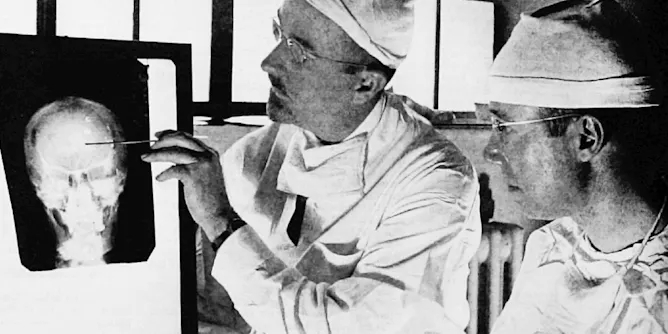
Maybe you think neuroscience has a peaceable history of benign efforts to improve lives and enhance human capacities. But its origins and development tell a different story – with ethical implications.
Articles on Bioethics
Displaying 101 - 120 of 137 articles

The science of reanimating the dead from deep freeze is one thing. But even if possible, it poses serious social and legal questions.
How will neurotech evolve? An NAS workshop this week focuses on social and ethical opportunities and challenges we face both now and down the road.

Smart drugs are known to boost cognition in healthy people – but are they a form of cheating?

We’re living longer and more ill lives – could we use animals to grow human organs for transplants?
New and imagined digital technologies have important ethical implications. We should devise relevant social norms through a high-profile, public, collaborative process.
U.C. Berkeley and the Broad Institute are fighting to control the patents on the revolutionary gene-editing technology. But there’s a lot more at stake than just who gets the credit and licensing fees.

Philosophically speaking our smartphones could be seen as an extension of us. But where does that leave us legally?
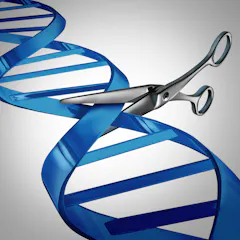
The International Summit on Human Gene Editing drew a distinction between editing an individual’s body cells and editing germline cells that would pass changes to future generations. Does that make sense?
Experts from around the world are in the US to discuss the scientific, ethical and governance issues linked to human gene editing. Here are five reasons they shouldn’t ban research in the field.
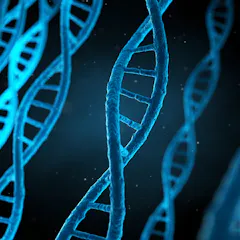
The debate about regulating gene editing technology is often couched in polar terms, but understanding degrees of regulation that might be a better approach.

Some scientists claim a pill that would have us living healthier lives for longer is less than a generation away. But many philosophers argue extended life may not be as good as it sounds.

Public engagement of academics has increased enormously in recent decades. But this new level of engagement is producing problems and conflicts for which many academics are ill-prepared.

US row might suggest using feotal tissue is new - in fact it’s not only a long-held practice, but essential for many medical breakthroughs.
On Human Experiments - The Nazi experiments during World War II were among the most egregious instances of unethical human research. But does that mean we can’t use the data they generated?
That genetic editing techniques have become as straightforward as they have poses questions for how we want them to be used.

When a family member dies from a disease caused by a genetic mutation, doctors have to decide whether to share the deceased person’s test results with the rest of the family.
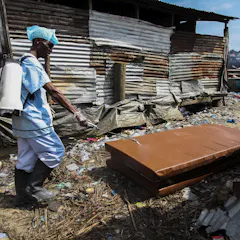
The extent of the current Ebola virus outbreak in West Africa has belatedly focused the attention of non-governmental organisations, local and Western governments, and international media. What we haven’t…
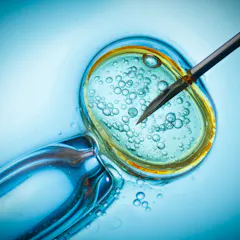
The UK parliament will soon consider making Britain the first country to allow three-person IVF. The regulations are yet to be approved, but the government is currently backing moves to allow the creation…
Many people participate in biomedical research and it is estimated that one in 30 of us is enrolled in a cohort study at any one time. These studies contribute to, and enhance, our understanding of health…
Top contributors
-

Chen Su Lan Centennial Professor in Medical Ethics, National University of Singapore; Distinguished Visiting Professor in Law, University of Melbourne; Uehiro Chair in Practical Ethics, The University of Melbourne
-
Professor of Bioethics and Humanities, School of Medicine, University of Washington
-
Lecturer in Bioethics, Monash University; The University of Melbourne
-
Distinguished Research Professor, Emerita, Dalhousie University
-
Associate Professor of Pediatrics, University of Cincinnati
-
Professor of Bioethics & Medicine, Sydney Health Ethics, Haematologist/BMT Physician, Royal North Shore Hospital and Director, Praxis Australia, University of Sydney
-
Assistant Professor in Biomedical Ethics, National University of Singapore
-
Professor of Medicine, Monash University
-
Lecturer in Philosophy, Fenner School of Environment and Society, Australian National University
-
Senior Research Fellow, Uehiro Centre for Practical Ethics, University of Oxford
-
Vanier Scholar and Ph.D. Candidate in Microbiology and Immunology, Dalhousie University
-
Research Fellow in Biomedical Ethics, The University of Melbourne
-
Honorary Professor Faculty of Health and Medical Science, Univeristy of Sydney; Senior Researcher Sydney Institue for Infectious Disease, University of Sydney., University of Sydney
-
Associate Professor of Health Care Ethics, Saint Louis University
-
Professor, Medical Ethics, Bond University