
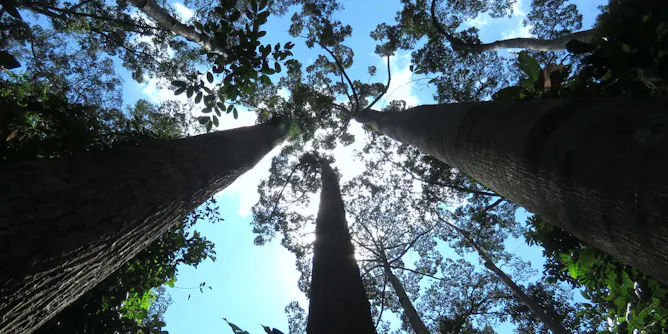
A staggering 17,500 tree species are at risk of dying out.
Articles on Biodiversity loss
Displaying 81 - 100 of 138 articles
New Zealand’s conservation needs to consider the long-term impact of climate change and focus not only on protecting native species but on preserving ecological richness.
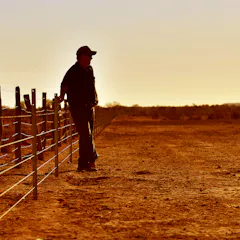
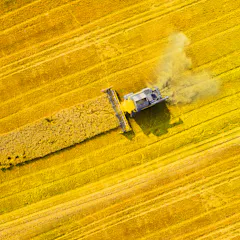
Adopting more environmentally conscious farm models would safeguard our agricultural exports, cut emissions and help protect nature.

The Tongass National Forest in Alaska, a focus of political battles over old-growth logging and road-building in forests for decades, has received new protection from the Biden administration.
The Convention on Biological Diversity aims to achieve a world “living in harmony with nature”. This won’t happen if the plan goes ahead in its current form.
How do we ensure solutions to climate change doesn’t make biodiversity loss worse? Fifty of the world’s leading researchers on biodiversity and climate have sought to answer this question.

As we look beyond a world besieged by Covid-19, the relationship between humans and nature in our cities must be shaped and reclaimed.

Solve the climate and extinction crises together, or solve neither.
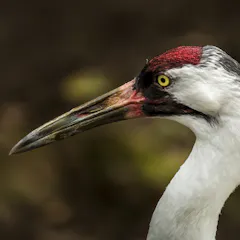
A bewildering array of laws and regulations cover species and ecosystems in Canada, making their protection inadequate.
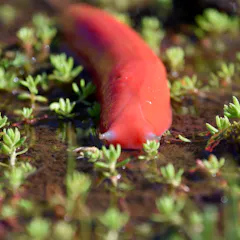
After more than 300 years of effort, scientists have documented fewer than one-third of Australia’s species. The remaining 70% are unknown, and essentially invisible, to science.

When something is free, people use a lot of it. Economists are urging governments to compute values for natural resources – wildlife, plants, air, water – to create motives for protecting them.
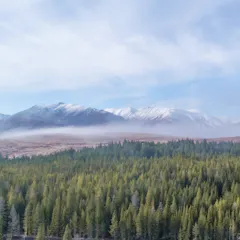
New Zealand recently became the first country to make climate-related financial disclosures mandatory, but it has some way to go to scale up investment in climate resilience.
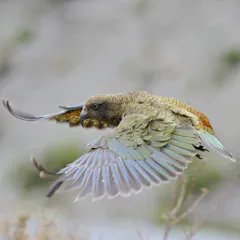
Climate change has long been dismissed as a significant stress to New Zealand’s native wildlife, but research shows it exacerbates existing threats such as introduced predators and habitat loss.
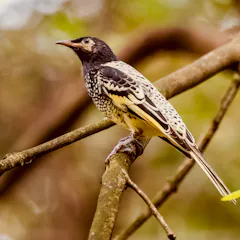
In healthy populations, the song of regent honeyeaters is complex and long. But where the population is very small, the song is sadly diminished.
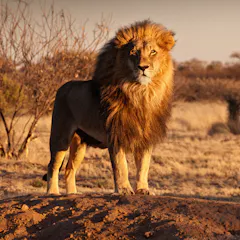
Presenting accounts of technological success in captive lion breeding against the backdrop of rapidly diminishing wildlife loss lets humans off the hook too easily.
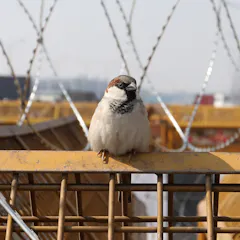
Nearly 700 species of flightless mammal could be barred entry to cooler habitats due to national borders by 2070.
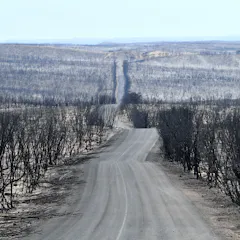
Humanity is destroying Earth’s ability to support complex life. But coming to grips with the magnitude of the problem is hard, even for experts.
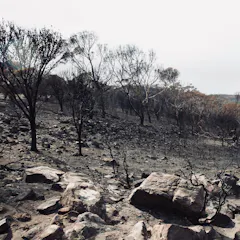
A year since the fires, I feel an underlying sadness and concern for the future. From my discussions with other conservationists, I know I’m not the only one to feel this way.

New Zealand spends about $500m on environmental research each year, but fails to invest systematically in monitoring programmes to track the changing environment.
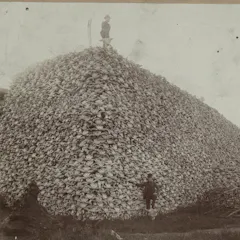
Historical photographs of bison extermination are a window into a history of relationships between humans, bison and the environment.
Top contributors
-

University Fellow in Biodiversity, Charles Darwin University
-
Professor in Wildlife Ecology and Conservation, School of Life & Environmental Sciences, Deakin University
-
Professor of Conservation Biology, Charles Darwin University
-
Adjunct professor, Institute of Forestry and Conservation and Department of Ecology and Evolution, University of Toronto
-
Matthew Flinders Professor of Global Ecology and Node Leader in the ARC Centre of Excellence for Indigenous and Environmental Histories and Futures, Flinders University
-
Professor of Environmental Management, The University of Queensland
-
Professor of Wildlife Conservation, Australian National University
-
Professor, Urban Ecology and Biodiversity, The University of Melbourne; RMIT University
-
Associate Professor, Singapore Management University
-
Research Director CSIRO Health & Biosecurity, CSIRO
-
Professor in Terrestrial Ecology, Deakin University
-
Professor of Ecology, Charles Darwin University
-
Honorary Associate Professor, ANU College of Law, Australian National University
-
Professor, TC Beirne School of Law, The University of Queensland
-
Honorary Research Fellow, University of Sydney