
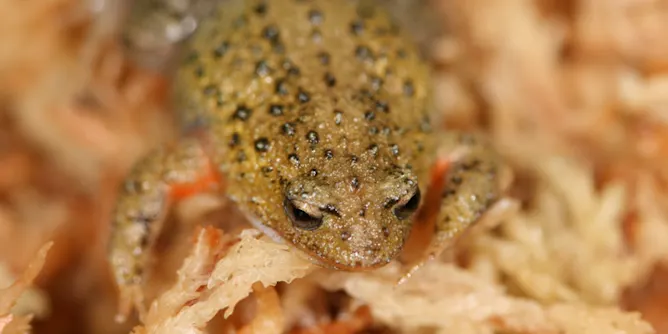
The White-bellied Frog (Geocrinia alba) is a tiny frog from south-west Western Australia, inhabiting a range of 130km2 between Margaret River and Augusta. It was only discovered in the early 1980s and…
Articles on Australian endangered species
Displaying 81 - 100 of 112 articles
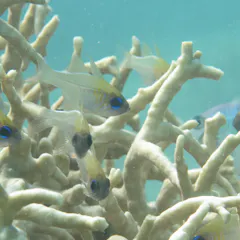
The fire coral (Millepora boschmai) is one of the rarest species of coral in the world. It is known only from a small number of locations in the Pacific Ocean, Panama and Indonesia, and it appears this…
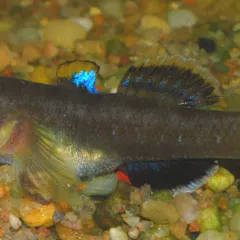
Gobies are one of the largest and most widespread fish families in the world, but even so, the presence of endemic species in the Great Artesian Basin spring complexes of central Australia is a little…
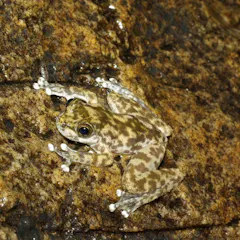
Torrent frogs are an interesting group of frogs found in the rainforests of north-east Australia. There are four species in the group: the Mountain Mistfrog (Litoria nyakalensis), the Armoured Mistfrog…
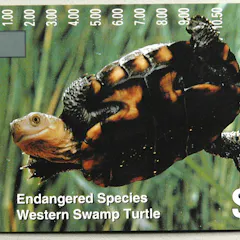
Last year the Australian governments (federal and state) spent AU$6.23 billion on the budget line “climate change and environment”. This probably seems a reasonable amount to most taxpayers, compared to…
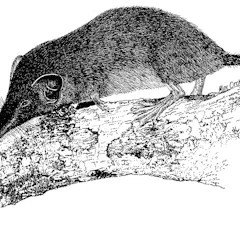
It may be that there are no more shrews in Australia. There was only ever one representative, edging into the Australian political estate on the remote Christmas Island, closer to Java than any other part…
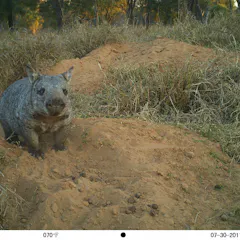
Bringing a species back from the brink of extinction is never easy. Typically, it takes long-term commitment, amounting to lifetimes of hard work by dedicated scientists, managers and supporters. That…
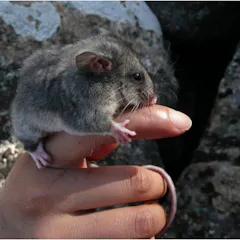
The Mountain Pygmy-possum (Burramys parvus) is one of five living species of pygmy-possum, all of which are classified within a single family. It is the largest of the pygmy-possums, and can be easily…
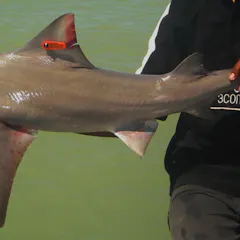
The Northern River Shark (Glyphis garricki) is one of the rarest species of shark in the world. It is known only from a small number of locations in Western Australia, the Northern Territory and Papua…
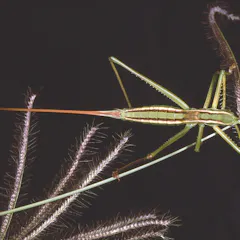
Consider the katydids. Katydids are related to grasshoppers and crickets. They are generally long-legged, have long antennae and are nocturnal. The majority are herbivores but some are carnivorous. Several…
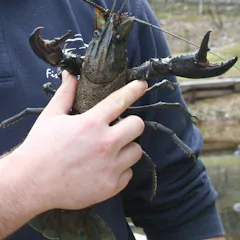
Marron are a large, iconic freshwater crayfish endemic to the southwest of Australia. Most Western Australians have been “marroning” in their youth. The tail meat is a delicacy prized by recreational and…
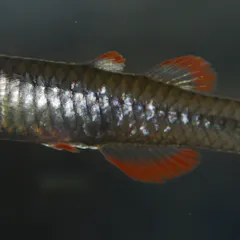
The Red-finned Blue-eye (Scaturiginichthys vermeilipinnis) grows to a maximum of three centimetres long. As males reach adulthood they develop the vivid colouration suggested by their common name. In contrast…
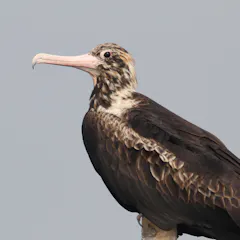
The Christmas Island Frigatebird is a spectacular large seabird. It is one of only five frigatebird species, all with glossy black plumage, long narrow wings, buoyant and acrobatic flight, and long bill…
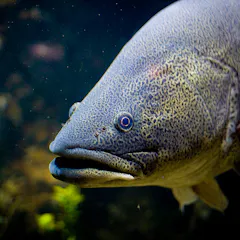
The Murray cod (Maccullochella peelii) is the largest native Australian freshwater fish species, and is probably the most iconic. The species’ credentials are impressive: it can live for more than 50 years…
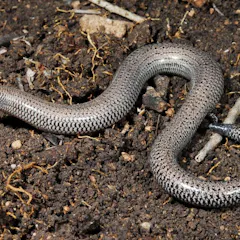
When asked to name an Australian lizard, most Australians would probably pick the familiar blue-tongue, stumpy lizard or bearded dragon, or perhaps the iconic thorny devil, frill-neck lizard or a goanna…
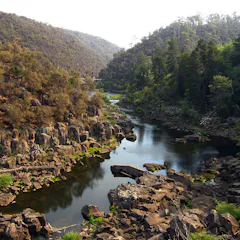
Torrent midges, as their name suggests, make their homes in the fastest-flowing parts of rivers and streams. Their larvae have evolved remarkable and unique adaptations, including suckers on their underside…
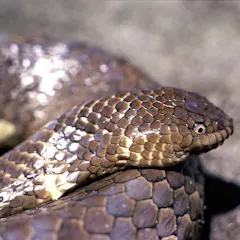
Short-nosed (Aipysurus apraefrontalis) and Leaf-scaled (A. foliosquama) sea snakes are restricted to coral reefs in Western Australia. Both species are known from Ashmore and Hibernia Reefs, while the…
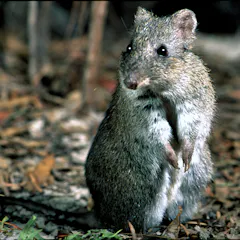
Gilbert’s Potoroo (Potorous gilbertii) is one of four species of potoroo. It has dense grey-brown fur, paler on the underside, with furry jowls, large eyes and an almost hairless tail. It is the smallest…
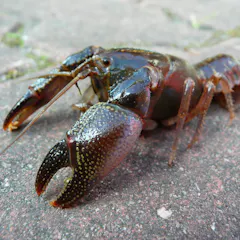
The buttongrass plains, swamps and heathy slopes of western Tasmania support a suite of burrowing crayfish species in the endemic genera Ombrastacoides and Spinastacoides. These nutrient-poor, acid peatlands…
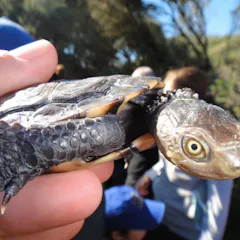
The Western Swamp Tortoise (Pseudemydura umbrina) is Australia’s rarest reptile. Originally it was known only from a single specimen collected in 1839 from an unknown location in Western Australia. No…
Top contributors
-

Professor of Conservation Biology, Charles Darwin University
-
Professor of Conservation and Sustainable Livelihoods, Charles Darwin University
-
Professor, University of Sydney
-
Professor in Conservation Science, School of the Environment, The University of Queensland
-
Distinguished Professor of Ecology, Fenner School of Environment and Society, Australian National University
-
Postdoctoral Fellow, Australian National University
-
Professor in Biodiversity and Conservation, The University of Queensland
-
Professor of Pyrogeography and Fire Science, University of Tasmania
-
Professor of Conservation Biology, UNSW
-
Lecturer, Edith Cowan University
-
Professor, College of Science & Engineering, James Cook University
-
PhD candidate, James Cook University
-
Professor of Environmental Management, The University of Queensland
-
John Evans Memorial Fellow, Australian Museum
-
Associate Professor in Wildlife Conservation, Edith Cowan University