
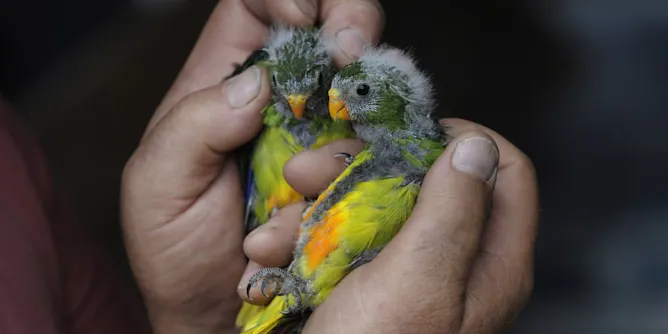
Researchers are planning to monitor orange-bellied parrot nests all summer to make sure they raise chicks successfully.
Articles on Australian endangered species
Displaying 21 - 40 of 112 articles
We know very little about Australia’s most threatened plants.

Half of Tasmania’s eastern quolls – Australia’s last population – have disappeared in the past 10 years.

New research suggests devils are evolving rapidly in response to their highly lethal transmissible cancer, and that the devils could save themselves.
Climate change gets a lot of the spotlight when it comes to saving wildlife. But bigger threats remain.
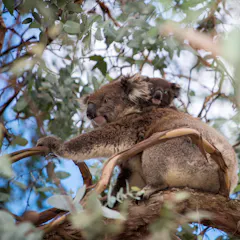
Koalas are under threat from a range of factors, from urban expansion to climate change. Unfortunately there is no quick fix, and it may be that not all populations can be saved.
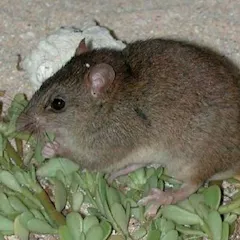
Australia’s conservation laws presume that we can preserve everything in its natural state. But in a changing world, we’ll have to be more flexible than that.

We’ll have to get our priorities in order to protect Australia’s wildlife.
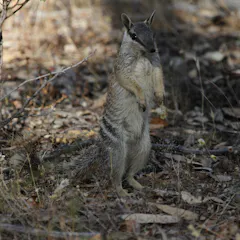
South west Australia is home to an astonishing number of plants and some of the country’s weirdest wildlife. Now we need to protect it.
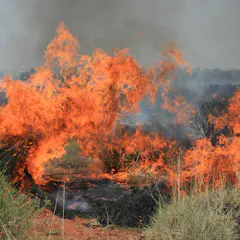
Recent bushfires have not just destroyed human lives and property, but pushed some species further down the path to extinction.
Australia may have reputation for vast areas of wilderness, but in reality the continent’s ecosystems have been chopped and diced. Now we need to protect what’s left.
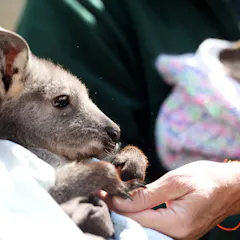
A 21st century government would put the environment on at least an equal footing with the economy. That means no more extinctions, and no more putting ourselves before wildlife or future generations.
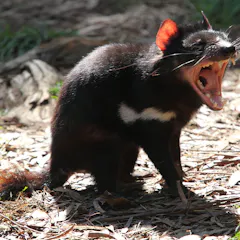
If we brought devils back to the mainland, they could play a similar role to dingoes - keeping foxes and cats under control and potentially boosting the conservation prospects of Australia’s small mammals.
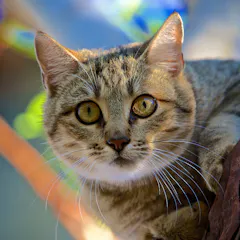
There’s been a lot of talk about killing feral cats, with the government’s recently announced war on cats, with a goal to kill two million by 2020. But let’s embrace cats as part of Australia’s environment.
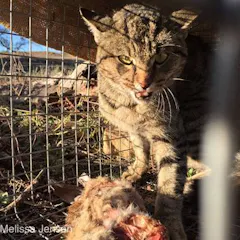
Feral cats are highly adaptable and highly variable, hence we must continue to search for their Achilles Heel and invest in a wide range of control methods.
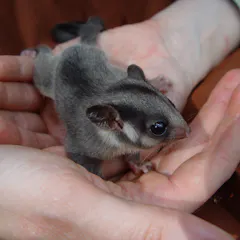
Three recent reports make clear that we should be saving habitat in order to save species. It is pretty simple. Destroy a species’ habitat and you destroy its home.
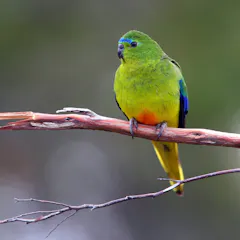
After falling victim to disease, there seems to be little hope left for Australia’s most endangered parrot.
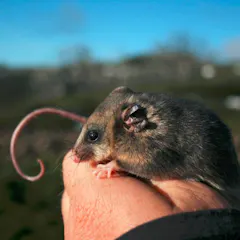
Nearly half of 200 Australian species are threatened by climate change, according to new research, including the iconic mountain pygmy-possum.
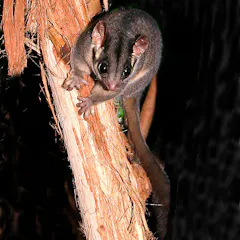
A large new national park might sound like the best way to protect the critically endangered Leadbeater’s possum. But it won’t do anything to save possums from the major threat of bushfire.
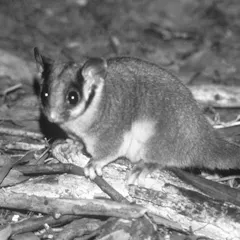
The Leadbeater’s has been formally listed as critically endangered. But unless clearfelling in the possums’ stronghold stops, it will continue down the road of extinction.
Top contributors
-

Professor of Conservation Biology, Charles Darwin University
-
Professor of Conservation and Sustainable Livelihoods, Charles Darwin University
-
Professor, University of Sydney
-
Professor in Conservation Science, School of the Environment, The University of Queensland
-
Distinguished Professor of Ecology, Fenner School of Environment and Society, Australian National University
-
Postdoctoral Fellow, Australian National University
-
Professor in Biodiversity and Conservation, The University of Queensland
-
Professor of Pyrogeography and Fire Science, University of Tasmania
-
Professor of Conservation Biology, UNSW
-
Lecturer, Edith Cowan University
-
Professor, College of Science & Engineering, James Cook University
-
PhD candidate, James Cook University
-
Professor of Environmental Management, The University of Queensland
-
John Evans Memorial Fellow, Australian Museum
-
Associate Professor in Wildlife Conservation, Edith Cowan University