
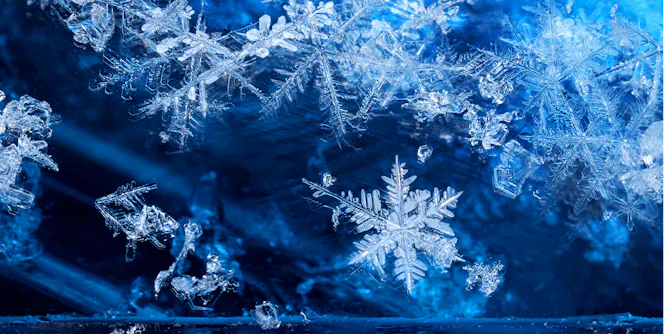
Love it or hate it, winter means snow and ice for much of the US. In many places, though, snow is becoming a scarce resource.
Articles on Atmospheric science
Displaying 101 - 120 of 144 articles
Not so long ago, people had no idea what would happen to them – and what they would see – once they ascended into the clouds.
Countries still figure out their emissions by adding up all the sources, rather than measuring what’s actually in the air.
If the Amazon rainforest functions as our planet’s lungs, what do raging wildfires threaten? An atmospheric scientist explains why the fires, though devastating, won’t suffocate life on Earth.
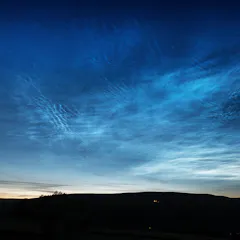
‘Night-shining’ clouds normally found above the poles have now been seen as far south as Los Angeles.
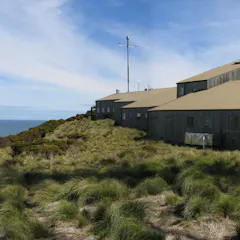
Carbon dioxide levels in the atmosphere are at 414 parts per million. But thanks to a recalculation of methane’s warming power, the total amount of greenhouse gases is now equivalent to more than 500.
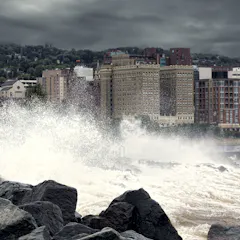
Over the past 20 years, Great Lakes water levels have gone from sustained multiyear lows to multiyear highs. Climate change is accelerating the transition between dry phases and wet phases.
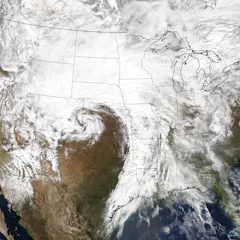
What creates such dramatic storms across the US Great Plains? The key factors are topography and temperature differences.
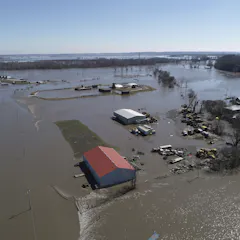
A climatologist who studies precipitation trends explains how climate change is projected to make flooding events in the Midwest more severe and more frequent.
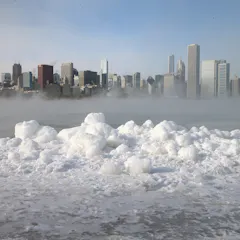
An atmospheric scientist explains why water can do some strange-looking things at very cold temperatures, and what’s different about snowfalls on Mars.

Haze from Northern California wildfires has drifted as far east as Philadelphia. Wildfire smoke contains many potentially toxic substances, so anyone exposed to it should take basic precautions.
According to a new study, the oceans have absorbed more heat from climate change than previously thought. This could mean the Earth will warm even faster in the future than scientists have predicted.
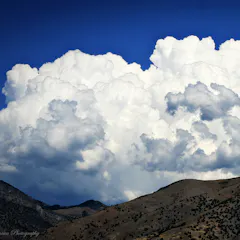
Even a small cloud can weigh as much as four tonnes – but gravity, chemistry and temperature keep them floating in the sky.
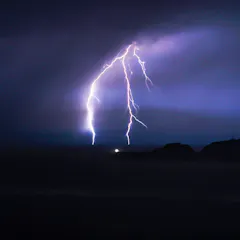
When you see a bolt of lightning, do you immediately start counting to see how far off a storm is? An atmospheric scientist parses the practice.
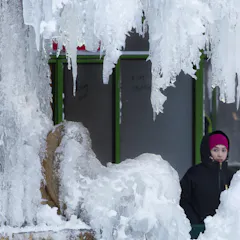
An atmospheric scientist who studies the Arctic explains why – because of global warming – the U.S. may be in for longer cold spells in the winter.
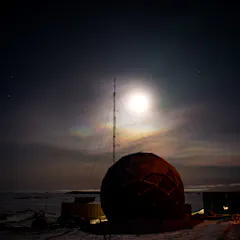
The treaty to limit the destruction of the ozone layer is hailed as the most successful environmental agreement of all time. Three decades on, the ozone layer is slowly but surely returning to health.
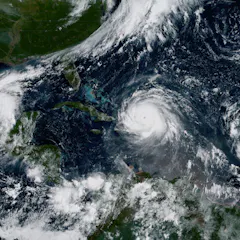
What scientists know – and don’t know – about the linkage between climate change and hurricanes.

Meteorology researchers across the country are prepping experiments for the mini-night the eclipse will bring on August 21 – two minutes and 36 seconds without the sun in the middle of the day.
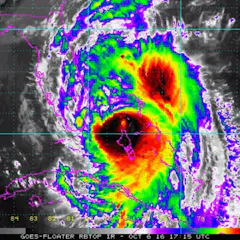
Two atmospheric scientists explain how they weigh evidence such as ocean temperatures, wind speeds and other climate patterns to predict how many Atlantic hurricanes are likely to form this year.
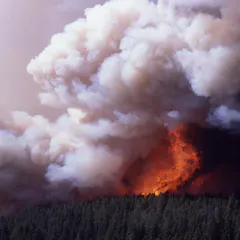
When a bushfire rages so high it creates its own thunderstorm, it becomes a ‘firestorm’ - and makes life much more difficult for firefighters. We still have a lot to learn about what triggers them.
Top contributors
-

Professor of Geology and Environmental Geosciences, University of Dayton
-
Professor of Atmospheric Science, Colorado State University
-
Research Group Leader, CSIRO
-
Honorary Fellow, CSIRO
-
Professor of Climate Science, UMass Lowell
-
Professor of Atmospheric Sciences, Climate Change Research Centre, UNSW
-
Meteorologist and Research Program Manager, University of Wisconsin-Madison
-
Atmospheric Science Educator, Georgia Institute of Technology
-
Distinguished Professor of Meteorology, Penn State
-
Ph.D. Student in Atmospheric Science, University of Michigan
-
Professor of Geography, University of Tennessee
-
Professor of Atmospheric Science, University at Albany, State University of New York
-
Assistant Professor of Geography, Middle Tennessee State University
-
Professor of Atmospheric Science, Iowa State University
-
Professor Emeritus of Climate and Space Sciences and Engineering, University of Michigan