
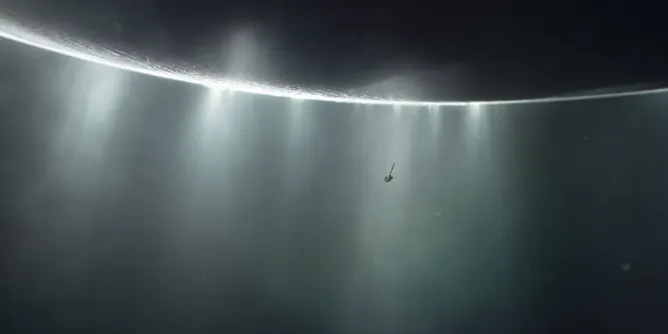
Saturn’s moon Enceladus has geysers shooting tiny grains of ice into space. These grains could hold traces of life − but researchers need the right tools to tell.
Articles on Astrobiology
Displaying 21 - 40 of 68 articles
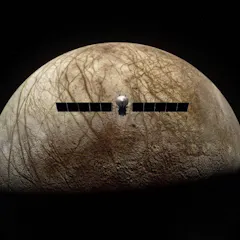
An instrument on the Europa Clipper mission might be able to detect biological cells from space.
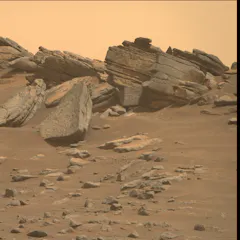
Determining whether or not life exists on another planet is an extraordinarily complicated – and expensive – scientific endeavor.

While NASA rovers on the surface of Mars look for hints of life, researchers back on Earth are studying ‘echoes of life’ from ancient basins – hoping that the two sites might be similar.

‘Assembly theory’ aims to explain evolution without biology. Is it a dazzling breakthrough or an attempt to answer questions nobody asked?
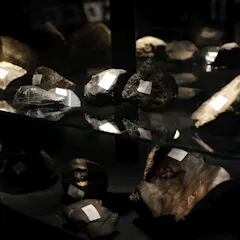
Some space rocks you can get for free – if you know how to identify them. Rarer materials cost more, and the asteroid sample NASA just brought back has a high price tag.
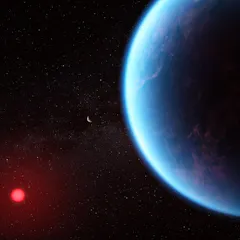
The results are intriguing, but analysing the atmospheres of exoplanets is no easy task.
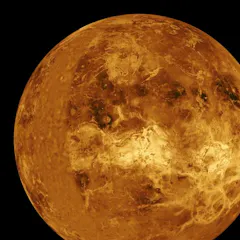
Alien hunters should learn from the Intergovernmental Panel on Climate Change (IPCC).
Some physicists think we live in a multiverse, surrounded by universes not quite like our own. What does that mean for life?
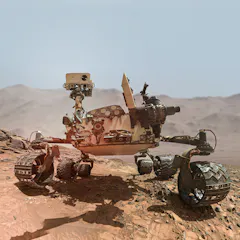
Our Mars rovers might not be sensitive enough to detect signs of life. But lessons from Antarctica might make future missions more successful.
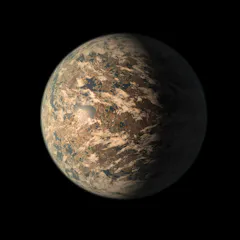
Life on Earth has dramatically changed the chemistry of the planet. Astronomers will measure light that bounces off distant planets to look for similar clues that they host life.
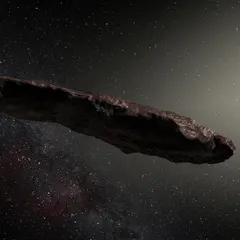
There’s a good reason why so many scientists disagree with claims that Earth has been visited by aliens.
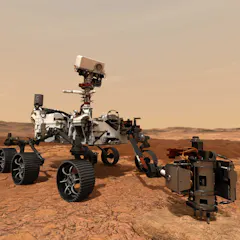
Methane gas in the atmosphere is a tantalising hint suggesting that life could exists on Mars.
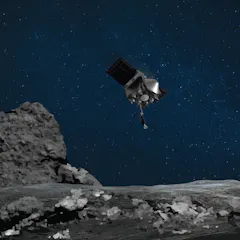
OSIRIS-REx will touch down on asteroid Bennu, collect a sample of the dust and begin its journey back to Earth, where scientists will study it, hoping to learn secrets of the solar system’s origin.
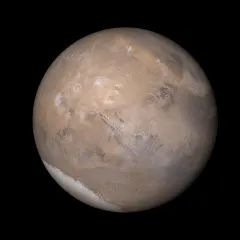
New findings boost chances of finding life on Mars, but there are better candidates in the solar system.
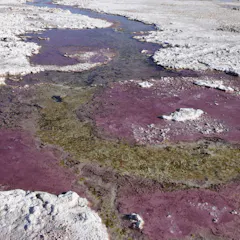
How ancient microbes survived in a world without oxygen has been a mystery. Scientists discovered a living microbial mat that uses arsenic instead of oxygen for photosynthesis and respiration.
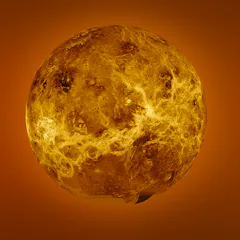
News that Venus may harbor life has swept the globe. So how do we find out for sure? A planetary scientist explains what’s next.
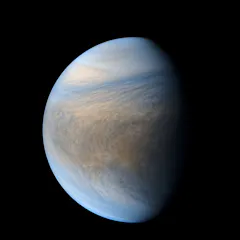
The discovery of phosphine in the acidic clouds of Venus can’t be explained by any known chemical or geological processes.
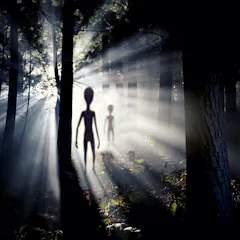
The Earth may be crawling with undiscovered creatures with a different biochemistry to life as we know it.
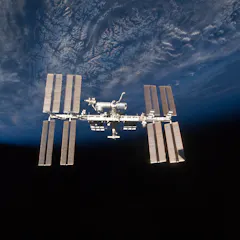
The short answer is yes, but it’s really, really difficult.
Top contributors
-

University Distinguished Professor of Astronomy, University of Arizona
-
Reader in Astrobiology, University of Edinburgh
-
Professor in Philosophy of Science, Durham University
-
Associate Dean for Research and Professor of Astronomy and Planetary Sciences, University of Arizona
-
Professor of Planetary Geosciences, The Open University
-
Professor of Astrobiology, UNSW
-
Senior Instrument Scientist, Australian Nuclear Science and Technology Organisation
-
Senior Lecturer, School of Chemistry, UNSW
-
Lecturer in Astrobiology and Principal Technical Officer at Bayfordbury Observatory, University of Hertfordshire
-
Assistant Professor of Complex Adaptive Systems, Arizona State University
-
Reader in chemistry, University of Leeds
-
Program Manager / Adjunct Research Fellow, Swinburne University of Technology
-
Professor, University of Alberta
-
Researcher at Research School of Astronomy and Astrophysics and the Research School of Earth Sciences, Australian National University
-
Associate Professor, School of Biotech & Biomolecular Science, UNSW