

According to the Canadian Anti-Hate Network, far-right groups have been trying to stack school boards with candidates harbouring anti-equity ideologies.
Articles on Anti-racism
Displaying 41 - 60 of 112 articles

Universities can draw on health research about patient/health-care practitioner shared decision-making to centre the voices of BIPOC students when creating policies and practices to dismantle racism.

A scholar of literature sees striking parallels between contemporary book bans in the US and those that took place in South Africa during apartheid.
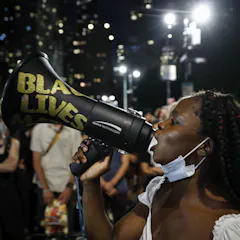
In today’s episode, we look at how sound and noise are used as tactics of protest and how practitioners are using environmental soundscapes to protest against racism and police brutality.

Recently, specious claims against critical race theory have been showing up in Canada. School boards are being questioned about their anti-racism policies and the teaching of CRT to students.

In today’s episode of Don’t Call Me Resilient, we speak with two Canadian educators who explain how using critical race theory in their classrooms helps both students and teachers.

Racism and colonialism are not events but enduring structures written into law and media systems. Legislators should listen to what Black, Indigenous and racialized people are calling for.

A landmark report in 1999 concluded that the police were institutionally racist, but the new action plan fails to acknowledge it.
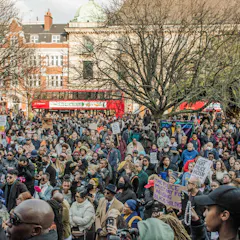
Discussions of racism in Britain centre around the experiences and traumas of Black people, but rarely on the perpetrators.

We’re launching the third season of Don’t Call Me Resilient, our podcast that takes on systemic racism and the ways it permeates our everyday lives.

In this era of racial reckoning, words such as ‘white privilege’ have played a significant role in defining social problems plaguing America. But those words also have a downside.
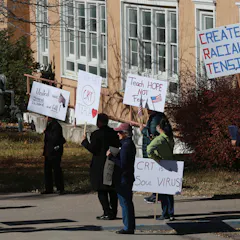
A vital step in achieving the kind of action and change that CRT proposes is for each of us to be intentional and steadfast in our convictions to dismantle racist and oppressive power structures.

Medical schools need long-term equity planning and built-in accountability measures in order to help realize a larger vision of anti-racist and inclusive health care.
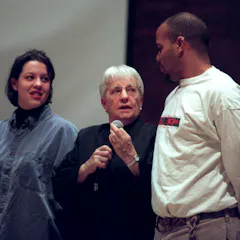
Jane Elliott wanted her white students to experience what it was like for Black students. But instead of teaching about the root causes of racism, she engaged in cruelty and shame.
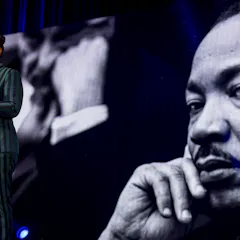
King saw parallels between the anti-colonial movement in Africa and the civil rights struggle in the US.

On-field demonstrations of remembrance and protest are able to harness potent political power.

This is the full transcript for Don’t Call Me Resilient, episode 7: How stories about alternate worlds can help us imagine a better future.

We’re launching the second season of Don’t Call Me Resilient, our podcast that takes on systemic racism and the ways it permeates our everyday lives.

Universities can ensure students in all disciplines are learning how to contribute to a world that they and future generations want to live in.
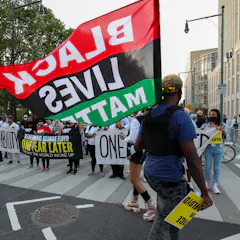
Like many social movements before it that began at the grassroots, Black Lives Matter is becoming a more conventional organization with top-down leadership.
Top contributors
-

Associate professor, Psychiatry, Western University
-
PhD candidate in Communication Studies, Concordia University
-
Associate Professor, Department of Leadership, Higher & Adult Education, Ontario Institute, University of Toronto
-
Associate Vice-President, Equity, Diversity, and Anti-Racism; Assistant Professor of History, University of Waterloo
-
Presidential Fellow in Ethnicity and Inequalities, University of Manchester
-
Research Associate, Southern Centre for Inequality Studies, University of the Witwatersrand, University of the Witwatersrand
-
Professor, Dick Clark Chair in Architecture, School of Architecture, The University of Texas at Austin
-
Assistant Professor, Florida Gulf Coast University
-
Canada Research Chair in Health Law and Policy; Professor, Faculty of Law and School of Public Health; and Research Director, Health Law Institute, University of Alberta
-
Assistant Professor, Social Work | Associate Dean of Undergraduate Programs, Memorial University of Newfoundland
-
Professor, Faculty of Education, School of Exercise Science, Physical and Health Education, University of Victoria
-
Lecturer in Film and Media, Bangor University
-
Professor of Sociology, Washington University in St. Louis
-
Assistant Professor of Educational Leadership, Policy and Program Evaluation, Faculty of Education, L’Université d’Ottawa/University of Ottawa
-
PhD Candidate in Information, University of Michigan