

A new mouse study suggests some cancers release signals that help the brain clear Alzheimer’s-linked proteins, offering clues to a long-standing medical mystery.
Articles on Amyloid
Displaying all articles

Helicobacter pylori, best known for causing stomach ulcers, was shown to block the build-up of both amyloid-beta and tau in our study.
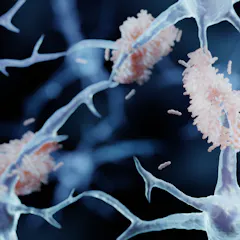
Around 5-10% of all Alzheimer’s cases are in people under the age of 65.
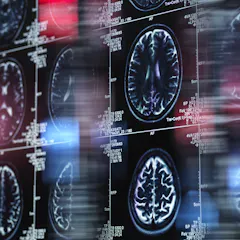
Despite decades of starts and stops, new treatments and key genetic discoveries are giving researchers great hope for slowing or eventually preventing Alzheimer’s disease.
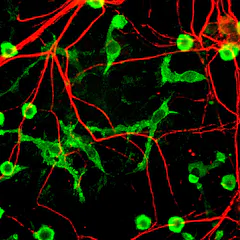
Microglia, immune cells disguised as brain cells, are known as the janitors of the brain. Dialing up their usual duties just enough could provide an avenue to treat neurodegenerative disease.
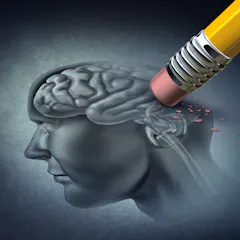
Lecanemab slows progression of early-stage Alzheimer’s disease in some, new study shows. But the ‘adverse events’ are significant.
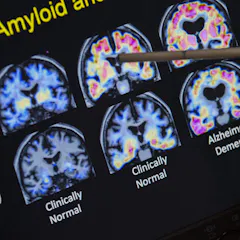
Alzheimer’s may not be primarily a disease of the brain. It may be a disorder of the immune system within the brain. Beta-amyloid may not be an abnormal protein, but part of the brain’s immune system.

Clinical trials of the drug have shown mixed results.

The new drug is based on the idea that a build-up of amyloid in the brain leads to the disease. But that hypothesis has been under scrutiny lately.

It was first officially described 115 years ago, but we still do not have a cure for Alzheimer’s disease. The human brain is extremely complex, and Alzheimer’s is its most complex disease.

Have you noticed your thinking ability drops during winter and spring? A new study of healthy adults and dementia patients found cognitive function declines in the colder months.
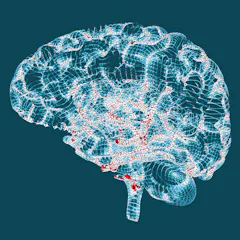
Alzheimer’s drug development tends to focus on protein aggregates in the brain. Perhaps that’s why they’ve all failed.

Alzheimer’s disease is the most common form of dementia, but treatments are still far from successful in clinical trials. Here is what we know about the disease, and what is yet to be uncovered.
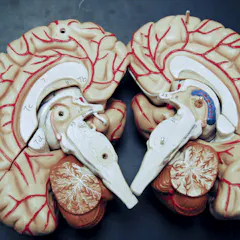
New research has identified a known neurodegenerative disease as being caused by prions. And it has again raised the possibility that these proteins are infectious.
Top contributors
-

Professor of Chemistry and Senior Scientist of the Krembil Research Institute, University Health Network, University of Toronto
-
Research Fellow, Harvard Medical School, Research Fellow, Florey Institute of Neuroscience and Mental Health
-
Professor of Neuroscience, Lancaster University
-
Professor and Chair in Ageing and Alzheimer’s Disease, Edith Cowan University
-
Director of Research, Associate Professor in Therapeutics, University of Bradford
-
Professor of cognitive pharmacology, Université du Québec à Montréal (UQAM)
-
Étudiant au doctorat en psychologie, Université du Québec à Montréal (UQAM)
-
Professor of Neurology and Neuroscience, University of Florida
-
Ph.D. Candidate in Neuroscience, University of Virginia
-
Professor of Biomedical Sciences, Anglia Ruskin University
-
Post Doctoral Research Assistant, University of Bradford
-
PhD Candidate, Neuroscience, University of Sheffield
-
Associate Professor, Turner Institute for Brain and Mental Health, Monash University
-
Associate professor, Karolinska Institutet
-
Distinguished Florey Fellow, Florey Institute of Neuroscience and Mental Health