
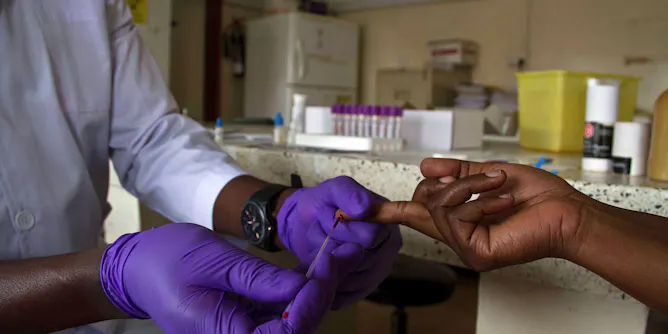
HIV services must be comprehensive to ensure that people take their medication as prescribed and avoid onward transmission of the virus.
Even before the advent of COVID-19, donors had begun to exit HIV programmes with increasing frequency.
Articles on AIDS21
Displaying all articles
To be effective, vaccine formulas need to cover all emergent strains. But there are still plenty of unknowns.
Stigma and criminalisation of same-sex relationships makes it difficult for transgender women and men who have sex with men to seek preventive services. This compounds their risk for HIV infection.

It is urgent and overdue to implement PrEP in pregnancy and during breastfeeding. Failure to do so allows ongoing avoidable HIV infection among women in South Africa and their infants.

Adolescent girls and young women aged 15 to 24 accounted for 25% of new infections, while making up only 10% of the population.
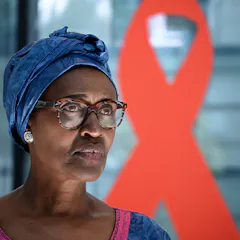
Greater urgency is needed in the response to pandemics, to end AIDS and to end COVID-19.
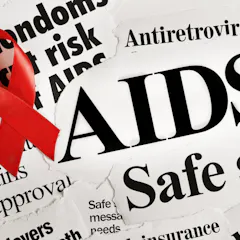
The key actions needed to end AIDS are relatively clear. The question is whether every government, funder, and implementing organisations will apply them.
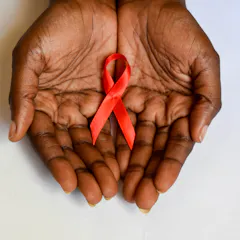
Cryptococcal ceningitis is one of the main causes of death of people with HIV. The tests and medicines to diagnose and treat it exist but remain inaccessible to most. A global strategy is needed.
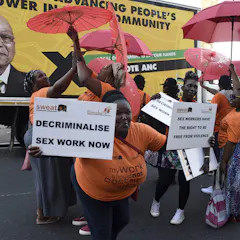
Narrow, unimaginative public health responses inhibit reducing HIV, exploitation and marginalisation within sex work.
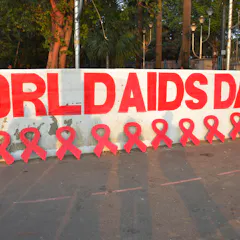
The HIV/AIDS response played out over a much longer trajectory than COVID-19. But it is, in some respects, a shining example of what can be achieved when countries and people work together.
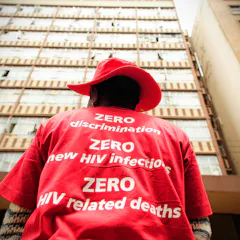
If the world is single-minded and focuses purely on combating one pandemic, forgetting others, the effects of other morbidity and mortality on healthcare systems will be seen for a long time to come.
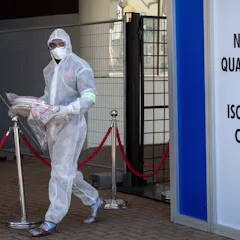
The redirection of resources to COVID-19 has enormous consequences for the provision of healthcare services for other diseases, in particular, HIV programmes.
Top contributors
-

Professor of medicine and deputy director of the Desmond Tutu HIV Centre at the Institute of Infectious Disease and Molecular Medicine, University of Cape Town
-
Honorary Research Associate, Centre for Infectious Disease Epidemiology and Research, University of Cape Town
-
Honorary Senior Lecturer in the Department of Biostatistics and Epidemiology, University of Cape Town
-
Post-doctoral researcher, KEMRI-Wellcome Trust Research Program, Kenya Medical Research Institute
-
Distinguished Professor, Infectious Disease and Oncology Research Institute, Faculty of Heath Sciences, University of the Witwatersrand, Executive Director Perinatal HIV Research Unit, Chief Scientific Officer, South African Medical Research Council
-
Head: Treatment Research in HIV and TB, Centre for the AIDS Program of Research in South Africa (CAPRISA)
-
Research fellow, African Centre for Migration & Society, University of the Witwatersrand
-
Pro Vice-Chancellor, Climate, Sustainability and Inequality and Director, Southern Centre for Inequality Studies, University of the Witwatersrand
-
Principal Investigator based at Centre for Research on Emerging and Re-Emerging Diseases (CREMER), Sub-Saharan African Network for TB/HIV Research Excellence (SANTHE)
-
Senior Research Associate in Sexual and Reproductive health, Manchester Metropolitan University
-
Deputy Director, Centre for the AIDS Program of Research in South Africa (CAPRISA)
-
Health Systems Researcher, Makerere University
-
Behavioural Scientist, Human Sciences Research Council
-
Perinatal HIV Research Unit, University of the Witwatersrand
-
Centre for the AIDS Program of Research in South Africa (CAPRISA)