
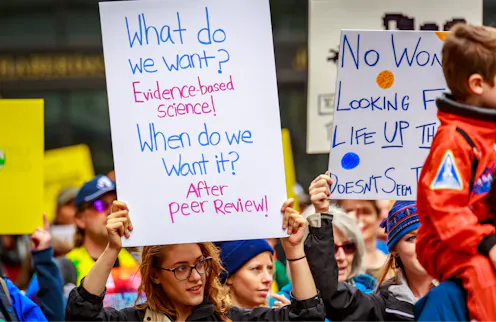
Trust in science seems compatible with believing almost anything, so long as it is expressed in plausibly scientific terms.
Science + Tech – Articles, Analysis, Comment
Displaying 126 - 150 of 6920 articles

Spain’s passing triangles did more than create space: they forced France into making constant choices.
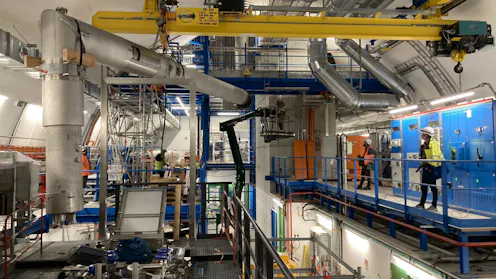
Major upgrade works may allow the LHC to uncover signs of new physics.

There’s a growing trend to pave over front gardens.
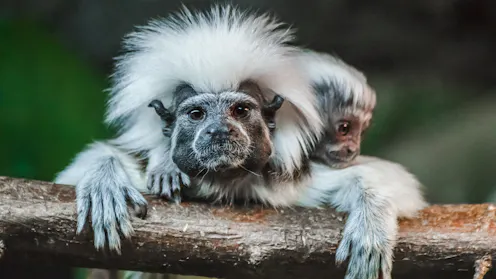
Tamarins and squirrel monkeys have babies with unspeakably large heads compared to their mother’s birth canal.
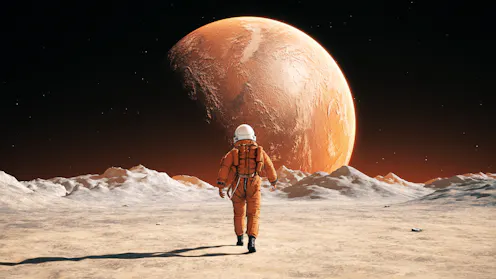
After decades assuming disabled people would struggle in spaceflight, researchers are finally asking what they can contribute.

Burial grounds are filling up but are new methods any more green than traditional options?

Mathematics is helping us move away from reacting to congestion, towards preventing it.
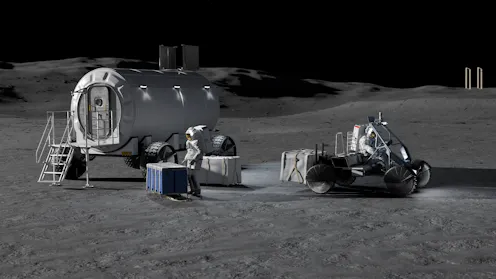
Suitable spots for establishing human outposts at the south pole are finite.

Researchers designed a new way of collecting data about snowfall in the Himalayas which is much more accurate than the ones used before.

The UK Civil Aviation Authority thinks that passengers are still unaware of the rules.
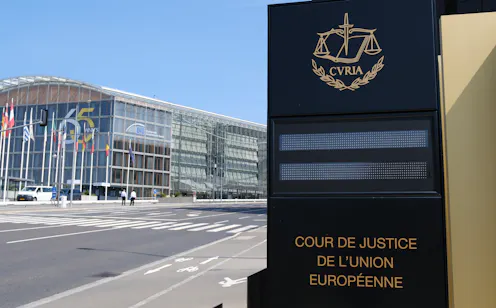
Big tech platforms argue they simply store and display information created by others, so should not be seen as legally responsible for it.
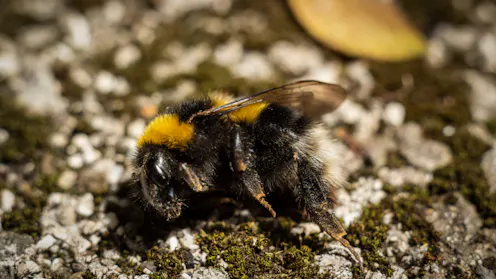
Bumblebees are being affected by heat and other factors this summer.

Hummingbirds are responsible for some of the fastest evolution in the plant kingdom.

As soils become saltier, roots are deploying remarkable survival strategies that could help safeguard future food supplies.
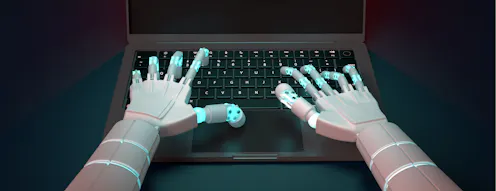
AI systems can now improve themselves by themselves. Is this the dawn of machine superintelligence?

British trees struggle to survive as temperatures get higher, and many die.

Iran’s leaders could use the peace dividend to invest in fixing its severe environmental problems.

Returning a tennis serve depends on one of the brain’s most remarkable abilities: predicting the future.
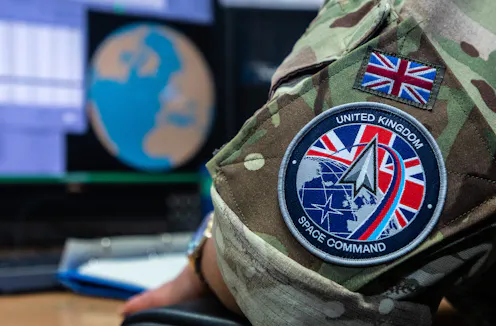
New defence spending offers little clarity on the future direction of military space.

Until now, there has been little evidence of how young people in middle- and low-income countries use and feel about AI.
Unlike lithium-ion batteries, flow batteries can’t catch fire (as they are mostly water) and are extremely durable.

What began as a symbol of status has become a complex technological challenge.

Deep oceans contain microbes with yet-to-be-discovered properties that could drive future innovations in biotechnology.

Academics have been testing out how best to deal with heatwaves in two neighbouring homes to see what works.