

The way humans share the world with wildlife has rapidly changed – and this is having a serious impact on the spread of pathogens.
Articles on Zoonotic diseases
Displaying 101 - 120 of 129 articles
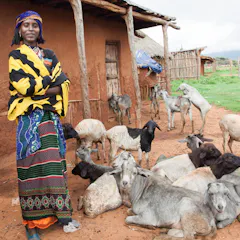
Rift Valley Fever infects millions of humans and livestock in Africa and Arabia. To fight it, scientists are developing a first of its kind vaccine that can be used on humans and animals.

Human-to-ape disease transmission is thought to be a severe threat to the survival of great apes.
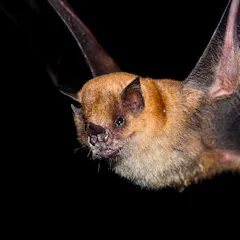
Scientists identify the risk of bat flu spreading to humans.

Outbreaks of zoonotic diseases call for a collaborative approach to surveillance.

Armadillos and humans are linked in the strangest of ways. Armadillos are the only other species known to get leprosy. A surge in cases in Brazil gives reason for concern there and in the US.

No one then knew a virus caused the 1918 flu pandemic, much less that animals can be a reservoir for human illnesses. Now virus ecology research and surveillance are key for public health efforts.
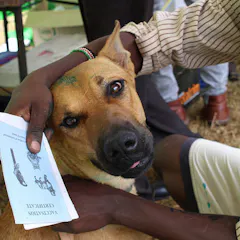
By tackling local threats and controlling existing diseases, countries are able to build the capacity needed to deal with future emerging disease threats.

A disease suspected to be Mpox is on the rampage in Nigeria. In less than one month, it has spread to seven of the country’s 36 states and infected 31 people.
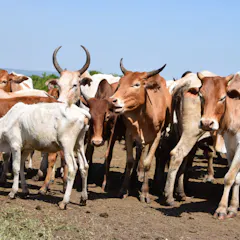
Governments in anthrax endemic countries should build efficient surveillance systems that incorporate detection, confirmation and efficient data collation and feedback.
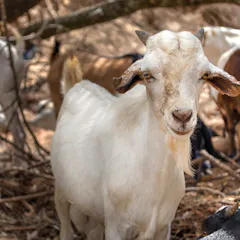
As the goat plague is a trans-boundary disease, there’s concern that it will spill over into neighbouring countries such as Rwanda and Burundi.
Functional early warning systems help countries respond to a disease before it spreads.

Africa’s cities are melting pots of activity and interaction. There are fears that the continent’s next major modern disease crisis will emerge from them.

A woman developed sepsis after she was licked by her pet greyhound.

Plague, one of the deadliest diseases in the world, has been reported in several African countries in the past decade.
As much as animals may pass on viruses to humans, humans pass on viruses which are sometimes lethal to the animal world as well.
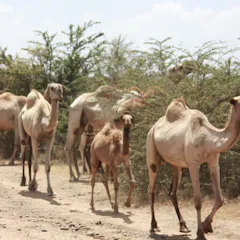
There is a high prevalence of the MERS virus in African camels. More research is key to understanding the virus better globally.

Along with better strategies to respond to outbreaks in human populations, we need a stronger focus on surveillance in animals to identify infectious diseases before they pose a risk to human health.
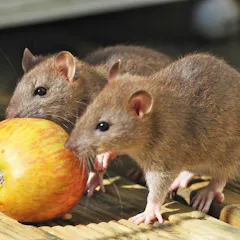
Our world is becoming increasingly urbanised. In 1950, just 30% of the world’s population lived in urban areas. This number is now over 50% and rising. By 2050, two-thirds of the world’s population are…
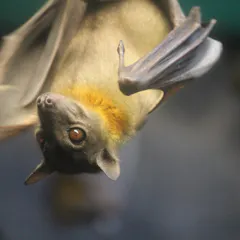
In an era flush with vaccines and antibiotics, when the greatest health risks in the developed world ride on the back of fried fish and hamburgers, it is easy to forget that infectious diseases still account…
Top contributors
-

Professor of Veterinary Infectious Diseases, University of Liverpool and International Livestock Research Institute, Kenya, University of Liverpool
-
Head Scientific Research Support, Stellenbosch University
-
Head: Division of Medical Virology, Stellenbosch University
-
Professor of Biodiversity and Human Development, Manchester Metropolitan University
-
Affiliate Professor of Veterinary Medicine, Auburn University
-
Regional Director, ILRI Asia, International Livestock Research Institute
-
Professor of Infectious Diseases, Monash University
-
Alborada Lecturer in Epidemiology, University of Cambridge
-
Canada Research Chair and Full Professor, Epidemiology and One Health, Université de Montréal
-
Directeur régional Asie du Sud-Est, vétérinaire et épidémiologiste, Cirad
-
Fellow, Nigerian Academy of Science
-
Regents' Professor & Chair, Medical Laboratory Science, Texas State University
-
Sydney Horizon Fellow, veterinarian and wildlife disease ecologist, University of Sydney
-
Emeritus Professor, infectious disease ecology, Griffith University
-
Senior Lecturer in Animal Science, Nottingham Trent University