

Researchers found that some bodies of water have become highly acidic within only a few years.
Articles on Yukon
Displaying all articles
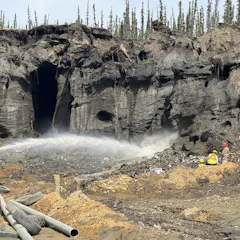
Permafrost holds an extraordinary molecular record of ancient life — and we are only now learning to read it, just as warming begins to erase it.
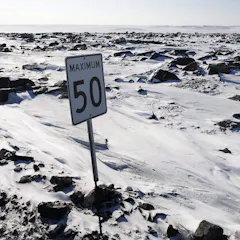
A new survey finds the majority of Canadians, across all regions and political leanings, support the construction of infrastructure in the Arctic.

The mining industry could learn a lot from the slow fashion and food movements. New research from the Yukon shows how slow mining can be a viable path forward.

We need to understand how bears are affected by climate change, and how those stresses might create new risks for humans.
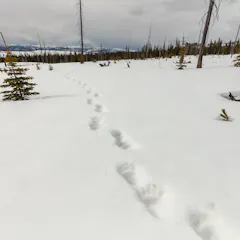
Parks and refuges are important for conservation, but without connections, they’re like islands. Linking them by protecting land in between makes it possible for wildlife to move over bigger areas.
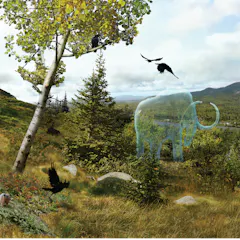
Permafrost in the Yukon is a treasure trove of ancient environmental DNA, but climate change threatens these rich historical archives.
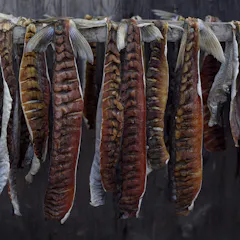
The Arctic and sub-Arctic regions are no longer exempt of industrial contamination. Researchers have found high blood levels of potentially harmful chemicals in people living in the North.
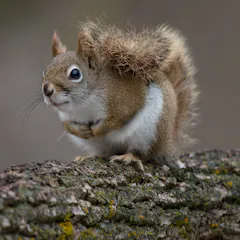
Red squirrels are solitary by nature, but research has found that they benefit from familiarity with other squirrels.
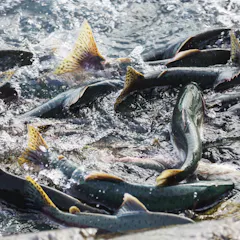
As climate change warms northern rivers and changes precipitation patterns, some types of cold-loving fish are failing.

Although marginalized from policy decisions, northern Indigenous communities have maintained and developed strong social networks to help them cope with climate change.
Top contributors
-

Scientist, Ancient DNA Lab (Biodiversity Genomics division) at the Hakai Institute and Adjunct Assistant Professor, Anthropology, McMaster University
-
Assistant Professor/ Professeure adjointe, Université de Montréal
-
Distinguished Professor of Conservation Biology & Policy, University of Montana
-
Conservation Planning Biologist, Wildlife Conservation Society Canada and Adjunct Professor of Conservation Biology, University of Saskatchewan
-
Professor of Anthropology and Biochemistry and the Micheal G. DeGroote Chair in Genetic Anthropology, McMaster University
-
Professor, Department of Earth and Atmospheric Sciences, University of Alberta
-
Postdoctoral Research Fellow, Center for Paleogenetics, Stockholm University
-
Postdoctoral fellow, Cooke Lab, Carleton University
-
Associate Professor in Human Dimensions of Environment & Sustainability, University of Saskatchewan
-
Professor and York University Research Chair in Global Change Biology; Director of the United Nations Institute for Training and Research Global Water Academy, York University, Canada
-
Lecturer in Environmental Studies, Brandeis University
-
MSc Student, School of Public Health and Health Systems, University of Waterloo
-
PhD, School of Earth, Environment & Society, McMaster University
-
Assistant Professor, Department of Earth Sciences, Carleton University
-
Postdoctoral Research Fellow in Animal Behaviour, University of Exeter