
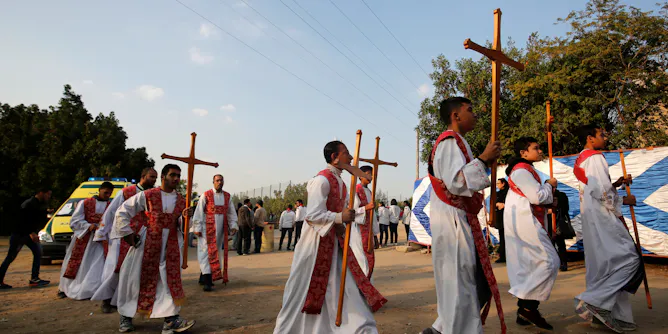
Sub-Saharan Africa is one of the hot spots of Christian higher education growth worldwide, a trend that can be observed across the continent.
Articles on World Bank
Displaying 141 - 160 of 207 articles
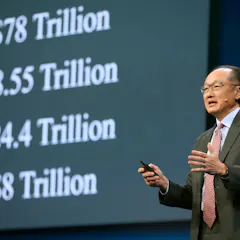
The World Bank has changed direction. It won’t be giving up on public funding, but it will increasingly be trying to attract private investors to developing countries.
Africa should be concerned about news that the World Bank is looking to migrate from the model that largely relies on funding member states to become a broker of private capital.

The Democratic Republic of the Congo has scheduled its 15-year-old mining code for review. The country must ensure reform that benefits its people.

While New Zealand leads the world in how easy it is to register a business, government regulation makes it expensive and time consuming to trade internationally.
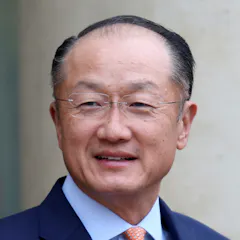
The World Bank meets 2017 with a new face and that face is – for better or worse – worn by Jim Yong Kim.
A dubious deal with the Trumps has sparked criticism of the World Bank, but attention should be focused elsewhere.
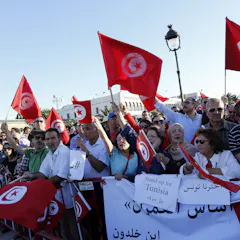
Protests in Tunisia and Morocco show underlying causes of the Arab uprisings remain intact.
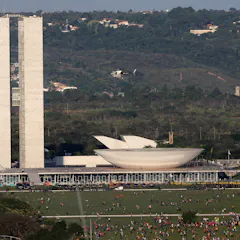
Domestically, Brazil is a mess. Now, its foreign policy is in crisis, too, landing a staggering one-two punch to this one-time rising star.
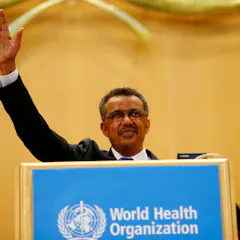
There are a number of challenges that the World Health Organisation’s new leader, Ethiopian-born Tedros Ghebreyesus, will have to navigate during his tenure.

There are huge challenges in South Africa’s public schools. The question is whether using public-private partnerships is the correct way to address them.
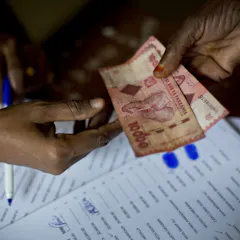
The case of Zanzibar shows that, given certain political conditions, even low-income countries in Africa can introduce and pay for a universal pension programme.
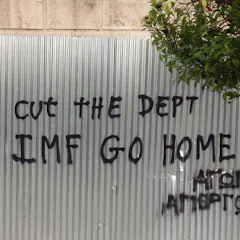
Where now for one of the great emblems of post-World War II global co-operation?
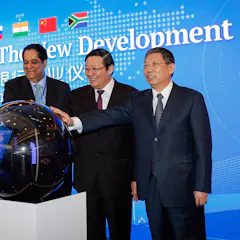
The BRICS New Development Bank has promised to change the world of multilateral development funding but has so far failed to live up to expectations.

Non-governmental organisations are criticised for pandering to the whims of the donor community at the expense of local populations. The real question is: can they bring about real change?

Accra and Johannesburg have some way to go before making it onto anyone’s top 20. Both cities have a desperate gap between rich and poor but inequality is not a uniquely African problem.
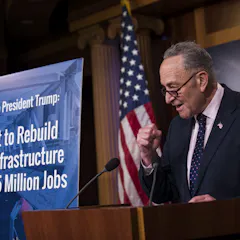
The trillions of dollars spent on infrastructure demands democratic transparency and accountability. This applies to both the investment and to the effects on cities, societies and the environment.
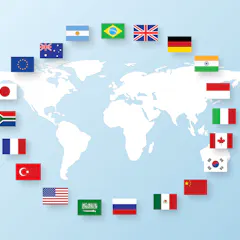
In its agenda to reform global economic governance the developing world should look for ways to extract some value from the G20.

Even though online learning has finally come into its own in higher education internationally, East Africa appears reluctant to embrace it fully.

Australia is near the back of the pack of rich nations when it comes to policies for clean energy. But there are things we can do about it.
Top contributors
-

Professor/Senior Research Fellow, Centre for Advancement of Scholarship, University of Pretoria
-
Post Doctoral Researcher, Graduate School of Business (GSB), University of Cape Town
-
Professor of Practice in Climate Policy, University of Oxford
-
Professor of Political Economy, University of the Witwatersrand
-
Professor of Economics & Business, Allegheny College
-
Professor of Law, American University
-
Professor of International Business Strategy & Emerging Markets at the University of Sussex Business School, and the Graduate School of Business, University of Cape Town
-
Associate Professor of Economics, Indiana University
-
Dean of Business School, University of Southern Queensland
-
Professor in The Division of Global Affairs and The Department of Political Science, Rutgers University - Newark
-
School of Social Sciences, Monash University
-
Professor, Faculty of Business and Management Sciences, University of Nairobi
-
Research associate at African Centre for Cities, University of Cape Town
-
Associate Professor of Business, Boston University
-
Professor of International Law, University of Pretoria