
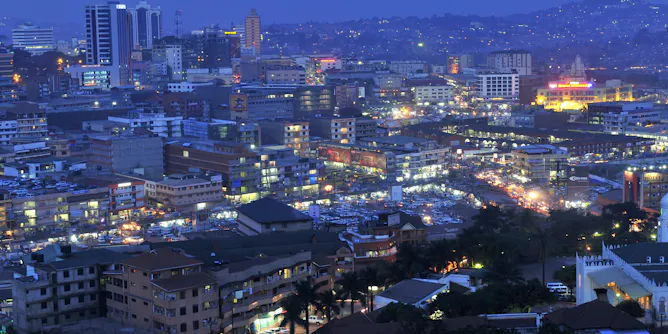
East Africa is one of the fastest urbanising regions in the world, but it’s still in the early phases. There’s a big opportunity to get the region’s cities right.
Articles on World Bank
Displaying 61 - 80 of 207 articles
Ghana’s finance ministry is struggling to build consensus on the country’s debt burden.
Look for significant progress in 2023 in two key areas, writes a veteran of international climate policy.
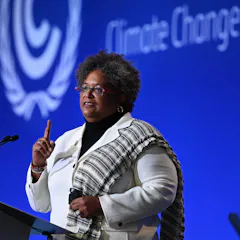
Two of the largest financial institutions are not doing enough to scale up funding for climate action.
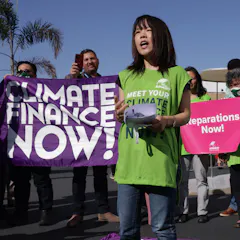
The biggest issues at COP27 involve financing for low-income countries hit hard by climate change. A former World Bank official describes some promising signs she’s starting to see.

With a square and a circle, the father of ecological economics and a founding architect of sustainable development redrew our understanding of the economy. It was revolutionary.

Many small island nations are struggling to protect their land from rising seas while also facing paralyzing debt.
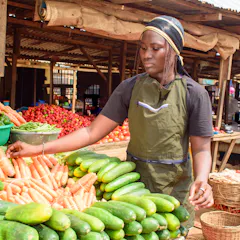
Better financial support is vital for growing populations.
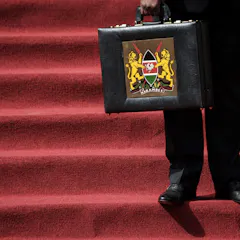
Njuguna Ndung'u has the experience that suits Ruto’s bottom-up economics but lacks the political gravitas to appease voters.

Questionable academic research has been used by Uber to argue against regulation.
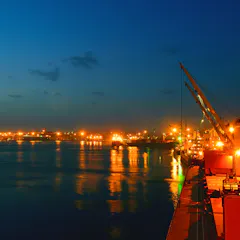
Harnessing the combined effect of trade and urbanisation could significantly boost the economies of African countries.
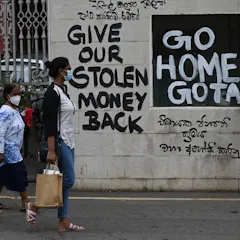
An expert on Sri Lanka’s economy identifies and explains three key challenges that Ranil Wickremesinghe will have to overcome if he hopes to steer the country out of its crisis.
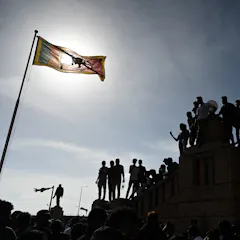
Protests over shortages forced the ouster of Sri Lanka’s president, but the crisis has deep-set roots in ethnonationalism, which has encouraged corruption, argues an expert on the country’s politics.
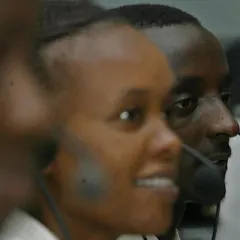
It’s still fashionable today to promote tech startups and tech hubs based on models from the global north. But new, alternative and more sustainable models might be emerging.
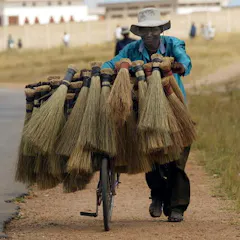
The informal sector in Zimbabwe is massive. Finding ways to connect it to the formal sector is vital.
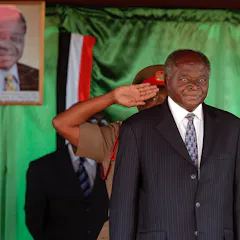
Kibaki gave Kenya’s higher education sector a free market capitalistic orientation, endearing him to the World Bank and the IMF
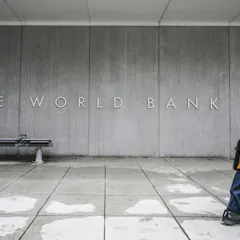
The World Bank board operates on the basis of reaching decisions by consensus. This means that any executive director must earn the respect of their colleagues to affect change.
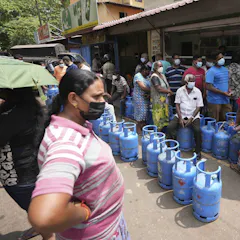
Sri Lanka was already experiencing a severe economic and financial crisis. Then Russia invaded Ukraine.
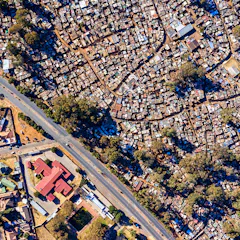
The reduction of inequality is crucial from an ethical point of view as well as the fact that will open new possibilities on how to tackle climate change.
A liaison group with large financial institutions has worked in the US and the Netherlands.
Top contributors
-

Professor/Senior Research Fellow, Centre for Advancement of Scholarship, University of Pretoria
-
Post Doctoral Researcher, Graduate School of Business (GSB), University of Cape Town
-
Professor of Practice in Climate Policy, University of Oxford
-
Professor of Political Economy, University of the Witwatersrand
-
Professor of Economics & Business, Allegheny College
-
Professor of Law, American University
-
Professor of International Business Strategy & Emerging Markets at the University of Sussex Business School, and the Graduate School of Business, University of Cape Town
-
Associate Professor of Economics, Indiana University
-
Dean of Business School, University of Southern Queensland
-
Professor in The Division of Global Affairs and The Department of Political Science, Rutgers University - Newark
-
School of Social Sciences, Monash University
-
Professor, Faculty of Business and Management Sciences, University of Nairobi
-
Research associate at African Centre for Cities, University of Cape Town
-
Associate Professor of Business, Boston University
-
Professor of International Law, University of Pretoria