
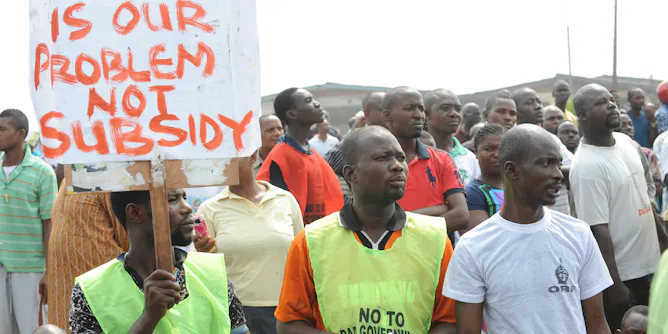
Removal of the fuel subsidy in Nigeria is long overdue, but replacing it with a transport grant is not the best approach.
Articles on World Bank
Displaying 81 - 100 of 207 articles
African countries can’t afford to tread water waiting for the global multilateral and private financing system to become more equitable.
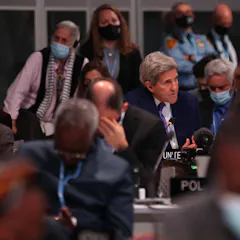
The world promised progress at the Glasgow climate conference. Now it has to turn those promises into reality. A former senior UN official describes what to watch for in the coming year.
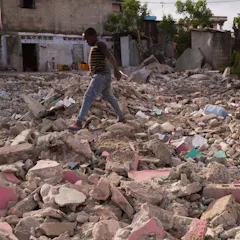
Collaboration can have immediate benefits in the most dire circumstances.
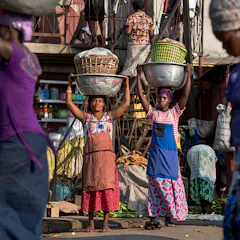
Influential international actors like the World Bank and the IMF should focus on expanding social protection rather than focusing on eliminating the informal economy.

Nigeria must remove fuel subsidies and channel the funds to critical sectors of its economy.

Allegations that World Bank officials manipulated country rankings in its much-used ease of doing business index highlight a deeper problem with these types of rankings.
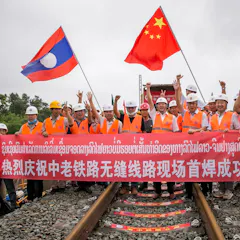
Through its Belt and Road Initiative, China has become the world’s largest country-to-country lender. A new study shows that more than half of its loans threaten sensitive lands or Indigenous people.
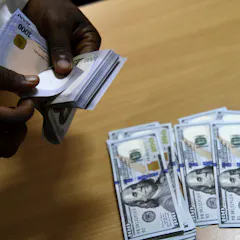
To non-economists, the World Bank ranking Nigeria fifth on the list of its top ten debtor countries is alarming. A deeper analysis shows there is no cause for concern.

Eurobonds are costly for governments. But they are also attractive because investors buy them without preconditions.
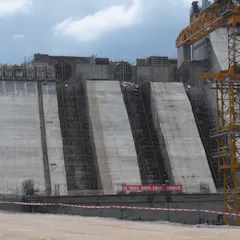
China’s engagement with Ghana was solidified by its willingness to undertake an expensive project Western partners had run away from.

Promoting entrepreneurship will help reduce unemployment in South Africa. But the government has to step up its game.
It has consequences for everything from voting rights at the IMF to international borrowing costs.

The African Continental Free Trade Area is the largest in the world. The World Bank sees it as a means of lifting 30 million people out of extreme poverty. But will it?

Government has limited resources to improve quality in schools in Ghana.

Despite evidence that cash payments can help improve well-being, they have limitations as well, according to a development economist.
Medium-term expenditure frameworks can be useful only when they are based on comprehensive medium-term development plans.

There is a need to be alive to tensions between short- and long-term objectives, as well as the assumptions we hold around what we consider to be “better” and how to achieve it.

Side agreements signed by some wealthy nations threaten to undercut global efforts to ensure a fairly equitable worldwide vaccination effort.

South Africa’s National Treasury now proposes to reduce salaries. On the face of it this seems sensible. But the fundamental issue is the structure of the public service.
Top contributors
-

Professor/Senior Research Fellow, Centre for Advancement of Scholarship, University of Pretoria
-
Post Doctoral Researcher, Graduate School of Business (GSB), University of Cape Town
-
Professor of Practice in Climate Policy, University of Oxford
-
Professor of Political Economy, University of the Witwatersrand
-
Professor of Economics & Business, Allegheny College
-
Professor of Law, American University
-
Professor of International Business Strategy & Emerging Markets at the University of Sussex Business School, and the Graduate School of Business, University of Cape Town
-
Associate Professor of Economics, Indiana University
-
Dean of Business School, University of Southern Queensland
-
Professor in The Division of Global Affairs and The Department of Political Science, Rutgers University - Newark
-
School of Social Sciences, Monash University
-
Professor, Faculty of Business and Management Sciences, University of Nairobi
-
Research associate at African Centre for Cities, University of Cape Town
-
Associate Professor of Business, Boston University
-
Professor of International Law, University of Pretoria