
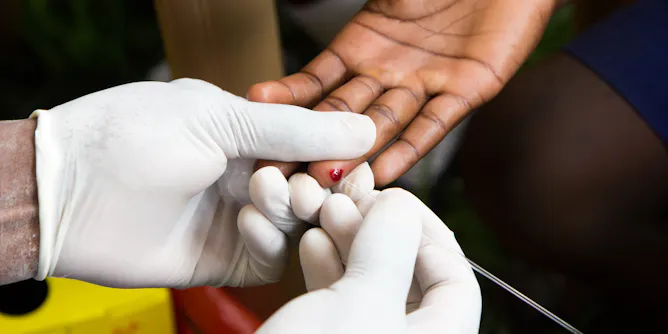
Knowing your HIV status is key to accessing life-saving treatment or evaluating the best prevention options.
Articles on World AIDS Day
Displaying 21 - 33 of 33 articles
HIV negative children born to women with HIV have a greater risk of dying before their first birthday.
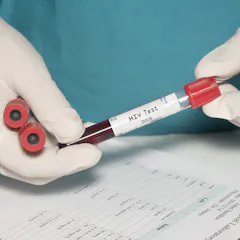
A liver transplant from an HIV-positive living donor to an HIV-negative recipient is possible, but there are still gaps in our knowledge.

Access to HIV testing is an important factor in reaching UN goals that 90% of people with HIV must know their status by 2020.

South Africa and Zimbabwe have made significant strides to roll out antiretrovirals. But the regional expansion of treatment programmes still needs work.
Stemming high HIV rates among adolescent girls and young women in sub-Saharan Africa has become a challenge due to the cycle of transmission.

Medical circumcision in settings where there are high rates of HIV will only be successful if these interventions take into account local beliefs about circumcision.
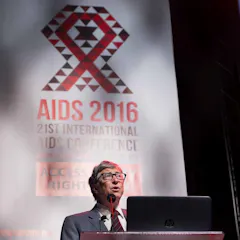
Bill Gates, who has been identified as the world’s most significant donor in the fight against AIDS, shares his thoughts on the pandemic with Africa’s most prominent HIV/AIDS academics.
Trials have shown that rates of HIV infection are reduced if people not infected with HIV take anti-retrovirals - known as pre-exposure prophylaxis (PrEP). But adherence to a daily dose is a problem.
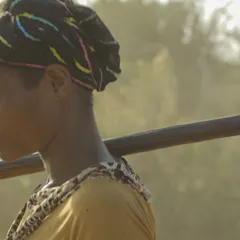
The stories of HIV positive women in Tanzania often go unheard outside the communities in which they live.
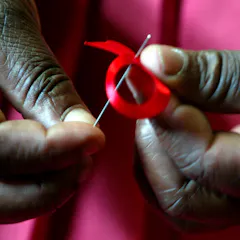
Women who were found to have lied in a clinical trial testing anti-HIV drugs were heavily criticised. But there are several factors that drove them to lie.
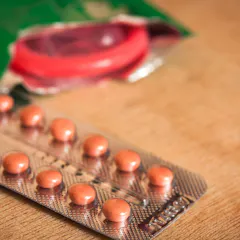
Scientists are developing various products that can provide contraception and protection from sexually transmitted infections and HIV at the same time.
Although men make up two-thirds of HIV-related deaths, there are not enough services geared towards helping them.
Top contributors
-

Professor of medicine and deputy director of the Desmond Tutu HIV Centre at the Institute of Infectious Disease and Molecular Medicine, University of Cape Town
-
Behavioural Scientist, Human Sciences Research Council
-
Health Systems Researcher, Makerere University
-
Executive Director of the Wits Reproductive Health and HIV Institute, University of the Witwatersrand
-
Senior lecturer in Paediatrics and Child Health, Stellenbosch University
-
Postdoctoral scientist, University of Heidelberg
-
Senior Scientist at CAPRISA, University of KwaZulu-Natal
-
Principal investigator, Kenya Medical Research Institute
-
Social scientist, MRC/UVRI Uganda Research Unit on AIDS
-
Reader (Associate Professor), University of the Witwatersrand
-
Honorary doctorate, Addis Ababa University
-
Senior Lecturer, Anthropology, University of the Witwatersrand, University of the Witwatersrand
-
Professor of Nursing and Health Research/ Associate Dean Research, University of Hull
-
Adjunct Associate Professor of Epidemiology, Columbia University
-
Head: Cell Biology, Centre for HIV and STIs, National Institute for Communicable Diseases