
Authors writing for Nature journals will also need to separate sex and gender data, so it can’t just be lumped in with other results.
Articles on Women in science
Displaying 21 - 40 of 141 articles

By surveying over 100 people in academic medicine, a researcher found that women are consistently excluded from important networking activities like watching sports, drinking at bars and playing golf.
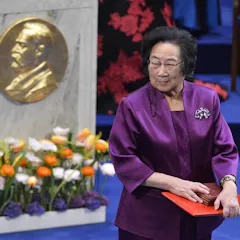
Discover the stories of five trailblazing women – Tharp, Nice, Tu, Noether and Wu – who worked in STEM during the 20th century.

The proportion of women in a discipline influences how rigorous and trustworthy people rate the field overall, as well as whether they categorize a STEM field as a ‘hard’ or ‘soft’ science.

Many scientists stuck at home during university closures dealt with increased domestic responsibilities. But some groups had it worse than others.

We spoke to 332 Year 3 students about what they want to be when they grow up. Some responses raised alarms.
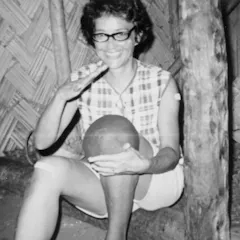
‘Wives’, volunteers, assistants: the vital contribution of women archaeologists has long been underplayed, if not erased. A new project uncovers trailblazers in the Pacific.
Science fields are improving at being more inclusive. But explicit and implicit barriers still hold women back from advancing in the same numbers as men to the upper reaches of STEM academia.
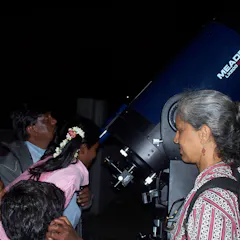
Excluding, silencing and discouraging so many brilliant minds carries a very heavy cost, not just to the women directly impacted, but to all of humanity.
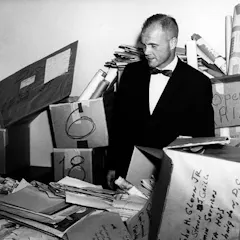
John Glenn would have turned 100 on July 18, 2021. Today’s space program is a giant leap more inclusive than when he made his pioneering orbit of the Earth in 1962.

One criticism of traditional mentoring is that it teaches people how to succeed by playing by existing rules, thus reinforcing the status quo. But mentoring can also be a force for change.
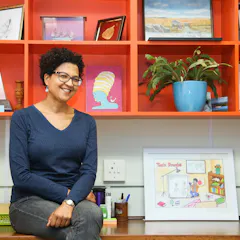
She believed and advocated that Africa needs to find solutions to its own problems and worked tirelessly to build biomedical engineering capacity across the continent.
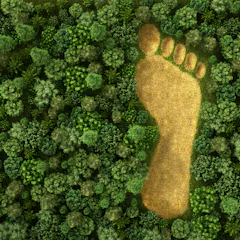
CC BY-NC-ND9.14 MB (download)
Ecology needs to be more inclusive of research from the global South and by women, to create a balanced view of the world.

Shakuntala Haraksingh Thilsted, a native of Trinidad and Tobago, is the winner of the 2021 World Food Prize for her work identifying small fish as valuable nutrition sources for developing countries.

Less than 30% of researchers worldwide are women. The biases and perceptions that keep women and girls out of STEM must be tackled.
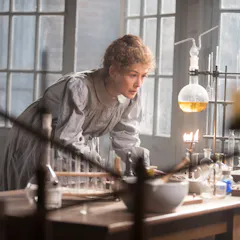
Marie Curie overcame innumerable obstacles, and in the process has become a role model. But does the latest film version of her life do her story justice?
Reasons why women’s voices are ignored in science reporting range from socio-cultural influences that inform gender norms, to perceptions of leadership and political power structures.

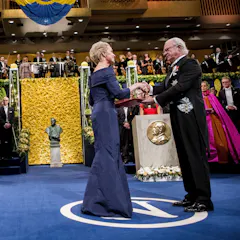
With 3% of science Nobels going to women and zero going to Black people, these awards are an extreme example of how certain demographics are underrepresented in STEM fields.
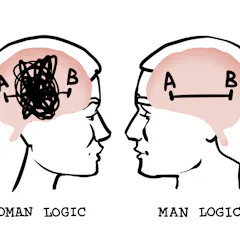
From having small brains to being better at reading, it is often argued that women aren’t well suited to do science.

Born on July 30, 1920, geologist and cartographer Tharp changed scientific thinking about what lay at the bottom of the ocean – not a featureless flat, but rugged and varied terrain.
Top contributors
-

Professor and Lincoln Professor of Ethics in Public Affairs, Arizona State University
-
Australia's Chief Scientist, Office of the Chief Scientist
-
Research Scientist, The University of Queensland
-
Professor of Mathematics, University of Sydney
-
Senior Instrument Scientist, Australian Nuclear Science and Technology Organisation
-
Pro Vice-Chancellor (Academic Innovation & Change), Professor of Astrophysics, Swinburne University of Technology
-
Professor Emeritus of Cognitive NeuroImaging, Aston University
-
Associate Professor, Interim Pro Vice Chancellor Learning and Teaching, Australian National University
-
Associate professor, University of Wollongong
-
Ph.D. Candidate in Psychology, Northwestern University
-
Associate Professor of Critical Media Practices and Digital Humanities, University of Colorado Boulder
-
Associate professor, University of Sydney
-
Professor and Deputy Vice-Chancellor (Research), University of Sydney
-
Associate Professor in Archaeology and Space Studies, Flinders University
-
Deputy Vice Chancellor Research & Innovation, Adelaide University