
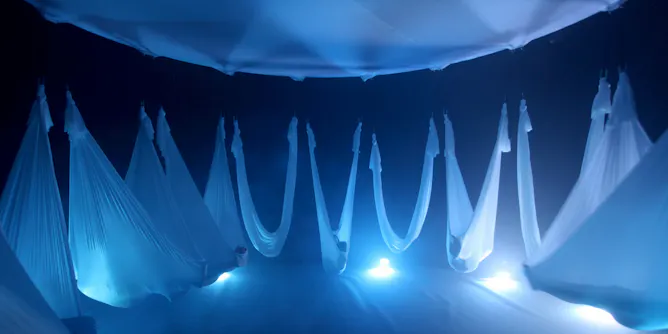
Science festivals are booming and with their mixture of music and art they are opening the field to a whole new audience who are keen to be amazed.
Articles on Women in science
Displaying 81 - 100 of 141 articles
There are many inspiring female computer scientists in and from Africa. They have the power to inspire young women who might think that computer science is ‘only for men’.
Female scientists publish more and better research but are promoted less. New research from Mexico exposes gender gap in science there, and across the globe.

Society, parents, schools and popular media all perpetuate the myth that girls don’t have the brains or ability to be scientists. Of course, that simply isn’t true.
There are many challenges for young women embarking on a career in science. Here are some tips for how to make it work.

Targets and initiatives are a start but both men and women already in the field need to offer a helping hand.

Letters from would-be girl astronauts in the 1960s tell part of the complicated story of sexism – in both NASA and the US at large – at the dawn of the space age.

Most people have a very limited understanding of what engineers do – and we engineers don’t do a good job of expanding that view. But if we did, the benefits could be impressive.

Men still outnumber women in senior positions in Australian universities and other workplaces. Women are pushing for change but it’s men who can help redress the gender balance.
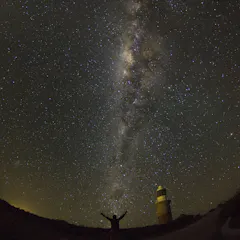
The drive the get more women involved in science should start at an early age. But as one space researcher found out, girls can get nudged out of science at school.

Attracting women to careers in science, technology, engineering and mathematics (STEM) is one issue, keeping them there is another.
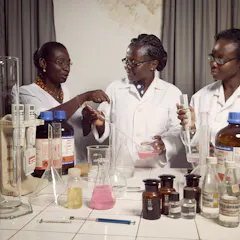
Getting more women into science, technology, engineering and maths fields is a process that involves many parts of a society. Several African countries are setting the pace.

How does one of the world’s most iconic science fiction television series depict women doing science?
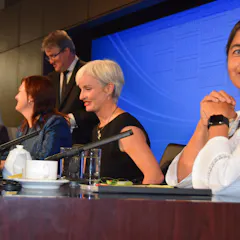
If we want a genuine ideas boom in Australia, then we need to remove the barriers preventing women from reaching the highest levels in science.
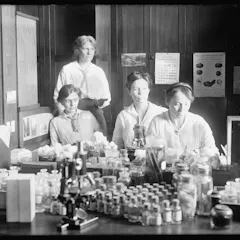
Women have come a long way in science, but plenty of work remains. After all, gender bias in science doesn’t happen in a vacuum.
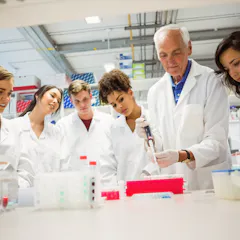
It’s fitting that on International Women’s Day we recognise the fact that greater diversity in science boosts research and its economic outcomes.

The push to bridge the gender gap and encourage more women and girls into a career in science gets the backing of the United Nations special day.

The public outing of a number of high profile scientists in sexual harassment cases shows the current system of protecting women isn’t working. But there is a solution.
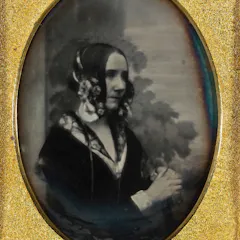
This extraordinary individual defied the constraints of her time and gave a remarkable and farseeing account of computation.
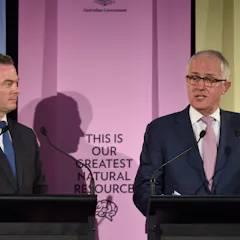
Prime Minister Malcolm Turnbull today announced the National Innovation and Science Agenda (NISA). Here’s what it means for science, commercialisation and industry in Australia.
Top contributors
-

Professor and Lincoln Professor of Ethics in Public Affairs, Arizona State University
-
Australia's Chief Scientist, Office of the Chief Scientist
-
Research Scientist, The University of Queensland
-
Professor of Mathematics, University of Sydney
-
Senior Instrument Scientist, Australian Nuclear Science and Technology Organisation
-
Pro Vice-Chancellor (Academic Innovation & Change), Professor of Astrophysics, Swinburne University of Technology
-
Professor Emeritus of Cognitive NeuroImaging, Aston University
-
Associate Professor, Interim Pro Vice Chancellor Learning and Teaching, Australian National University
-
Associate professor, University of Wollongong
-
Ph.D. Candidate in Psychology, Northwestern University
-
Associate Professor of Critical Media Practices and Digital Humanities, University of Colorado Boulder
-
Associate professor, University of Sydney
-
Professor and Deputy Vice-Chancellor (Research), University of Sydney
-
Associate Professor in Archaeology and Space Studies, Flinders University
-
Deputy Vice Chancellor Research & Innovation, Adelaide University