
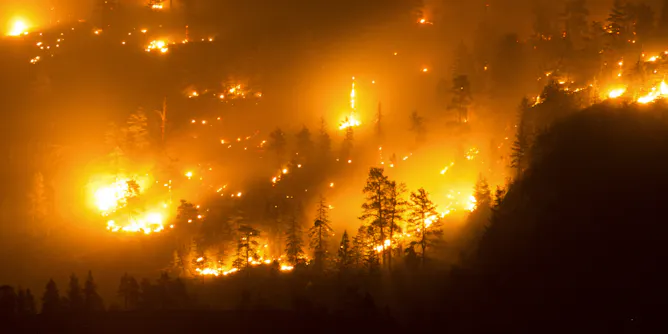
The wildfires of the past were as fierce, deadly and eerily similar to the ones we have today. And we have yet to learn to live with them.
Articles on Wildfires
Displaying 321 - 340 of 575 articles
The role of beavers in safeguarding against our heating climate has become an interesting point of discussion. But just how important remains subject to debate.

Millions of people around the world suffered through long-lasting heat waves and deadly flash flooding in the summer of 2022. A climate scientist explains the rising risks.

Whether it is the war in Ukraine or other devastating news, people find it hard to sustain their attention. A scholar who studies crisis fatigue explains why that is so and what we can do.
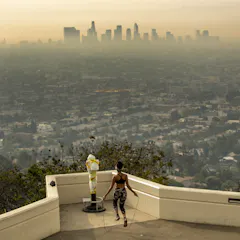
The worst effects are during high nighttime temperatures, something happening more often with climate change. Wildfire smoke adds to the risk.

Wildfires are intensifying, yet they’re one of the most poorly understood phenomena on Earth. New research shows that they can disturb both regional and global climate.

Telling people they have a flood risk rating of 10 is less powerful than explaining how much they’re likely to pay to deal with flooding over the next five years.
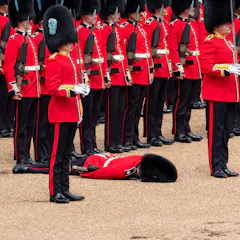
Global heating may be making the weather systems behind heatwaves more common in Europe.
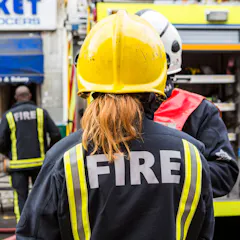
With extreme weather events becoming more common, the fire and rescue service will need to change its approach.
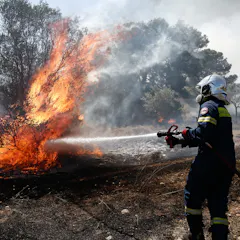
Hotter, drier summers risk making widlfires more like those of southern Europe.
The UK recorded blistering hot temperatures as the US and Europe also experienced sweltering heat waves.
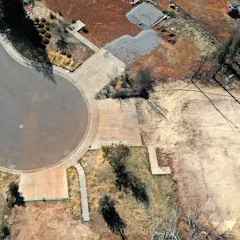
Managed retreat is already common in flood-prone areas, but what about in neighborhoods at high risk from wildfires? Here are four ways communities can pull back for safety.
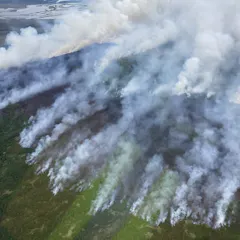
Fires today are hotter and more destructive, thanks in part to a warming climate.
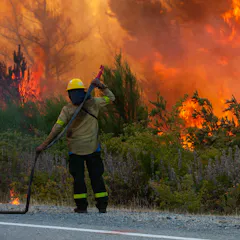
Climate change’s assault on the natural world may explain mystery methane emission surge.
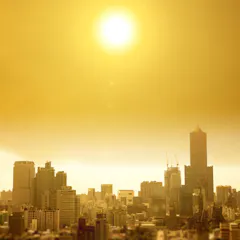
North America’s 2021 extreme heat event should compel governments to scale innovations from leading cities and countries to advance resilient, restorative and renewable cities.
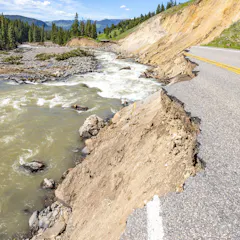
Extreme downpours brought deadly flooding to the Appalachian region, just a few weeks after the destructive Yellowstone River flood.
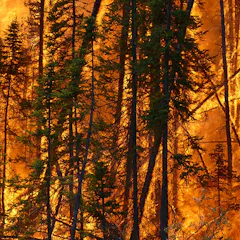
Fire weather reason – when wildfires are most likely to strike – has expanded almost everywhere.

Climate change has a clear link to rising foodborne illnesses. Blackouts during heat waves and wildfires are a growing part of the problem.
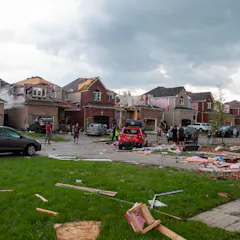
Engineers, architects and builders can design and construct affordable new buildings that can resist tornadoes, floods and wildfires, but do not. We have that opportunity now.
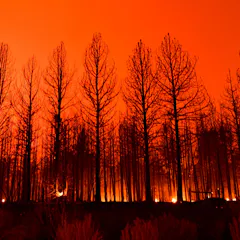
More carbon dioxide in the air doesn’t necessarily mean more growth for trees, and the increasing risk of wildfires and drought has major consequences, as an interactive map shows.
Top contributors
-

Professor of Pyrogeography and Fire Science, University of Tasmania
-
Associate Professor of Civil Engineering, Boise State University; United Nations University
-
Professor of Civil, Environmental and Ecological Engineering, Purdue University
-
Professor of Geography and Director of the Centre for Wildfire Research, Swansea University
-
Professor of Engineering, University of California, Merced
-
Assistant Professor of Environmental and Radiological Health Sciences, Colorado State University
-
Fellow, Queen's Institute for Energy and Environmental Policy, School of Policy Studies, Queen's University, Ontario
-
Tenured Scientist (IMB-CSIC, Spain) & Honorary Associate Prof. (SU, UK), Swansea University
-
Wildfire Specialist, University of California Cooperative Extension; Adjunct Professor at the Bren School, University of California at Santa Barbara, University of California, Santa Barbara
-
Emeritus Professor of Life Sciences, Arizona State University
-
Professor of Geology and Environmental Geosciences, University of Dayton
-
Professor, Disaster & Emergency Management, Faculty of Liberal Arts & Professional Studies & Director, CIFAL York, York University, Canada
-
Professor of Fire Ecology, University of Montana
-
Research Fellow in Environmental Science, University of Tasmania
-
Reader in Cultural Geography and Communication, University of Westminster