
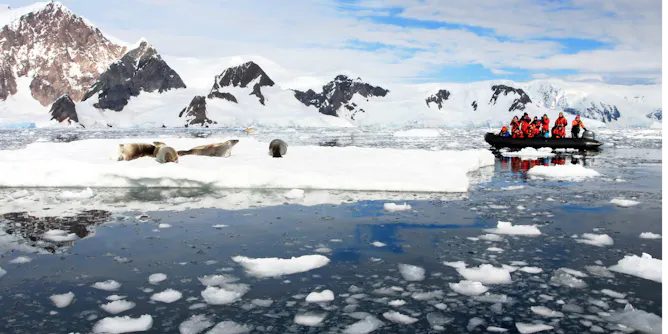
Over six months, 73,991 tourists visited the continent. The potential to spread coronavirus to penguins, whales and other wildlife is enormous.
Articles on Whales
Displaying 101 - 120 of 202 articles

Whales are rediscovering their old haunts in the Arctic and Southern oceans after centuries of hunting.
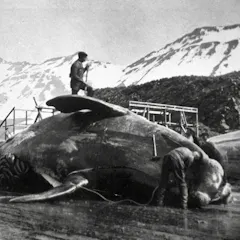
For 200 years, a small number of countries have exploited the marine wildlife of Antarctica, often with devastating impact on their populations.
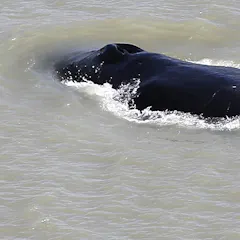
The strange appearance of three humpback whales in a Kakadu river threw up many questions – including whether they’d come out on top in a fight with a crocodile.
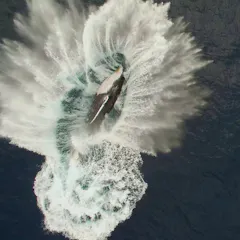
When humpback whales shift their distribution and behaviour, it can lead to unexpected human encounters and new challenges.
It’s time to listen to warnings from the people of the Pacific.
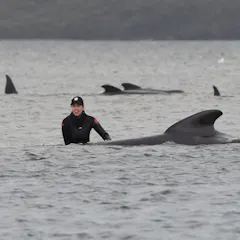
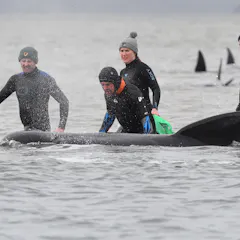
More than 450 long-finned pilot whales are stranded in Tasmania. Saving them is a race against time.

Whale breaches and tail slaps look great from a distance. But they can pose a threat if you want to get up close and swim with these giants of the ocean.
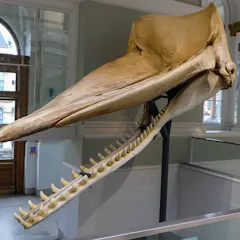
How we worked out when whales first evolved asymmetrical skulls.
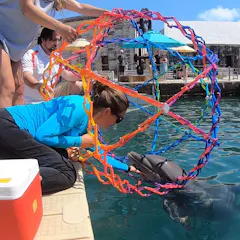
Wild dolphins are fast, smart and hard to study, but it is important to understand how human actions affect their health. So we are building a drone to sample hormones from the blowholes of dolphins.
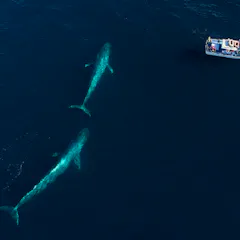
Some species, including blue whales, spend little time at the surface. So despite their overwhelming size, they can be hard to find and tough to study.

Icelandic whalers have killed more than 1,700 whales since a global ban was adopted in 1986 – up to 2019, when no hunts took place. Is Iceland quietly getting out of the business?

The long tusk of the male narwhal earned these whales their fanciful nickname. But there’s more to these Arctic mammals than their unique spiral tooth.
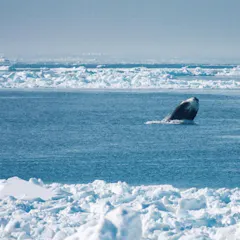
New research is uncovering that whales have their own distinct microbiomes that may play important roles in animal health. But how do scientists study whale microbiomes?

How did whales that feed on tiny prey evolve into the largest creatures on Earth? And why don’t they get even bigger?
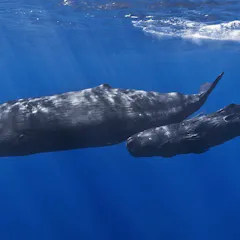
The Great Pacific Garbage Patch, a floating accumulation of rubbish the size of a continent, has whales and dolphins in its heart.
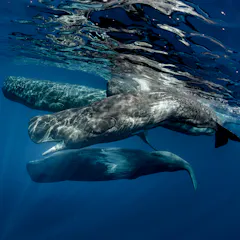
Do animals have their own culture? A researcher studying the culture of whales argues that they do. She says understanding that may be one way to save them from extinction.
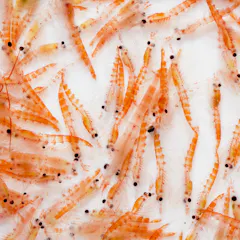
These small shrimp-like creatures are more than just whale food.
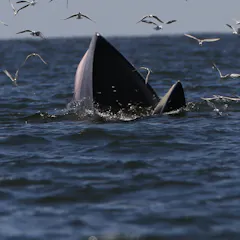
Dead whales usually sink, so most evidence of ‘ship strikes’ quickly disappears beneath the waves.
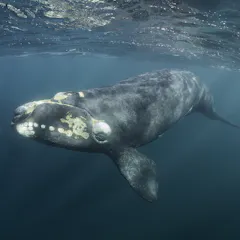
Scientists have used drones and 3D modelling to work out the weight of Earth’s largest mammals without killing them.
Top contributors
-

Whale Scientist and Lecturer, Faculty of Science and Engineering, Macquarie University
-
Research Fellow in Marine Science and Manager Whales & Climate Program, Griffith University
-
Curator of Vertebrates, Museum of New Zealand Te Papa Tongarewa
-
Adjunct Professor, Institute for Marine and Antarctic Studies, University of Tasmania
-
Professor Evolution & Ecology, UNSW
-
Reader in Biology, University of St Andrews
-
Honorary Professor at Bangor University; Director of Sea Watch Foundation, Bangor University
-
Adjunct Research Associate, Monash University
-
Senior Curator, Vertebrate Palaeontology, Museums Victoria Research Institute
-
Senior Researcher in Marine Biology, Aarhus University
-
Lecturer, UWA Oceans Institute, The University of Western Australia
-
Antarctic Law Researcher, Institute for Marine and Antarctic Studies and the Antarctic Climate and Ecosystems CRC, University of Tasmania
-
Associate Professor, School of Science, Edith Cowan University
-
Professor of Ocean Sciences, University of California, Santa Cruz
-
Lecturer in Ecology, Scotland's Rural College