
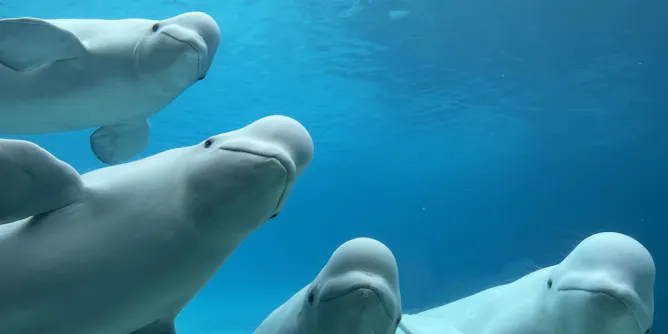
Sea sanctuaries could work well for some animals, but up to this point, only a handful of animals have lived in them.
Articles on Cetaceans
Displaying 1 - 20 of 37 articles
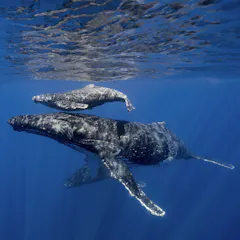
Our latest study takes a closer look at the emotional lives of humpback whales.
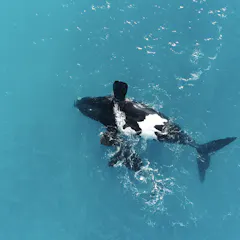
This behaviour is unique, rather perplexing and not reported in other large whales.
Chinese scientists have discovered hundreds of ancient whale carcasses deep in the Diamantina Zone off the coast of Western Australia.
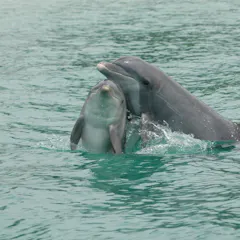
A database of sounds from a community of wild dolphins is proving to be a great resource for researchers studying dolphin communication.
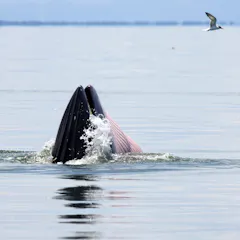
Biological matter left behind in the water allows us to follow these animals without ever setting eyes on them.

Whether capturing them on film, containing them in amusement parks, or subjecting them to scientific experiments, our curiosity about whales and dolphins has compelled us to capture them out of the ocean.
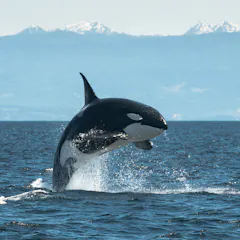
For the first time, orcas have been seen making and using tools out of seaweed. The reason? Most likely as a form of social grooming.
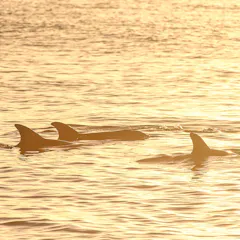
Studying the information contained in dolphin whistles is crucial for our understanding of threats to their survival.
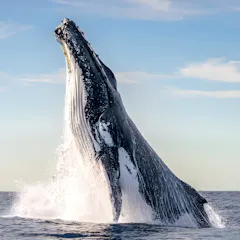
The findings are a window into the rich inner lives of whales – and allow us to check the health of the ocean.
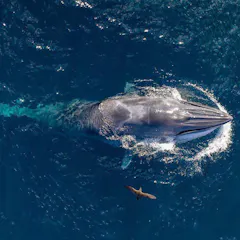
By tapping into observations of Bryde’s whale shared on social media, we found evidence of feeding and “surfing” behaviours possibly never documented before.
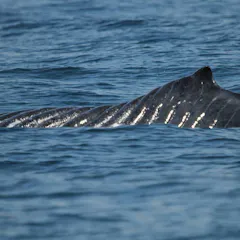
Recent sightings of Bladerunner the humpback and Split Fin the killer whale provide an opportunity to remind everyone to keep their distance and avoid collisions with majestic marine mammals.
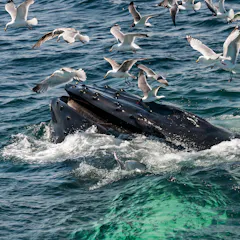
It’s certainly an exciting time to study communication in whales and dolphins.

A new treaty could help protect cetaceans in the Pacific, but more needs to be done internationally.
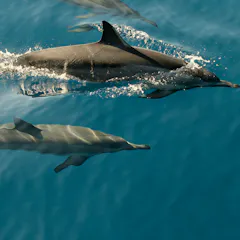
Let’s delve into the three super-senses of dolphins: magnetic perception, electrical perception and echolocation.

Researchers are finding alarming concentrations of persistent pollutants such as PFAS in Australian dolphins. These record-breaking levels are cause for concern.

The multi-billion-dollar whale-watching industry enables millions of people to see these magnificent creatures up close. But the noise made by so many boats is a threat to whales’ wellbeing.

Antarctic minke whales are elusive and hard to track – but a new study of their behaviour offers clues to their evolution and the limits of their filter-feeding behaviour.

A new acoustic recorder could track the movements of marine mammals more accurately.

Whale species at higher risk of predation from killer whales are more adversely affected by the sound of sonar.
Top contributors
-

Whale Scientist and Lecturer, Faculty of Science and Engineering, Macquarie University
-
Lecturer, UWA Oceans Institute, The University of Western Australia
-
Senior Researcher in Marine Biology, Aarhus University
-
Reader in Biology, University of St Andrews
-
Postdoctoral research fellow, Smithsonian Institution
-
Professor in Evolutionary Biology, College of Science and Engineering, Flinders University
-
University Research Fellow, University of Manchester
-
Professor of Neuroscience, University of Florida
-
Assistant Scientist, University of Florida
-
Assistant Professor, School of Energy, Geoscience, Infrastructure and Society // CEO MarFishEco Fisheries Consultant Ltd, Heriot-Watt University
-
Honorary Professor at Bangor University; Director of Sea Watch Foundation, Bangor University
-
Endowed Associate Professor in Whale Habitats, Oregon State University
-
Research Associate, UWA Oceans Institute, The University of Western Australia
-
Associate professor, Stony Brook University (The State University of New York)
-
Director of CORDIO in East Africa and Adjunct Fellow, Pwani University