

Hospitalisations and deaths attributed to COVID have dropped significantly since a peak in 2022. But a new variant could still reverse the trend quickly.
Articles on Wastewater surveillance
Displaying all articles
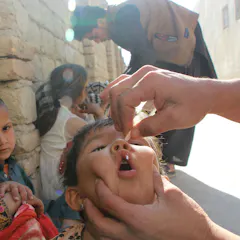
Herd immunity will protect people in those countries for now, but this is a concerning find.

Rather than winging it when an unusual health event crops up, health officials take a systematic approach. The goal is to quickly figure out what’s going on and squash any outbreak before it spreads.

Detecting infectious agents in sewage is only the first step. Researchers are working on developing reliable ways to translate surveillance measurements to case numbers and infection predictions.

We sampled sewage sludge from 13 wastewater treatment plants across three states. We found every resident adds microplastics to farmland, in dried sewage sludge (biosolids) used as fertiliser.

Nearly all the wastewater samples from aircraft arriving in the UK showed evidence of COVID-infected passengers on board.

Public health officials monitor sewage in local communities to track COVID, polio, flu and more. But no one asks the people being monitored for their permission – raising some questions and concerns.
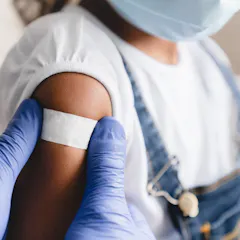
Polio cases in the US, UK and Israel remind us that this could also happen in Australia. Here’s what we should watch out for.
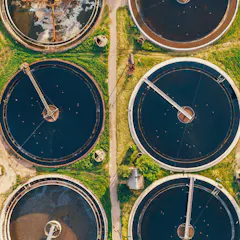
The clue is in your poo. Two experts explain the history and science behind wastewater surveillance.
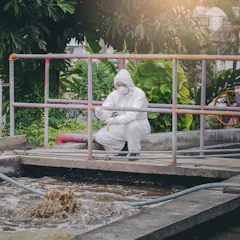
The COVID-19 pandemic has seen an increase in wastewater testing to monitor the spread of the virus. But historical cases show that targeted surveillance can further marginalize vulnerable populations.
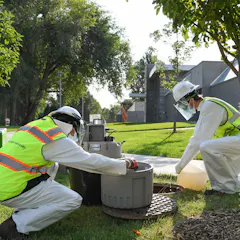
Over 800 sites across the US report coronavirus data from sewage to the CDC. Here’s how this kind of surveillance system works and what it can and can’t tell you.
Top contributors
-

Professor of Civil and Environmental Engineering, Michigan State University
-
Lecturer, Griffith University
-
Professor of Environmental Science, Griffith University
-
Associate Professor in Infectious Disease Modelling and Data Analytics, University of Bristol
-
Associate Professor of Civil and Environmental Engineering, Colorado State University
-
Assistant Professor, Geography, University of British Columbia
-
PhD Candidate, Geography, University of British Columbia
-
Associate Principal Research Fellow, Burnet Institute
-
Professor of Microbiology, Immunology and Pathology, Colorado State University
-
Professor of Soil and Environmental Science, Bangor University
-
Associate Professor of Medicine, University of Louisville
-
Associate Professor, London School of Hygiene & Tropical Medicine
-
Assistant Professor of Human Geography, Queen's University, Ontario
-
Environmental Virologist, School of Natural Sciences, Bangor University
-
Assistant Professor of Health Services Administration, Auburn University