

A study of 4.2 million people found a strong link between substance-use disorders and suicidal behaviour, with family patterns offering further clues.
Articles on Epidemiology
Displaying 1 - 20 of 243 articles

The next phase of the response must not be about deploying more people into communities simply to deliver interventions.

In the US and Sweden, there’s been a drop in the number of babies receiving the vitamin K injection. But Australia doesn’t collect national data.
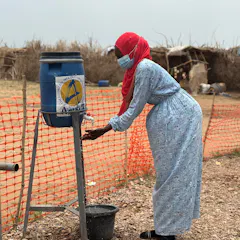
While cholera launched modern epidemiology and has nearly disappeared in many countries, the disease never went away. It has instead retreated to the places least equipped to fight it.

New mathematical modelling shows the first smallpox epidemic among Aboriginal people in the Sydney region may have spread thousands of kilometres and lasted decades.
Cancer deaths in the US have dropped steeply since 1991. But the medical and public health advances leading to these declines have been concentrated among high-income areas.

The Ebola outbreak in the DRC has the potential to become huge and of long duration.

Diseases once thought confined to history are making a comeback in Australia. And vaccination is only part of the story.
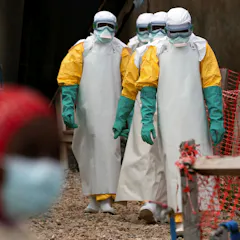
While other forms of Ebola can be prevented with a vaccine, none are currently available to prevent this rare strain.

Is hantavirus being transmitted from person to person? Here’s what investigators need to consider before making that call.
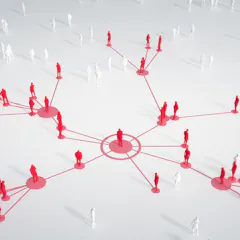
COVID models helped counter the virus but revealed less about the impacts of emergency measures. More sophisticated modelling can help balance those trade-offs.
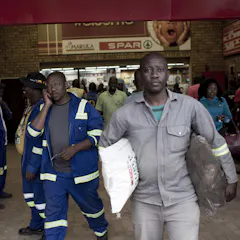
The modernisation of small towns, while positive economically, brings hidden health costs.

As we prepare for the festive season, it’s easy to let COVID boosters fall off our to-do lists. But COVID is still circulating and new shots are available.

If you see a health claim that seems too good – or too bad – to be true, take a moment to step back and assess the evidence.

The ways in which zombies are spawned − and contained − reflect a range of public health principles.

Public health calls many deaths ‘preventable,’ but that term can mask how policy, access and geography shape who gets care – and who doesn’t.

New research shows fast-food outlets and with few healthy food options was strongly linked to indicators of poorer health for both mother and baby.

As overall cancer rates in the US decline, childhood acute lymphocytic leukemia continues to rise.

These tests promise to show how much cellular ‘wear and tear’ your body has undergone, and how that corresponds with your age in years. Here’s what the science says.

The Epidemic Intelligence Service has been a crucial tool in fighting diseases at home and abroad. Its impact would be impossible to replace.
Top contributors
-

Associate Professor, Epidemiology, Deakin University
-
Professor of Biostatistics and Epidemiology, Adelaide University
-
Professor, School of Medicine, University of Connecticut
-
Professor in Mathematical Biology, The University of Melbourne
-
Chair in Epidemiology, Deakin University
-
Head of School of Population Health and Professor, Infectious Diseases Dynamics and Interventions, UNSW
-
Professor of Epidemiology, Population Interventions Unit, Centre for Epidemiology and Biostatistics, Melbourne School of Population and Global Health, The University of Melbourne
-
Professor of Public Health, American University
-
Professor and Chair of Epidemiology, University of Michigan
-
Research Assistant Professor of Epidemiology, University of Michigan
-
Assistant Professor of Infectious Diseases, University of Pittsburgh
-
Ph.D. Student in Microbiology and Immunology, Vanderbilt Vaccine Center, Vanderbilt University
-
Matthew Flinders Professor of Global Ecology and Node Leader in the ARC Centre of Excellence for Indigenous and Environmental Histories and Futures, Flinders University
-
Honorary Enterprise Professor, School of Population and Global Health, and Department of General Practice and Primary Care, The University of Melbourne
-
Professor of Global Biosecurity, NHMRC L3 Research Fellow, Head, Biosecurity Program, Kirby Institute, UNSW