
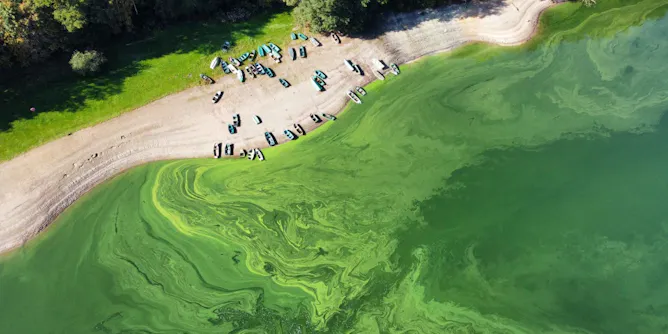
The small country of Luxembourg acts as a living laboratory where new water monitoring technologies can be tested at scale.
Articles on Wastewater monitoring
Displaying all articles
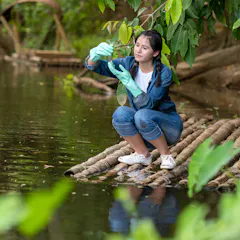
Antimicrobial resistance is hard to monitor because there’s no standard way to detect it. Here’s how it could be better identified in rivers, streams and seas.

Much like our gut microbes, the community of microbes used to process human waste must be healthy to do the job well. Monitoring the DNA in waste sludge can help us ensure the system stays healthy.

Nearly all the wastewater samples from aircraft arriving in the UK showed evidence of COVID-infected passengers on board.

Public health officials monitor sewage in local communities to track COVID, polio, flu and more. But no one asks the people being monitored for their permission – raising some questions and concerns.
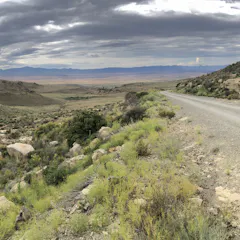
New regulations for protecting water resources during oil exploration are inadequate and should be reviewed.
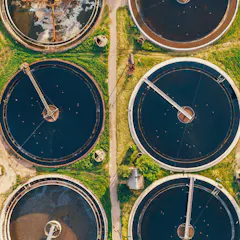
The clue is in your poo. Two experts explain the history and science behind wastewater surveillance.
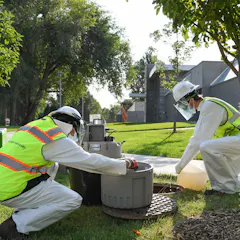
Over 800 sites across the US report coronavirus data from sewage to the CDC. Here’s how this kind of surveillance system works and what it can and can’t tell you.

If you live in an area where virus fragments have been found in wastewater samples, the most important thing to do is follow your state health department’s advice.
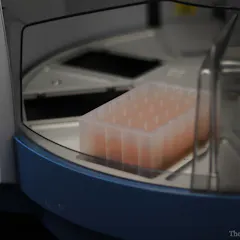
A community’s wastewater can predict coronavirus cases that haven’t yet been diagnosed. The quicker that information is known, the better.

Detection of a virus in wastewater implies the presence of infected people in a community. It’s not quite so simple though.
Top contributors
-

Associate Professor, Adelaide University
-
Associate Professor in Infectious Disease Modelling and Data Analytics, University of Bristol
-
Associate Professor, London School of Hygiene & Tropical Medicine
-
Associate Professor of Medicine, University of Louisville
-
Postdoctoral Research Associate in Pediatrics, University of California, San Diego
-
Professor of Soil and Environmental Science, Bangor University
-
Postoctoral Researcher, School of Science, RMIT University
-
Professor of Microbiology, Immunology and Pathology, Colorado State University
-
Associate professor, Clinical and Health Sciences, Adelaide University
-
Associate Professor of Civil and Environmental Engineering, Colorado State University
-
Professor of Pediatrics and Computer Science and Engineering, University of California, San Diego
-
Environmental Virologist, School of Natural Sciences, Bangor University
-
Lecturer in Bacteriology, University of Galway
-
Lead R&T Scientist, Luxembourg Institute of Science and Technology (LIST)
-
Associate Professor in the Centre for Environmental Management, University of the Free State