
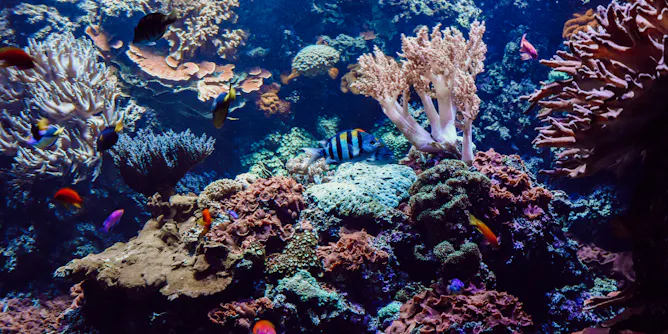
The Earth has already experienced three mass coral bleaching events over the last few decades, with a fourth happening now. Researchers are trying to find ways to make corals more adaptable to heat.
Articles on Warming seas
Displaying all articles
Floating seaweed can travel long distances to new territories and accumulate in large mats or wash ashore in huge quantities.
Reef corals grow vigorously in nutrient poor water – new research has found out why.

The scale of climate threat is beyond the tools we have to manage the Great Barrier Reef. New measures and sustained effort are needed.

How sea water circulates underneath Antarctic ice shelves is a vital missing link in climate change projections.

Climate change is changing Antarctic krill habitat. The repercussions for the Southern Ocean food web are huge.
New research is uncovering that whales have their own distinct microbiomes that may play important roles in animal health. But how do scientists study whale microbiomes?

A warming Earth could see invading species arrive in Antarctica via the floating “taxi service” of the sea. That could be a threat to the southern continent’s delicate ecosystem.
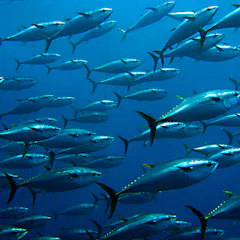
Over the past five years we’ve seen a significant increase in research on ocean acidification and warming seas, and their effect on marine life. Overall, unfortunately, the news is not good.
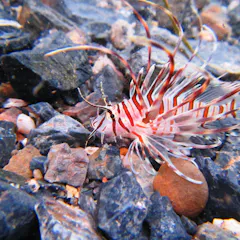
We know the warming seas are forcing some marine life to new waters, but we don’t know much about how fast and how far they are moving. But now you can help scientists find the answers with Redmap.
Top contributors
-

Professor, Marine Biology, Adelaide University
-
Research Fellow, University of Tasmania
-
Associate Professor in Environmental and Life Sciences, University of Newcastle
-
Professor, Institute for Marine and Antarctic Studies and Director of the Centre for Marine Socioecology, UTAS, University of Tasmania
-
Postdoctoral fellow, University of British Columbia
-
Professor in Marine Science, University of Otago
-
Associate Professor, Oceans Ice and Climate, University of Tasmania
-
Adjunct Principal Research Fellow, College of Science and Engineering, James Cook University
-
Associate Scientist of Marine Chemistry & Geochemistry, Woods Hole Oceanographic Institution
-
Professor of Marine Biology, James Cook University
-
PhD student , University of Tasmania
-
Professor of Biological Oceanography & Head of the Coral Reef Laboratory, University of Southampton
-
Associate Professor, Coral Reef Laboratory, University of Southampton
-
UNESCO Chair on Climate Change Variability of Natural and Cultural Heritage and Professor in Physics, James Cook University
-
Postdoctoral research fellow at Sorbonne University and University of Cape Town, University of Cape Town