

Myopia is a major risk factor for serious eye diseases. It has become epidemic among children, particularly because of their heavy use of electronic devices.
Articles on Vision
Displaying 81 - 100 of 138 articles
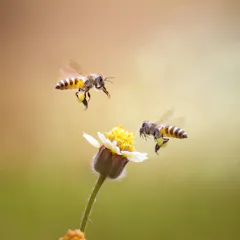
Bees need flowers to live, and we need bees to pollinate our crops. Understanding bee vision can help us better support our buzzy friends and the critical pollination services they provide.

As you age, your body deteriorates and your risk of disease and injury increases. Here’s a decade by decade guide to what you’re up against – and what you can do about it.

Your field of view is how much you can see without turning your head. When things are closer to us, they take up more of our field of view, which makes them look bigger.
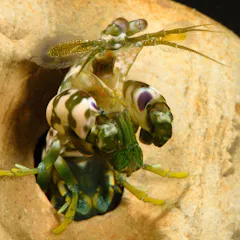
With superpowers other animals can only dream of, these crustaceans challenge sharks for the title of most amazing predator in the sea.
For roboticists looking to nature for inspiration on how animals see the world, there’s a tension between mimicking biology and capitalising on the advances in camera technology.

In an ant’s world, the smaller you get the less you can see. So how does that affect an ant’s ability to avoid hitting any obstacle as it walks about?

Some thought technology would make braille redundant – but the real threat is a lack of education and resources.

There are many people who are astonished to discover that their complete lack of ability to picture visual imagery is different from the norm.
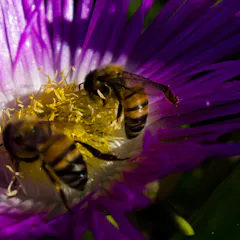
To learn about how humans, animals and insects experience vision illusions, we had to find a way to ask bees what they saw.
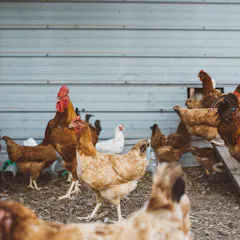
Chicken eyes are stranger than you think: they can look up and down at the same time.
People across the globe all see millions of distinct colors. But the terms we use to describe them vary across cultures. New cognitive science research suggests it’s about what we want to communicate.
The artificial vision provided by a bionic eye is not like natural sight, and takes a lot of getting used to.
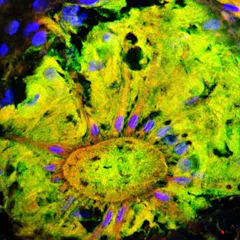
We’re used to thinking of our eyes detecting light as the foundation of our visual system. But what’s going on in other cells throughout the body that can detect light, too?
How we see the world depends on certain aspects of our personality.
Why are eyeglasses so expensive? You can thank two massive industry comglomerates, Luxottica and Essilor.
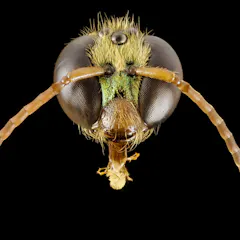
Nocturnal insects have eyes that act like cameras to enhance their light-gathering abilities.
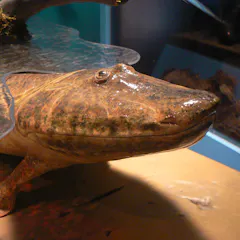
The first truly terrestrial animals evolved from ancient fishes that left the water for land. But what prompted to move has been a mystery.

New research shows pink cricket balls can be extra difficult to see in those crucial minutes when day turns to night during play.
Glaucoma is the sneak thief of sight, affecting the eyesight of more than 50 million people worldwide. It remains the biggest preventable cause of blindness today.
Top contributors
-

Professeur Titulaire. École d'optométrie. Expertise en santé oculaire et usage des lentilles cornéennes spécialisées, Université de Montréal
-
Postdoctoral Research Associate, Florida International University
-
Professor, School of Psychology, The University of Queensland
-
Technical Officer, Deakin University
-
Senior Research Scientist, South Australian Museum; Flinders University
-
Clinical Associate Lecturer, University of Sydney
-
Professor in Robotics, Queensland University of Technology
-
Professor of Biological Sciences, University of Maryland, Baltimore County
-
Associate Professor, Department of Physiology, Monash University
-
Senior Investigator at the National Eye Institute, Section on Perception, Cognition, and Action, National Institutes of Health
-
Lecturer, Faculty of Business, Sport and Enterprise, Southampton Solent University
-
Professor of Psychology, University of Washington
-
Professeur d’économie, Mines Paris - PSL
-
Associate Head of Education, University of Portsmouth
-
Professor of Visual Development, University of Bradford