
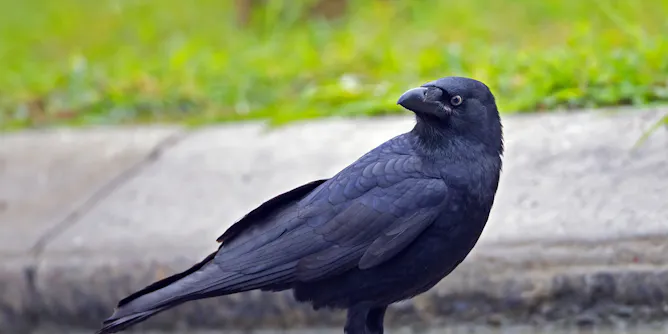
Why are our cities full of crows, ravens and rainbow lorikeets, while other species decline? The answer comes down to street smarts, adaptability, and sometimes plain bullying.
Articles on Urban wildlife
Displaying 81 - 91 of 91 articles
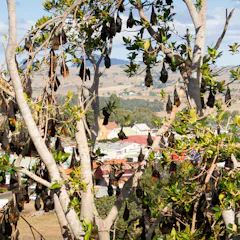
Flying-foxes can cause conflict - just ask the people of Batemans Bay, NSW. But plans to disperse them won’t necessarily work without understanding these highly mobile animals’ behaviour.
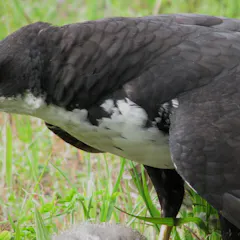
Urbanisation exposes wildlife to new man-made stresses which affect species in a variety of ways.
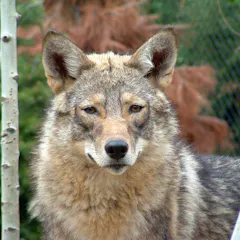
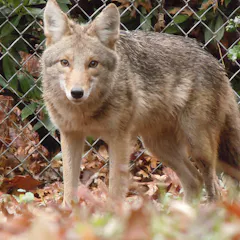
A wildlife biologist argues that the canid in eastern North America – known as the eastern coyote, or the coywolf by some – deserves to be classified as a separate species.
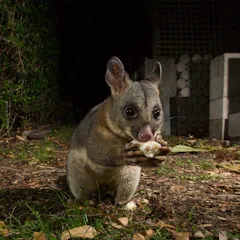
Grunting, growling, hissing, screeching: if your home is making these noises, you probably have possums.
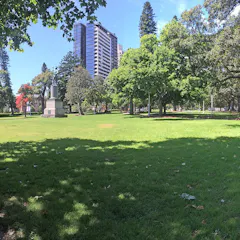
Nature is dispersed through our cities, even if we don’t notice it. And there’s abundant evidence that engaging with nature, even in urban settings, is good for us.
Many Americans move to rural areas to live near nature. But the mere presence of humans changes wildlife behavior in ways that may have ripple effects.

Have a look in your garden - you might be surprised at some of the native animals that thrive there when the weather’s hot.
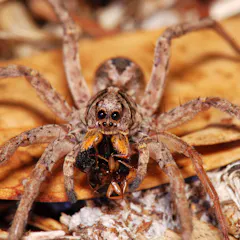
Only two Australian spiders can kill you, but the rest are a pretty fascinating bunch.
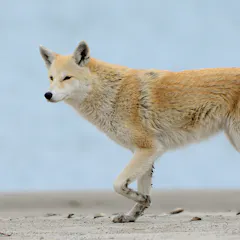
It’s an amazing evolution story happening in our backyards and forests – should this wily canid be called the eastern coyote a ‘coywolf’?
Urban wildlife is here to stay. Cities and their residents need better policies to coexist with the many animals making their homes in cities and suburbs.
Top contributors
-

Professor, Urban Ecology and Biodiversity, The University of Melbourne; RMIT University
-
University Fellow in Biodiversity, Charles Darwin University
-
Associate Professor & ARC Industry Fellow, Urban Ecology, Curtin University
-
Senior Lecturer, School of Agriculture, Food and Ecosystem Sciences, The University of Melbourne
-
Professor in Conservation Science, School of Ecosystem and Forest Science, The University of Melbourne
-
Research Fellow, Centre for Urban Research, RMIT University
-
Professor of Wildlife Conservation, Australian National University
-
Senior Research Fellow, RMIT University
-
Associate Research Professor of Wildlife Conservation, Penn State
-
Vice-Chancellor's Research Fellow, Centre for Urban Research, RMIT University
-
Assistant Professor, Faculty of Health Sciences; Senior Scientist, Pacific Institute on Pathogens, Pandemics and Society, Simon Fraser University
-
Professor, School of Life and Environmental Sciences, University of Sydney
-
Senior Lecturer in Conservation Ecology & Genetics, University of Cape Town
-
Adjunct Lecturer/ Ecologist, University of New England
-
Professor of Conservation Biology, Charles Darwin University