
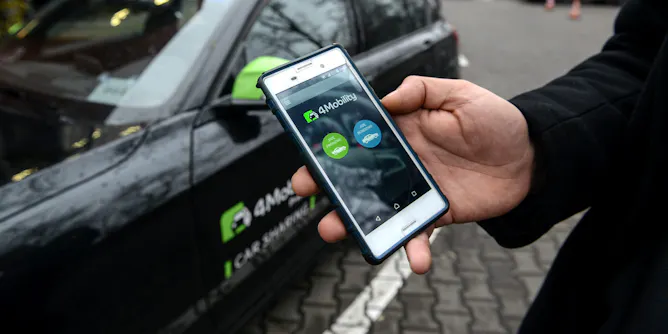
Investment is pouring into urban technology, much of it into innovative ventures that aim to transform how we get around our cities.
Articles on Urban transport
Displaying 61 - 80 of 101 articles
To cut emissions within the 12 years or so we have left to avoid disastrous global warming, we will need to change our old transport habits, using a combination of strategies to achieve this.
The city where the Kyoto Protocol was signed resolved some years ago to move away from cars and towards low-emission alternatives for getting around. And it’s making real progress towards that goal.

Blind belief that new technology and disruptive innovation will fix congestion in our cities overlooks the need for strong leadership that supports progressive policy innovation.

For 40 years the author has argued that trains and trams are better than buses. New ‘trackless trams’, which take innovations from high speed rail and put them in a bus, have changed his mind.
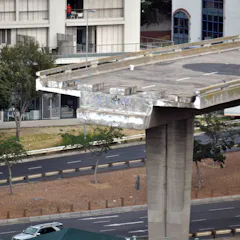
Various attempts have been made to complete Cape Town’s Foreshore Freeway scheme. A new approach is needed.
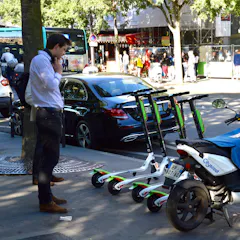
Shared electric scooters appeal as a way to cover that awkward distance between public transport stops and your destination. But first e-scooter operators must solve the littering and dumping problem.
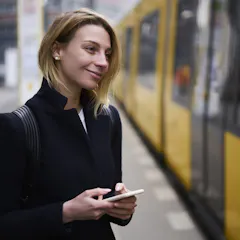
The UK pioneered smart cards such as Oyster. But now, experimentation is being stifled as cash-strapped councils struggle to deliver basic services.
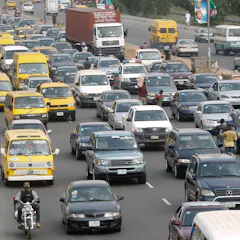
Old people in Nigeria’s cities can’t even rely on public transport.
It might not be effective now, but the development of self-driving vehicles could be a game changer for public transport services.
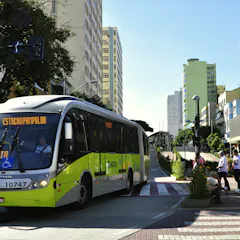
Trains and trams get most attention, but ‘tweaking’ bus transit can transform cities. Buses can be more cost-effective and deliver better service, especially for small to mid-sized cities.
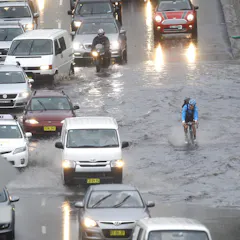
The relationship between weather and our travel choices is complicated. We can’t change the weather, but, with many other factors in play, good policy and design can reduce its impacts.
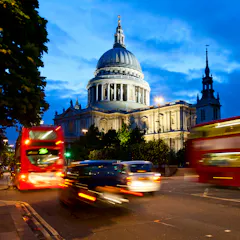
The congestion charge has helped to ease traffic and raise funds. But the rise of Uber and other private hire vehicles have raised unforeseen challenges.
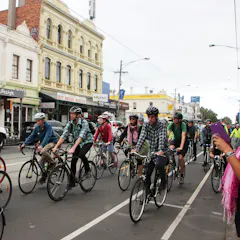
If the strategies we put in place to make cycling safer were taken up in earnest the result would often be chaos.
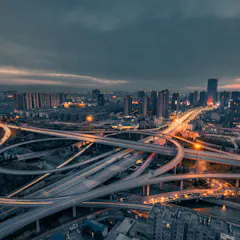
Choreographers could offer engineers tools to stimulate new ideas in city-making.
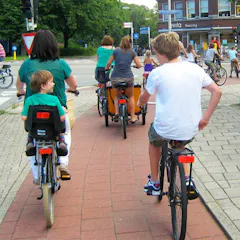
The evidence suggests a small investment in cycling infrastructure, combined with less punitive policing, would enable more Australians to escape daily traffic congestion.
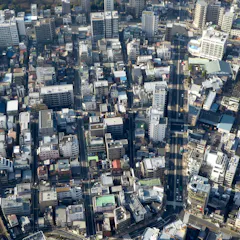
Tokyo has experienced extraordinary population growth but is among the world’s most liveable cities. Just how has it managed the pressures of growth?
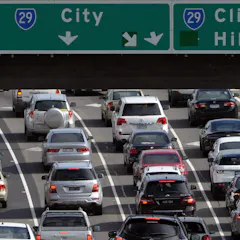
For Melbourne drivers who comfort themselves with the thought that traffic congestion is worse in Sydney, sorry but new analysis shows overall delays are similar, but some commutes are especially bad.

Estimated cost savings for rail and bus franchising from Infrastructure Australia and PwC will have government treasurers salivating. Problem is, the figures are almost certainly far too high.
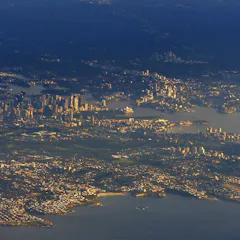
Justifying Sydney’s ranking as a liveable city requires greater recognition of the inequality of Sydneysiders’ access to jobs, wealth, transport and housing.
Top contributors
-

Honorary Professor of Planning, The University of Queensland
-
Professor of Sustainability, Curtin University
-
Professor of Transport Technology and Sustainability, Swinburne University of Technology
-
Adjunct Researcher, Cities Research Institute, Griffith University
-
Associate Professor in Urban Planning, The University of Queensland
-
Transport and Cities Program Director, Grattan Institute
-
Senior Research Fellow, Cities Research Institute, Griffith University
-
Adjunct Professor, Institute of Transport and Logistics Studies, University of Sydney Business School, University of Sydney
-
Assistant Professor, National Yang Ming Chiao Tung University, Taiwan, Griffith University
-
Adjunct professor, School of Media and Communications, RMIT University
-
Professor of City Planning and Transport, Curtin University
-
Honorary Senior Fellow in Transport Planning, The University of Melbourne
-
Associate Professor of Urban Planning, The University of Melbourne
-
Professor and Head of the School of Civil and Environmental Engineering, UNSW
-
Senior Research Fellow, Curtin University