
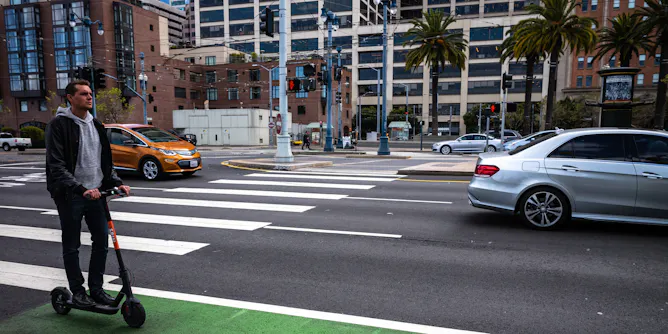
Over US$33 billion was invested in mobility tech last year in response to claims it will transform our lives. Based on what we have seen so far, which of these promised solutions will be delivered?
Articles on Urban transport
Displaying 41 - 60 of 101 articles
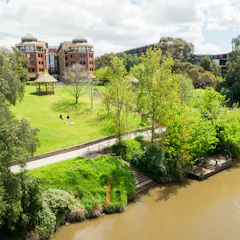
Only the inner suburbs of Melbourne and other capital cities meet the 20-minute neighbourhood test. But we could transform the other suburbs for much less than the cost of current transport projects.
A national consultation may (legally) bring e-scooters to UK cities.
Whether you like or hate them, the way transport operates in cities needs to change.
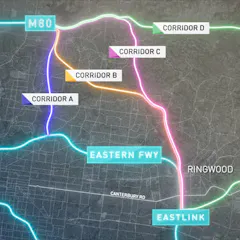
Transport modelling has been tarnished by its use to justify the predetermined projects politicians favour. But, if used more transparently, it’s a valuable tool for planning our future cities.
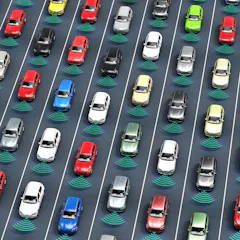
Self-driving vehicles that constantly roam the streets looking for passengers could overwhelm cities. But, if kept in check, these vehicles could be useful for improving urban transport.
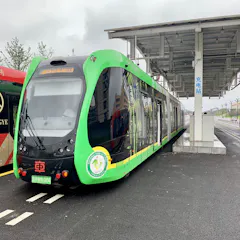
Installing light rail is costly, as Sydney has found, but it’s the gold standard for public transport along road corridors. What trackless trams can do is rapidly expand such services at low cost.

A breakdown in the road or rail systems often causes commuter chaos in Australia. Some overseas cities are more resilient because they have other options – and our bicycle network could give us that.
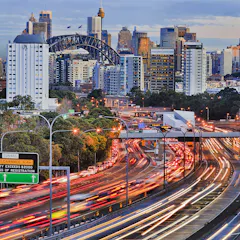
Commuters who drive to and from the CBD typically earn much more than most. Concerns about the fairness of charging drivers who use these busy roads at peak times are overblown.

Parcel and courier delivery vehicles are often blamed for traffic congestion in our cities. But they’re only a fraction of the traffic caused by tradespeople and other services.
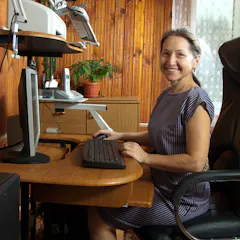
Two-thirds of surveyed workers work from home one day a week on average, but could do at least half their work out of the workplace. If they commuted less often, congestion could be greatly reduced.
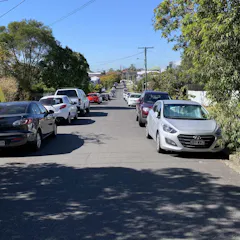
The global trend is to free up valuable city space by reducing parking and promoting other forms of transport that don’t clog roads and pollute the air. Australian cities are still putting cars first.
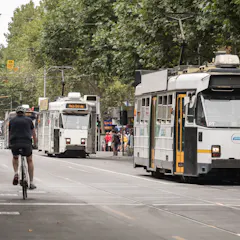
From Apple Music to Netflix, subscription services are on the rise. It’s time transport followed suit.
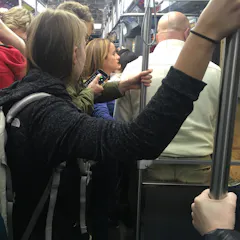
Traffic impact assessments required of major building developments mainly focus on the movement of cars, but these account for only 30-40% of trips by inner-city apartment dwellers.
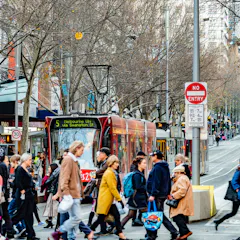
A newly released ten-year plan for Melbourne aims for fewer cars, safer streets and more shared spaces. A significant amount of parking and road space would be reallocated to walking and cycling.
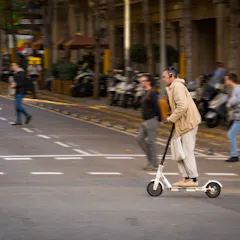
The exploding popularity of e-scooters has the potential to reshape transport in our cities. Regulators need to adapt their approaches to handle the new mobility service rather than ban it altogether.
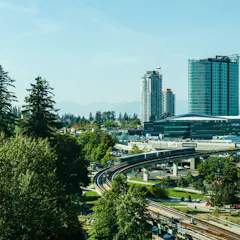
Instead of spending ever more on roads, we can learn from Vancouver’s use of congestion as a ‘friend’ in managing the development of transport networks and of the city itself.
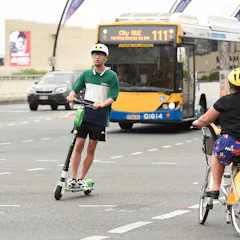
Researchers looking at Australia’s first trial of e-scooter sharing find the Brisbane public has embraced this mode of transport. They make five recommendations to deal with issues that have emerged.

Under 10 percent of new Citi Bike and Divvy bike docks are sited where residents suggested using interactive online maps, a new study shows. But that doesn’t mean city officials weren’t listening.
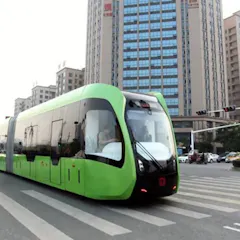
The autonomous rail rapid transit (ART) system developed in China might make buses sexy, but the technology alone won’t resolve the issues of road space and right of way in Australia.
Top contributors
-

Honorary Professor of Planning, The University of Queensland
-
Professor of Sustainability, Curtin University
-
Professor of Transport Technology and Sustainability, Swinburne University of Technology
-
Adjunct Researcher, Cities Research Institute, Griffith University
-
Associate Professor in Urban Planning, The University of Queensland
-
Transport and Cities Program Director, Grattan Institute
-
Senior Research Fellow, Cities Research Institute, Griffith University
-
Adjunct Professor, Institute of Transport and Logistics Studies, University of Sydney Business School, University of Sydney
-
Assistant Professor, National Yang Ming Chiao Tung University, Taiwan, Griffith University
-
Adjunct professor, School of Media and Communications, RMIT University
-
Professor of City Planning and Transport, Curtin University
-
Honorary Senior Fellow in Transport Planning, The University of Melbourne
-
Associate Professor of Urban Planning, The University of Melbourne
-
Professor and Head of the School of Civil and Environmental Engineering, UNSW
-
Senior Research Fellow, Curtin University