
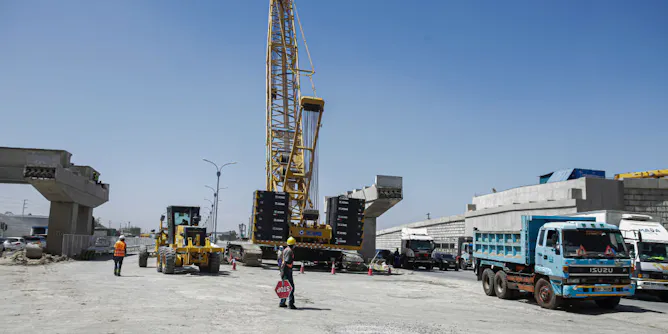
Chinese-funded infrastructure projects in African cities are driven by the national elites and therefore do not necessarily lead to community-level improvements.
Articles on Urban infrastructure
Displaying 1 - 20 of 96 articles

Sinkholes are fairly common in Philadelphia due to aging water lines that leak or burst, causing the surrounding soil to wash away.
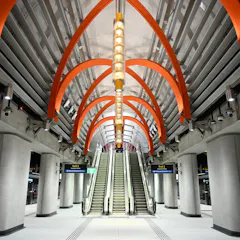
Melbourne’s rail network will feel the improvements immediately, but experience from Sydney and elsewhere shows changes in travel behaviour will take time.
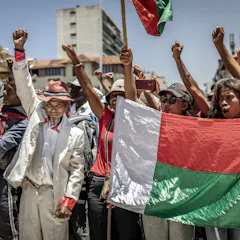
President Rajoelina’s large-scale infrastructure projects didn’t meet the needs of most Malagasy citizens.
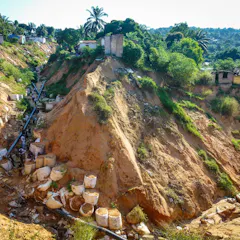
Urban planning can prevent gullies from forming, saving costly repairs and avoiding displacement of people.
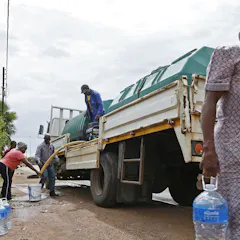
Many people feel unsafe in their homes, and when walking in their neighbourhood during the day or at night.

Climate change is contributing to larger rainfalls throughout Canada, and aging urban infrastructure is unable to keep up. Blue-green infrastructure updates can help to flood-proof cities.

Sanitation in Shanghai is not just about cleanliness but also power, culture and social norms.

Bridges are getting safer – but their designers need to keep up with the ever-growing size of cargo ships.

The Canadian federal government is pursuing the idea of “smart cities,” but in the wrong way.
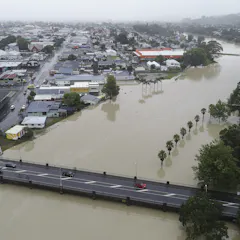
A new report sets out the practical ways New Zealand can improve its urban resilience to flooding due to climate change. But time, rather than money, is of the essence.
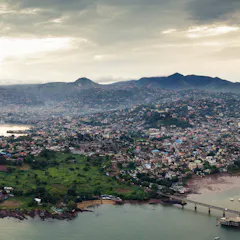
Freetown, the capital city of Sierra Leone, has a chief heat officer, the first in Africa. She has her work cut out for her.

important decisions must be made today for urban greening programs to succeed in a warmer world.
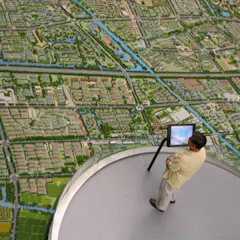
The pandemic has accelerated some urban trends and reversed others, while focusing attention on the vulnerabilities of cities. The old planning certainties will have to be revisited.
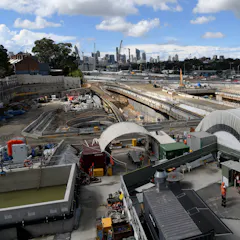
Three big firms win almost all the $1 billion-plus contracts. And they often team up in joint ventures, further reducing the competition that would keep the price tags of road and rail projects down.
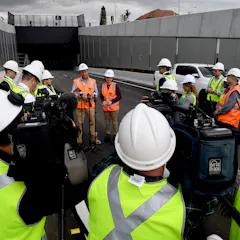
A review of all public road and rail projects worth $20 million or more and completed since 2001 reveals a 21% cost overrun. Worryingly, costs of bigger projects blew out more often and by more.

The states are primarily responsible for providing infrastructure, but lack the budgets, especially since the pandemic hit revenues. Making up the shortfall depends very much on the Commonwealth.

What was once the stuff of urban legends now spreads virally through social media claims the tunnels beneath our cities are used for child trafficking. The truth is both more mundane and important.

Investing more in cycling and walking would boost both physical and economic health, with a typical return of $5 for every $1 spent on cycling infrastructure.
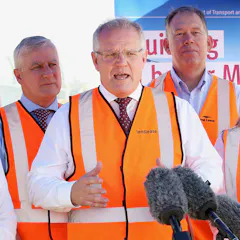
As well as an infrastructure spending boost, governments are fast-tracking approvals. But these processes exist for a reason. If we get projects wrong, we live with the consequences for decades.
Top contributors
-

Associate Professor of Urban Planning, The University of Melbourne
-
Transport and Cities Program Director, Grattan Institute
-
Professor of Urban Policy and Director, Urban Futures Enabling Impact Platform, RMIT University
-
Professor of Sustainability, Curtin University
-
Senior Associate, Disability Program, Grattan Institute
-
Associate, Grattan Institute
-
Senior Associate, Grattan Institute
-
Professor Sustainability and Urban Governance, RMIT University
-
Director, Centre for Western Sydney, Western Sydney University
-
Adjunct Professor, Institute of Transport and Logistics Studies, University of Sydney Business School, University of Sydney
-
Program Director, Housing and Economic Security, Grattan Institute
-
Professor of Housing Economics and Director, UK Collaborative Centre for Housing Evidence, University of Glasgow
-
Proprietor - Hale Consulting, The University of Melbourne
-
Collaborative Research Fellow, Sustainable Industries and Liveable Cities (ISILC), Victoria University
-
Lecturer, Australian Urban Design Research Centre, The University of Western Australia