
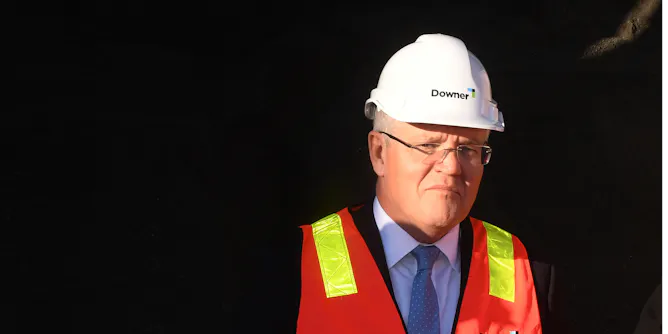
Smaller projects are better for delivering broad, long-term value to communities across the country, reducing inequality and cutting emissions, as well as quickly providing jobs and economic stimulus.
Articles on Urban infrastructure
Displaying 21 - 40 of 96 articles

After the ‘world’s biggest work-from-home experiment’, many people (and their employers) might decide they needn’t commute every day. If even a fraction do that, infrastructure needs will change.

States across Australia are increasingly using market-led proposals to build infrastructure. The emerging problems reflect the inherent risks of projects that bypass proper public planning processes.
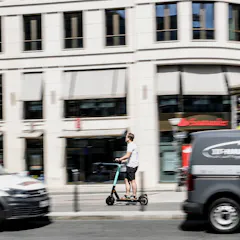
Whether you like or hate them, the way transport operates in cities needs to change.

Overseas, city-shaping mega-projects are generally overseen by local government, but in Australia state governments often step in and exclude council and community representatives from the process.
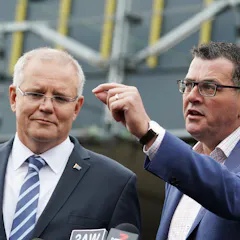
Unsolicited market proposals are not transparently assessed. Infrastructure should be built to serve the public interest, not shaped by its private backers, but the checks to ensure this are broken.
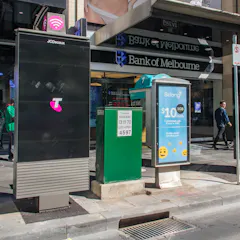
The new payphones have Wi-Fi, mobile charging and transport information. But city councils are concerned they’re digital billboards for Telstra, which could cost billions in lost productivity.

The more people come to a city, the more demand for buildings is amplified.This demand creates pressure from which a range of agencies, motivations and causes arise.

Companies have an opportunity to reframe brand communications from the promotion of conspicuous consumption to becoming a regenerative force in urban economies.
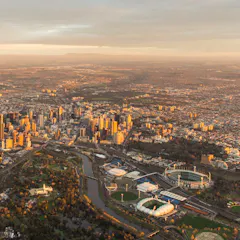
State and local governments can’t do much about the rapid population growth in Melbourne, but they can take steps to reduce the costs of growing disparities between the outer suburbs and inner city.
The major parties are promising tens of billions of dollars in transport spending, but only a handful of projects are on Infrastructure Australia’s national priority list with approved business cases.
The major parties are promising projects costing tens of billions of dollars, with a surprisingly large overlap between them. Yet only two have been endorsed by infrastructure authorities.

If we recognised social housing as infrastructure as essential as transport links, schools and hospitals, not properly investing in it could become unthinkable.

An increase in the use of self-driving cars will change parking infrastructure in cities, and hopefully result in more colourful character neighbourhoods.

Urbanisation is the main reason for rising temperatures and water pollution, but receives little attention in discussions about the health of water streams, reefs and oceans.
In the election bidding wars, parties commit billions to transport projects, often before all the work needed to justify these has been done. More cost-effective alternatives hardly get a look-in.
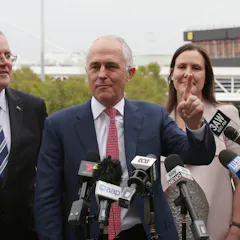
Billions of taxpayer dollars are committed before all the evidence for, and against, infrastructure projects is in. As well as missing business cases, basic rules of economic modelling are broken.

TfL’s money troubles worsen, as passenger numbers fall for the first time in two decades.

The risk of urban flooding is rising. Overall, residents and municipalities are ill prepared, but there are steps homeowners can take to protect themselves.
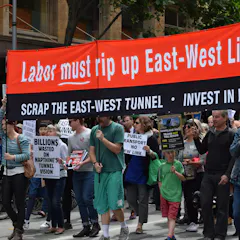
Transport infrastructure has such an impact on what kind of city we become that more democratic planning is long overdue. But public consultation is typically limited and focused on design issues.
Top contributors
-

Associate Professor of Urban Planning, The University of Melbourne
-
Transport and Cities Program Director, Grattan Institute
-
Professor of Urban Policy and Director, Urban Futures Enabling Impact Platform, RMIT University
-
Professor of Sustainability, Curtin University
-
Senior Associate, Disability Program, Grattan Institute
-
Associate, Grattan Institute
-
Senior Associate, Grattan Institute
-
Professor Sustainability and Urban Governance, RMIT University
-
Director, Centre for Western Sydney, Western Sydney University
-
Adjunct Professor, Institute of Transport and Logistics Studies, University of Sydney Business School, University of Sydney
-
Program Director, Housing and Economic Security, Grattan Institute
-
Professor of Housing Economics and Director, UK Collaborative Centre for Housing Evidence, University of Glasgow
-
Proprietor - Hale Consulting, The University of Melbourne
-
Collaborative Research Fellow, Sustainable Industries and Liveable Cities (ISILC), Victoria University
-
Lecturer, Australian Urban Design Research Centre, The University of Western Australia