

What’s happening in Afghanistan is not simply gender discrimination; rather, it’s pushing an entire gender out of public systems altogether in a policy of gender apartheid by the ruling Taliban.
Articles on UNICEF
Displaying 1 - 20 of 47 articles
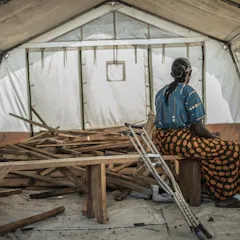
Investigators are increasingly using technology and user-generated content to help identify and persecute perpetrators of sexual violence in conflict zone.

Child soldiers are victims, not villains. This is why children in conflict zones must be protected.

The key to the for-profit company’s successful partnership with governments, international agencies and humanitarian, nongovernmental organizations is how it handled its patent.
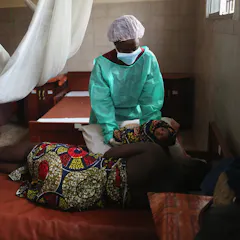
Breastfeeding mothers and their babies have largely been neglected in Ebola research. This needs to change.

Vaccinating public village leaders or respected older community members might be an effective approach to increasing vaccine uptake.
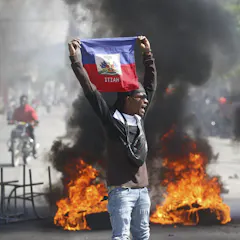
Haiti will be able to emerge from the crisis it is in if it has a strong public administration and co-ordinated international aid from countries that respect human rights.
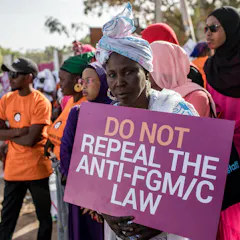
The potential repeal of the ban on female genital mutilation poses a threat to the well-being of girls in The Gambia.

Over one million Canadian children live in poverty. Child poverty is a pernicious childhood adversity that has detrimental long-term impacts on health, development and well-being throughout life.

Nigerians lack access to safe water, sanitation and hygiene facilities despite investment in these areas. Procurement law contributes to this inadvertently.
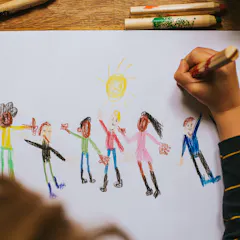
A new law intended to strengthen oversight of Oranga Tamariki and other agencies tasked to protect children has the potential to do the opposite.
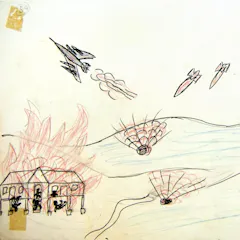
Their drawings and paintings often express a mix of horror, fear, hope and beauty.

The new EU regulation is about to change the way we do artificial intelligence. The United Nations needs to follow suit.
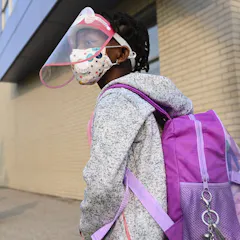
The COVID-19 pandemic risks making Canada’s already woeful record on child welfare worse. To safeguard a future for our children, governments must prioritize their care.

With UNICEF ranking New Zealand 35th out of 41 rich countries for children’s well-being, the gap between rhetoric and reality is wider than ever.
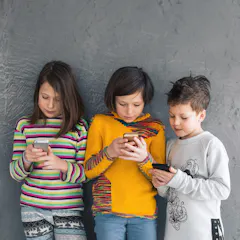
In our increasingly datafied world, there is a clear need to develop and disseminate responsible approaches for handling data for and about children.
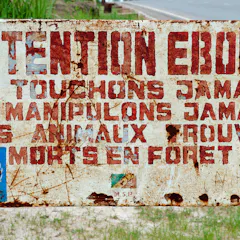
The biggest lesson has been that controlling a disease outbreak like Ebola is impossible without community trust and engagement.

The Khamas have dominated Botswana’s politics since the 1870s, but they are now a discredited, spent force.

Research shows that abuse, violence and poor relationships in families may have dire consequences for society, and specifically children.
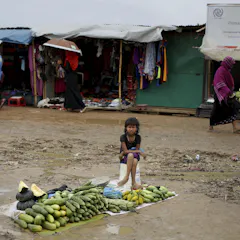
An estimated 500,000 Rohingya children, refugees from Myanmar, are growing up in Bangladesh in overcrowded camps with no access to formal education.
Top contributors
-

Professor of Law, University of Waikato
-
Post-doctoral Researcher, London School of Economics and Political Science
-
Director, Program Management and Research Operations of the Center for Social Well-Being and Development, Milken Institute School of Public Health, George Washington University
-
Distinguished Professor of Energy and the Environment, University of Delaware (USA); Honorary Professor, The University of Queensland
-
Professor of Development Economics, Monash University
-
Professor of Paediatrics and Child Health, University of Sydney
-
Research Scientist, African Population and Health Research Center
-
Professor of Psychiatry, Monash University
-
Director of Research, Australian Paediatric Surveillance Unit and Associate Professor Discipline of Child and Adolescent Health, University of Sydney
-
Researcher, Department of Social Policy & Social Work, University of York
-
Policy Officer, Young Lives Study, University of Oxford
-
Senior Research Fellow, Horn of Africa and Southern Africa, Institute of Commonwealth Studies, School of Advanced Study, University of London
-
Honorary Fellow, Department of Geography and Planning, Macquarie University
-
Assistant Professor of Anthropology, University of North Carolina – Charlotte
-
Associate Professor in the Milken Institute School of Public Health, Department of Anthropology, and Elliott School of International Affairs at the George Washington University, and Director of both the Avance Center for the Advancement of Immigrant/Refug, George Washington University