
Users shouldn’t trust Facebook, but that doesn’t mean they should immediately abandon what has become a crucial platform for connectedness.
Articles on Uber
Displaying 121 - 140 of 229 articles
Companies developing autonomous vehicles are missing out on the local knowledge and values of the people who live where these cars are tested. And that lack of engagement sets up bigger problems.
Elaine Herzberg’s death will provide the impetus for clearer liability rules for self-driving cars. Australia is wise to adopt a wait-and-watch approach and maintain its human-first orientation.
Sensors that monitor everything a self-driving vehicle does can help determine who is responsible in the case of an accident – the manufacturer, the service centre or the vehicle owner.
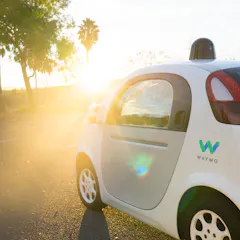
Uber, Tesla and Waymo (Google) are leapfrogging traditional car makers like Ford, VW and General Motors when it comes to self-driving cars.
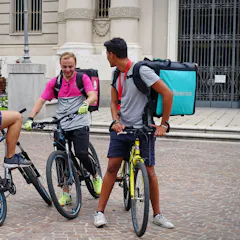
Many gig workers are classified as independent contractors, leaving them without minimum wages and other workplace protections. Creating a new category of worker could fix that.

The digital economy has created millions of jobs that involve intense competition, unregulated working conditions and extremely low rates of pay.

Data ethics should pay much more attention to the social value of research

Uber has admitted that the 2016 data breach puts at risk the personal information of 57 million users.
It’s going to be difficult for UK government-backed autonomous vehicle projects to compete with Silicon Valley – unless they have something neat under the bonnet.
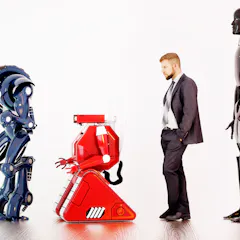
Jobs are not created or lost because of a single technology, but because of the business models designed to leverage the power of it.

Millions of Americans rely on public transit to get to school, work or stores, but many can’t get the service they need. ‘Uberizing’ transit by offering more options on demand could fill the gaps.

Rules are made to be broken. Innovation stalls when you don’t follow that simple maxim.

Using ride-hailing services full-time would mean avoiding the hassles of owning a car. But it could cost less, too – depending on how you value your time otherwise spent behind the wheel.

Uber’s business model suggests something has to give – either its imperial ambitions or its presence in markets which hold it to account.

Using technology and rhetoric, ride-hailing companies manage to dictate drivers while simultaneously creating the illusion of equal relation.
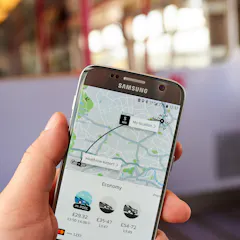
A rebellion against the technology which triggered the industrial revolution changed the way we understand technology.
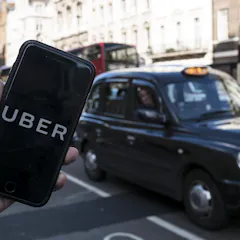
Why Uber needs to address the values that are embedded in its technological success.

How the ride-sharing company responds to a licence refusal in the UK capital will show if its culture has genuinely changed.

Economic inequality and distrust in government is causing outbreaks of violence on South Africa’s streets.
Top contributors
-

Professor of Practice, Associate Dean, Warwick Business School, University of Warwick
-
Associate Professor UTS Centre for Business and Social Innovation, University of Technology Sydney
-
Affiliate Researcher, Work and Organisational Studies, University of Sydney
-
Associate professor, University of Sydney
-
Honorary Professor of Planning, The University of Queensland
-
Senior Lecturer, Management and Organisations, UWA Business School, The University of Western Australia
-
Professor. Durham University Business School, Durham University
-
Senior lecturer, University of the Witwatersrand
-
Senior Lecturer, Management and Organisations, The University of Western Australia
-
Associate Professor, School for the Future of Innovation in Society and The Polytechnic School; Co-Director Center for Smart Cities and Regions, Arizona State University
-
Laurie Carmichael Distinguished Research Fellow at the Centre for Future Work, Melbourne; and Professor Emeritus, Griffith Business School, Griffith University
-
Professor of Law, University of Oregon
-
Professor of Marketing, The University of Melbourne
-
Senior Research Associate in Media and Communications, University of Sydney
-
Professor of Economics, University of Canberra