
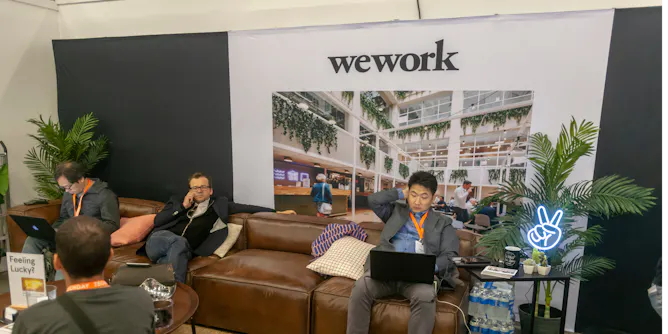
Adam Neumann both controlled and managed the co-working company he founded in 2011. A finance scholar explains why that can be a serious problem in venture capital-backed startups.
Articles on Uber
Displaying 81 - 100 of 229 articles
WeWork’s uncertain future reflects how investors have wised up to the hype around Silicon Valley start ups.

Recent revelations about the lack of privacy protections in place at the companies on Libra’s foundation raise concerns about how much trust users can place in Facebook’s new cryptocurrency.

New technologies and services aren’t creating irreversible damage, even though they do generate some harms. Preemptive bans would stifle innovation and block potential solutions to real problems.
Unions should move their focus away from traditional collective bargaining and instead embrace new ways to attract new members, such as by offering discounted benefits and engaging in more advocacy.

A growing number of jobs are becoming less stable, with fewer benefits and stagnating wages. This is taking a significant toll on the psychological health of workers.

Uber’s expansion has become a global epic with regional episodes, but the legal conflict in Argentina has even higher stakes.

We go back to the basics and look at what Libra is, how it compares to other cryptocurrencies and whether you should be concerned about using it when it eventually arrives.

Tech giants like Facebook are at risk of joining the ranks of Compuserve and MCI Mail to be replaced with the next generation of organizing designed for new models of distributed trust.

As a researcher in unmanned aerial systems, I was asked recently if I would ride on an Uber Air taxi. After a brief ponder, my answer is “yes”.
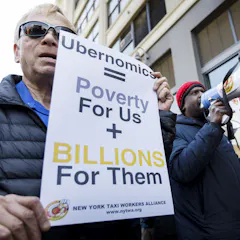
Many Uber drivers do their job because the alternatives are worse. It’s an unhappy work choice faced by an increasing number of Australians.
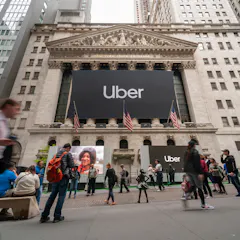
Astronomic valuations for non-profitable companies are popular in Silicon Valley but how are they calculated and what do they reflect?
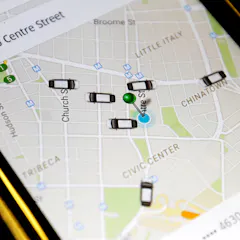
Uber’s IPO will value the company at more than $80 billion, yet the data it collects on its users may be worth even more – and creates the potential for dangerous manipulation.
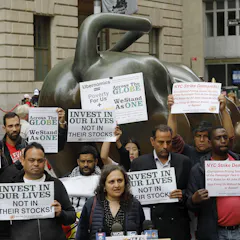
The Uber driver walkout raises questions about how workers can fight for better pay and benefits in the age of the gig economy – a topic frequently on the minds of Conversation scholars.

Drivers for Uber, one of the most successful companies in the gig economy are set to strike by turning their apps off for one day this week as their company prepares for its IPO.

One of Uber’s selling points is that a driver is always available to pick up a rider within minutes. But the drivers who make this possible aren’t being compensated for the time they spend waiting.

Government regulators and industry experts often overlook the complexities and risks of human-technology interactions and increasingly rely on companies’ voluntary oversight and self-assessments.
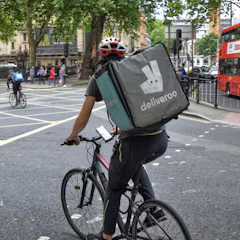
The tensions between platforms and their workers can be better understood by studying the mutual expectations of both parties.

The sharing economy is often romanticised as a shift away from the evils of capitalism to a more communal and socially conscious way of life. But is this simply clever marketing?

There are a lot of similarities between the state of tech companies today and when the 2000 dot-com bubble burst.
Top contributors
-

Professor of Practice, Associate Dean, Warwick Business School, University of Warwick
-
Associate Professor UTS Centre for Business and Social Innovation, University of Technology Sydney
-
Affiliate Researcher, Work and Organisational Studies, University of Sydney
-
Associate professor, University of Sydney
-
Honorary Professor of Planning, The University of Queensland
-
Senior Lecturer, Management and Organisations, UWA Business School, The University of Western Australia
-
Professor. Durham University Business School, Durham University
-
Senior lecturer, University of the Witwatersrand
-
Senior Lecturer, Management and Organisations, The University of Western Australia
-
Associate Professor, School for the Future of Innovation in Society and The Polytechnic School; Co-Director Center for Smart Cities and Regions, Arizona State University
-
Laurie Carmichael Distinguished Research Fellow at the Centre for Future Work, Melbourne; and Professor Emeritus, Griffith Business School, Griffith University
-
Professor of Law, University of Oregon
-
Professor of Marketing, The University of Melbourne
-
Senior Research Associate in Media and Communications, University of Sydney
-
Professor of Economics, University of Canberra