
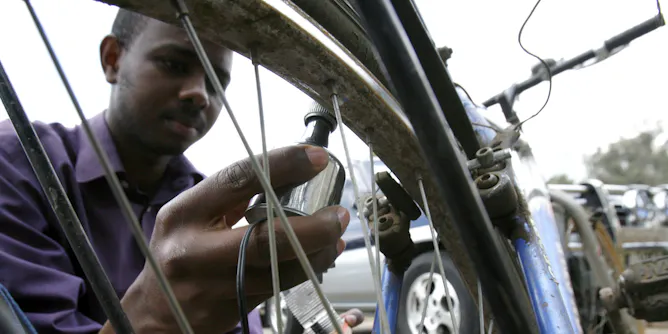
An advocate for the power of innovation to improve the world offers some cautions.
Articles on Uber
Displaying 201 - 220 of 229 articles
Time to stop trying to make disruptive technology businesses like Uber tow the line, and instead create the right conditions for all businesses to embrace innovation.

Labor’s sharing economy guidelines should help make for a more nuanced debate about the collaborative economy.
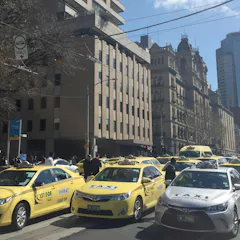
Whatever happens to Uber’s legal status in Australia, it’s likely consumers will be the eventual winners.

Two visions of the ‘new economy’, one based on environmental and social justice values, the other on disruptive technologies, are coming together to challenge the status quo.

The economist Frédéric Bastiat didn’t experience the “sharing economy,” but he knew the ludicrousness of wailing against a “foreign technology.”

The most radical reinvention of work since the rise of industrialization is upon us, as more of us drift toward app-enabled self-employment.

There’s a global race on to harness mapping technology, delivering companies the data they need to gain a competitive advantage.
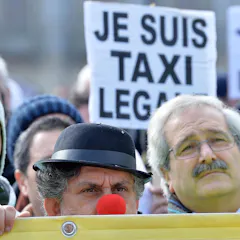
Democratising the sharing economy might reduce profits but it would probably benefit people and the environment more.

As our ever-increasing use of services like Uber, Lyft and AirBnB show, it’s safe to trust other Americans. Time for hitchhking to make a comeback.

Uber is in a global fight to win a regulatory environment favourable to its business model. It could go one of two ways.

Australians are used to casual work, but there’s not yet any evidence the gig economy is taking off.
The NSW Taxi Council says ridesharing platforms like uberX are no safer than hitchhiking. Is that supported by the evidence?
Some theorists suggest that such platforms are making our world more efficient by natural selection. The reality is a little more complicated.

Ride-hailing apps such as Uber and Gojek are disrupting the market for traditional transportation services in Jakarta.

The exponential change in the role of management means more and more management tasks are likely to be taken away.
California case highlights the potential negative impact of technological progress.
A California commission ruled that an Uber driver is an employee, not a contractor, but the decision will do little to resolve the murky legal issue.

A ruling by the Californian Labor Commission that Uber drivers are employees, not individual contractors, might have much wider implications for the ride-sharing group.

With the momentum of the sharing economy growing, we’re only just starting to come to grips with what it means for the future of work.
Top contributors
-

Professor of Practice, Associate Dean, Warwick Business School, University of Warwick
-
Associate Professor UTS Centre for Business and Social Innovation, University of Technology Sydney
-
Affiliate Researcher, Work and Organisational Studies, University of Sydney
-
Associate professor, University of Sydney
-
Honorary Professor of Planning, The University of Queensland
-
Senior Lecturer, Management and Organisations, UWA Business School, The University of Western Australia
-
Professor. Durham University Business School, Durham University
-
Senior lecturer, University of the Witwatersrand
-
Senior Lecturer, Management and Organisations, The University of Western Australia
-
Associate Professor, School for the Future of Innovation in Society and The Polytechnic School; Co-Director Center for Smart Cities and Regions, Arizona State University
-
Laurie Carmichael Distinguished Research Fellow at the Centre for Future Work, Melbourne; and Professor Emeritus, Griffith Business School, Griffith University
-
Professor of Law, University of Oregon
-
Professor of Marketing, The University of Melbourne
-
Senior Research Associate in Media and Communications, University of Sydney
-
Professor of Economics, University of Canberra