

Fame as an important affect on how the game is played.
Articles on Trust
Displaying 1 - 20 of 250 articles

When state health departments, federal health agencies and medical societies diverge, how is an ordinary person supposed to know whom to trust?

If checking each other’s messages for AI fingerprints becomes a habit, even casual communication may be marred with suspicion and doubt.

Research on language processing fluency can help us become aware of our psychological tendencies, and how to use them more productively with gen AI chatbots.

Viewing trust as behaviors, not feelings, can help explain why some heed Aaron Rodgers’ advice over Dr. Fauci’s – and what experts can do about it.

When words are no longer enough, you have to change the incentives. Here are 3 levers for negotiating with a partner you can’t do without, but can’t fully trust either.
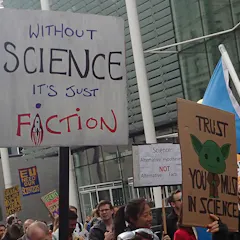
Science works through a process of revision. As consumers, we must learn how to evaluate how mature evidence is, and always remain flexible to new findings.
Although it’s important that journalists practice diligence and deference, communities need to be willing to engage, forgive and voice concern.

People who interact with expressive robots that make mistakes react with suspicion rather than seeing the bots as malfunctioning machines.
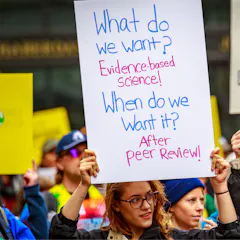
Trust in science seems compatible with believing almost anything, so long as it is expressed in plausibly scientific terms.
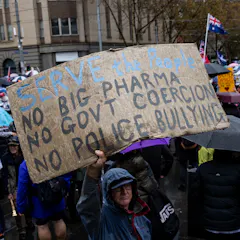
The effects of COVID vaccine mandates live on today. And a distrust of government is one of its biggest casualties.

Canada’ aging population is a marker of national success, not a crisis. The question is whether we will seize this moment to build the strongest aging society in the world.

A linguistic expert explains the techniques Enron traders used to build and retain trust in their criminal strategies.

What is emerging is not the end of trust but its reconfiguration.
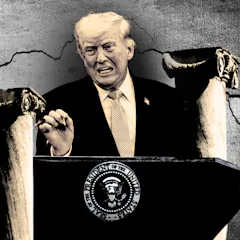
Australia is one of the world’s leading democracies, but we’re not immune from the pressures causing backsliding overseas.

Conducting military strikes against a nation that is engaged in negotiations to reduce its nuclear capacity has set a dangerous precedent.

While rationalizing deception is easy to do, developing the virtue of truthfulness is not.

In both the UK and Japan, people who trusted the government were more willing to pay extra for organic food.

After a certain point, our trust is fairly stable, so there could be a link between our formative experiences and our feelings about politics.
Following the app’s sale, the company’s updated privacy policy and terms of service set off alarm bells. The reaction shows Big Tech has lost the public’s trust.
Top contributors
-

Professorial Fellow, University of Canberra
-
Adjunct professor, Charles Sturt University
-
Senior lecturer, University of Canberra
-
Director of the Center for Trust Studies, Professor of Management and Organizations, University of Arizona
-
Professor of Political Communication; Director CAJ, The University of Melbourne
-
Chair in Trust, Professor of Management, The University of Melbourne; Melbourne Business School
-
Dean of Global Business, The Fletcher School, Tufts University
-
Chair in Governance, University of Southampton
-
Professor of Public Relations, Michigan State University
-
Director, Vice-Chancellor's Centre of Public Ideas (CoPI) and Donald Horne Professor of History and Public Ideas, University of Canberra
-
Assistant Professor of Political Science, Iowa State University
-
RBC Professor in Responsible Organizations and Full Professor, Concordia University
-
Associate Professor of Management, York University, Canada
-
York Research Chair and Associate Professor, York University, Canada
-
Professor in Psychology, Keele University