

How can Generation Z serve as effective agents of economic reform in a system they don’t believe in?
Articles on Trust
Displaying 81 - 100 of 250 articles
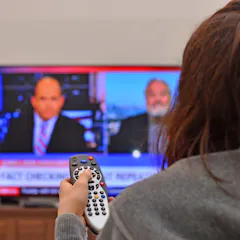
Teaching students about information literacy can help them determine what kinds of practices make news reports trustworthy.
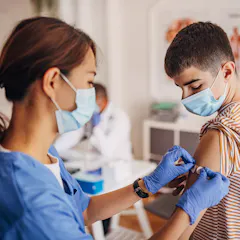
Nurses who identify as Democrats have a significantly higher likelihood of having their children vaccinated against COVID-19 than those who identify as Republicans.

It’s tempting to focus on the minority of Americans who hold negative views about scientists. But blaming others for their lack of trust won’t build the relationships that can boost trust.

Trust is at the heart of a well-functioning cabinet. A cabinet cannot work if ministers do not respect the fundamentals.

There are obviously better ways the Toronto Police — and other police services — could enhance public trust than through a social media campaign.

A new study adds to a body of work that casts doubt on the wisdom of the standard rulebook many donors expect charities to follow.
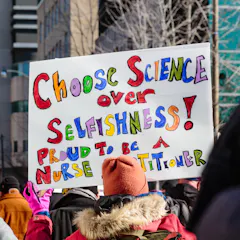
To communicate scientific findings that are relevant to the public, science communicators need to understand how to overcome attitudes that are anti-science.
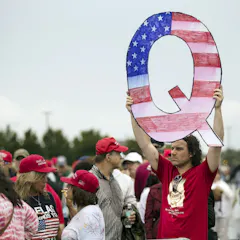
Overcoming conspiracy theories isn’t just about information. A scholar of religion explains that the emotions they inspire are part of their appeal.

Sports can help prevent the involvement of youth in violent extremism.

Trying to convince people to trust the basic institutions of Canada and each other is not enough. Economic divisions create a trust divide that threatens Canadians’ way of life.
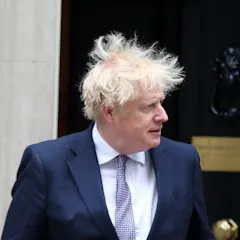
The government’s handling of the Northern Ireland protocol could spell trouble for the UK’s post-Brexit trade negotiations.

The Tim Hortons consumer app was found to have collected detailed user information, including location data. As a privacy violation, this challenges perception of Tim Hortons as a trusted brand.

Studying medication use in a traumatized population of immigrants required pharmacists to listen to and learn from trusted community health workers.
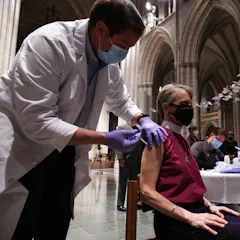
Two political scientists in their study in South Dakota found people trusted medical professionals the least when it came to public health messages.

Traditional ecological knowledge, or TEK, can encompass science, medicine, ecology, religion and culture – and help protect the environment.

This growing trend aims to shift some of the power funders typically wield to the groups getting their money.

Many people promoting cryptocurrencies are looking for something bigger than the future of financial transactions. They’re aiming to break free of governments and corporations.
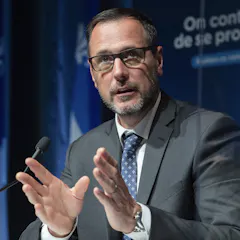
Given the harmful consequences of trust erosion, leaders must consider how they can maintain trust. The two trust dimensions, knowledge and emotions, can provide a helpful guide.

A look at how we decide which experts are the most trustworthy - and the possible biological basis behind it.
Top contributors
-

Professorial Fellow, University of Canberra
-
Adjunct professor, Charles Sturt University
-
Senior lecturer, University of Canberra
-
Director of the Center for Trust Studies, Professor of Management and Organizations, University of Arizona
-
Professor of Political Communication; Director CAJ, The University of Melbourne
-
Chair in Trust, Professor of Management, The University of Melbourne; Melbourne Business School
-
Dean of Global Business, The Fletcher School, Tufts University
-
Chair in Governance, University of Southampton
-
Professor of Public Relations, Michigan State University
-
Director, Vice-Chancellor's Centre of Public Ideas (CoPI) and Donald Horne Professor of History and Public Ideas, University of Canberra
-
Assistant Professor of Political Science, Iowa State University
-
RBC Professor in Responsible Organizations and Full Professor, Concordia University
-
Associate Professor of Management, York University, Canada
-
York Research Chair and Associate Professor, York University, Canada
-
Professor in Psychology, Keele University