
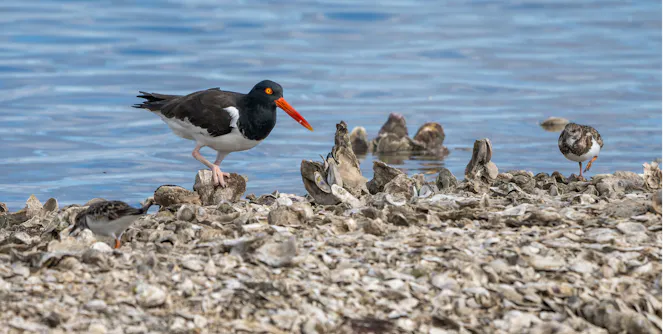
Climate change is making oceans more acidic globally. Now, scientists are finding that large storms can send pulses of acidic water into bays and estuaries, further stressing fish and shellfish.
Articles on Tropical cyclones
Displaying 21 - 40 of 73 articles
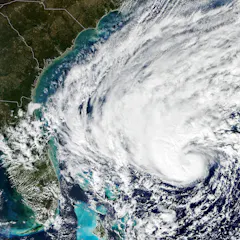
Research shows storms that might have caused minimal damage a few decades ago are becoming stronger and more destructive as the planet warms.

Evacuations can save lives, as in the case of post-tropical cyclone Fiona. As more frequent extreme weather events are set to occur, it is important to have evacuation plans in place.

A reconstructed record of cyclone activity going as far back as 1850 has revealed interesting trends, both around Australia and globally.
Southern Africa’s current above-average rainfall is a climate variability signal - a short-term fluctuation in average wet-season conditions.
Global floods in 2021 showed the danger of poor emergency preparedness - and the importance of planning ahead.

As the climate changes, the ocean is also changing. And that’s putting our health at risk.
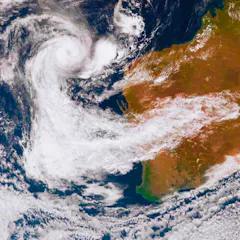
Climate change is likely to mean disasters such as Cyclone Seroja will become more intense, and be seen further south in Australia more often.
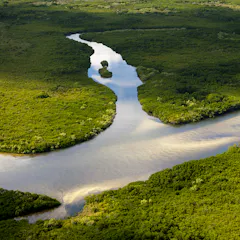
Wetlands bear the brunt of much storm damage to the coast. But over the past 300 years, 85% of the world’s wetland area has been destroyed.
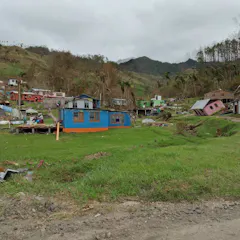
At the start of the cyclone season in the Pacific, weather forecasters are changing their warnings to focus less on weather information and more on the damage expected from an impending storm.
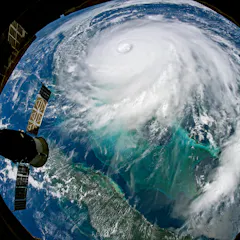
Hurricane stalling has become common over the past half-century, and their average forward speed has also slowed.
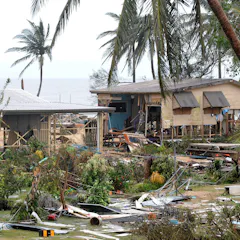
A new statistical model predicts the number of tropical cyclones up to four months before the start of the season from November to April.
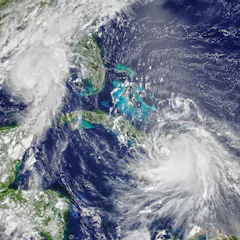
It’s only happened twice since naming started in 1950, and there’s an unusual twist to where many of the storms formed this year.
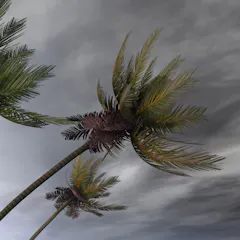
Tropical cyclones account for almost four in five natural disasters across Pacific Island nations. But a new forecasting tool now gives up to four months warning for the upcoming cyclone season.

Cyclone Amphan was one of the worst cyclones to hit Bangladesh in modern times. But thanks to local action, many lives were saved.
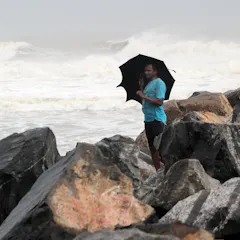
Massive cyclone that hit India and Bangladesh could have been so much worse.
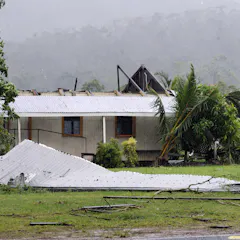
Most homes are not as cyclone-ready as they could be. It seems lower insurance premiums aren’t enough of an incentive for owners to upgrade their homes, but a new study points to some solutions.
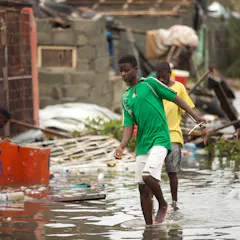
As storm directions change, countries that are outside the usual tropical storm zones need to ready themselves.
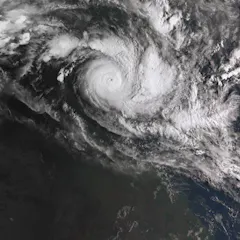
Southern and eastern Australia need to prepare for heatwaves and increased fire risk this summer, as forecasts predict hot, dry weather.
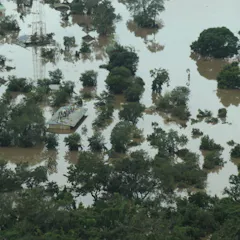
Tropical cyclones Idai and Kenneth have shown how important it is to integrate local information and resources with global scale forecasts and support.
Top contributors
-

Professor of Physical Geography, University of the Witwatersrand
-
Professor of Physical Geography, James Cook University
-
Adjunct Professor of Environmental Geography, CQUniversity Australia
-
Adjunct Professor (Practice) in the School of Earth, Atmosphere and Environment, Monash University
-
Principal Research Scientist in Extreme Weather, The University of Melbourne
-
Professor of Atmospheric Sciences, Monash University
-
Assistant Professor of Meteorology, Mississippi State University
-
Professor of Geography, School of Law and Society, University of the Sunshine Coast
-
Adjunct Fellow, Climate Change Research Centre, UNSW
-
Honorary Professor of Hazards and Disaster Risk Sciences, University of Sydney
-
Postdoctoral Researcher, University of Newcastle
-
Professor of Disasters and Health, UCL
-
Associate Professor of Meteorology, Florida State University
-
Honorary Associate Professor of Climate Science, The University of Melbourne
-
Associate Professor – Hydroclimatology, University of Newcastle