

Insects aren’t known for having big brains, and slime moulds and fungi don’t have any. So how do they solve challenges that test the ingenuity of human transport engineers?
Articles on Transport
Displaying 241 - 260 of 493 articles

New Zealand has set itself a goal of becoming carbon neutral by 2050, and a recent report by the Productivity Commission lays out how it could hit that target.

It might not be effective now, but the development of self-driving vehicles could be a game changer for public transport services.
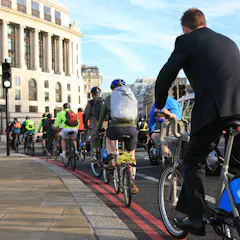
Even using public transport is better for your health than travelling by car.

TfL’s money troubles worsen, as passenger numbers fall for the first time in two decades.
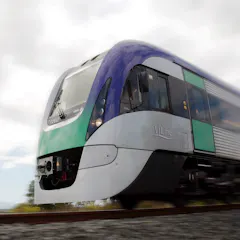
High-speed rail for Australia has been on the drawing boards since the mid-1980s but has come to nothing. Three states are developing medium-speed rail with federal funding, but NSW is missing out.
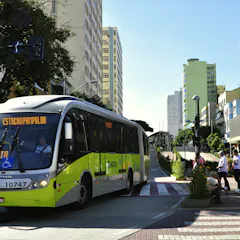
Trains and trams get most attention, but ‘tweaking’ bus transit can transform cities. Buses can be more cost-effective and deliver better service, especially for small to mid-sized cities.
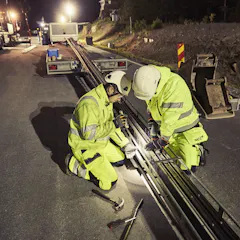
Sweden’s smart road allows electric cars to charge in motion. But alternative technologies might be a better option.
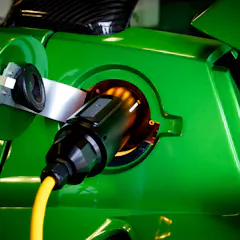
Electric cars might be a quick fix to clean up transport, but the problems with cars go beyond just emissions.
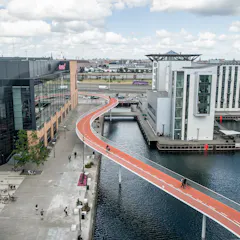
New analysis reveals just how little is spent on cycling and walking projects around Australia. No state’s spending on cycling is more than 1.5% of its road funding.
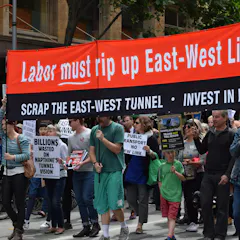
Transport infrastructure has such an impact on what kind of city we become that more democratic planning is long overdue. But public consultation is typically limited and focused on design issues.
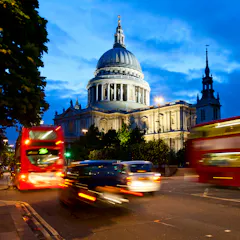
The congestion charge has helped to ease traffic and raise funds. But the rise of Uber and other private hire vehicles have raised unforeseen challenges.
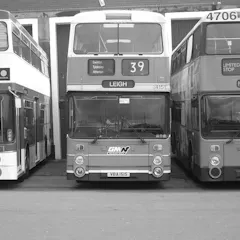
Buses are set to be replaced by private and autonomous vehicles – but it’s not clear how society is going to deal with it.
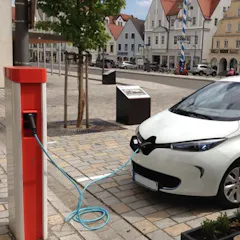
The overall analysis of the results of the new Energy Market Barometer confirms that the road to a change in the dominant mobility model is still long.
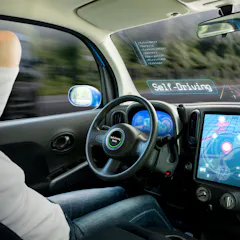
Traditional car manufacturing may have gone from Australia with a loss of jobs, but one senior figure in the motor industry sees a potential for new jobs thanks to driverless cars.

There are three key cultural reasons why a share-bike business model that could be successful in Singapore is much less likely to be so in Australia.

A rethink in the approach to road freight transport safety is urgently required to reduce fatalities and injuries.
The real challenge is finding appropriate ways to invest in public transport that will not only take pressure off the system but also support improved travel on all modes, including cars.

The future of Sydney is under constant scrutiny. But before we consider creating a ‘third city’ in Sydney’s west, we should ensure we get the current infrastructure up to international standards.

Human-operated cars affect health in three main ways, all negatively. How might driverless cars be healthier?
Top contributors
-

Professor of Sustainability, Curtin University
-
Transport and Cities Program Director, Grattan Institute
-
Honorary Principal Fellow, University of Wollongong
-
Professor of Transport Technology and Sustainability, Swinburne University of Technology
-
Associate Professor and Principal Fellow in Urban Risk and Resilience, The University of Melbourne
-
Researcher in Transport Policy and Governance, UCL
-
Honorary Professor of Transport Studies
-
Chris Rissel is a Friend of The Conversation.
Senior Research Fellow, College of Medicine and Public Health, Flinders University
-
Professor of Operations Management, Manchester Metropolitan University
-
Visiting Research Fellow, Intelligent Mobility, Manchester Metropolitan University
-
Associate Professor in Urban Planning, The University of Queensland
-
Adjunct Professor, School of Engineering and Built Environment, Griffith University
-
Professor and Director, Institute of Transport and Logistics Studies, University of Sydney
-
Professor of Transport Governance, University of Leeds
-
Research Fellow, GAMUT, The University of Melbourne