
How far would you go to limit your carbon footprint?
Articles on Transport
Displaying 201 - 220 of 493 articles
From Apple Music to Netflix, subscription services are on the rise. It’s time transport followed suit.
How many opportunities you can reach depends on where you live and how you travel. A new report maps accessibility for our eight capital cities by car, public transport, cycling and walking.
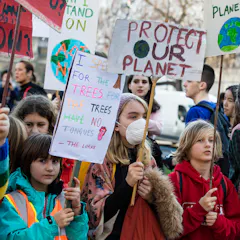
Children are the future, so why don’t we listen to them more often?

More than half a century after the first high-speed trains began running overseas, Australia is still waiting for the long-promised service. Right now, faster rail is a better short-term prospect.

We have learnt to be wary of big data, but it can also be your friend: one platform combines and analyses data about housing, jobs and transport to reveal very useful information about living in Perth.
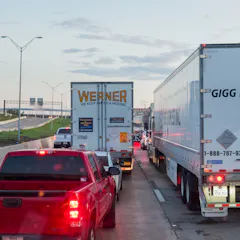
Despite efforts to encourage a shift to sustainable transportation, traffic congestion is often the focus of debates over mobility. Motorists endlessly demand more roads, but is this really a solution?
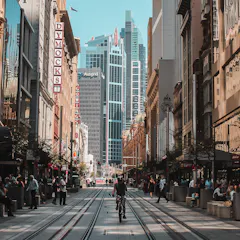
The car revolutionised the way people travel – but at a heavy cost. Now, car-free cities will only work when there’s reliable public transit and access for all.
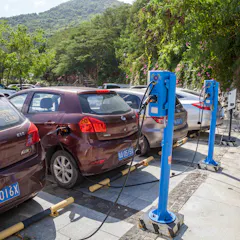
When it comes to eliminating greenhouse gas emissions from transport, the future is already here on small islands.
The current system drives social injustice and environmental destruction, a new approach to address both is called for.
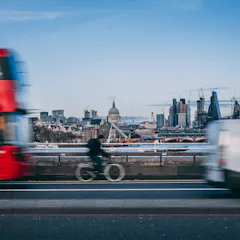
Find out what the Ultra Low Emission Zone is, how it works and what Londoners make of the new measures.
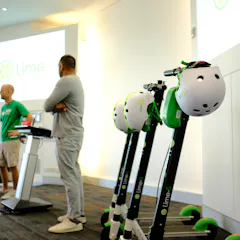
Every day, e-scooters and helmets are put out together, but some people ride without helmets and at the end of each day helmets are missing. So what can be done to ensure safe riding behaviour?
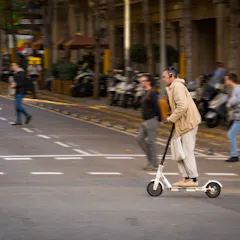
The exploding popularity of e-scooters has the potential to reshape transport in our cities. Regulators need to adapt their approaches to handle the new mobility service rather than ban it altogether.
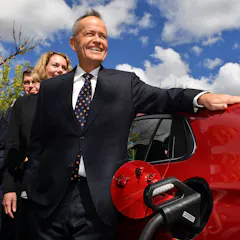
Labor’s ambitious plans to reduce transport emissions will be dead in the water without regulatory CO2 emission standards and real financial and non-financial incentives for buyers.

Using driverless cars to get from A to B in the future will mean more free time to do other activities – but will people really use it productively?

In England, one in fifty children cycle to school. But if English children cycled at the same rates as Dutch children, this could rise to two in five.
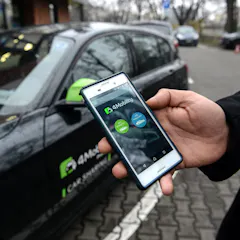
Investment is pouring into urban technology, much of it into innovative ventures that aim to transform how we get around our cities.
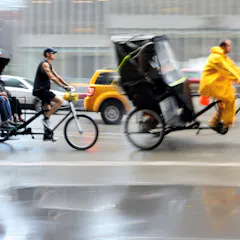
To cut emissions within the 12 years or so we have left to avoid disastrous global warming, we will need to change our old transport habits, using a combination of strategies to achieve this.
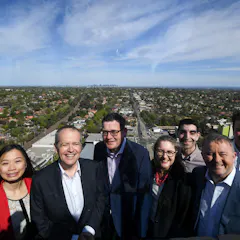
Whichever party wins, Victoria’s new government will have promised the biggest transport infrastructure project in Australian history. So what are the promises and are they backed by proper assessment?
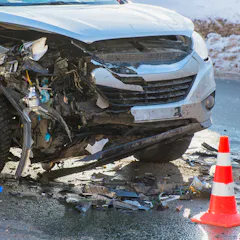
Road traffic injuries are one of the leading causes of death worldwide.
Top contributors
-

Professor of Sustainability, Curtin University
-
Transport and Cities Program Director, Grattan Institute
-
Honorary Principal Fellow, University of Wollongong
-
Professor of Transport Technology and Sustainability, Swinburne University of Technology
-
Associate Professor and Principal Fellow in Urban Risk and Resilience, The University of Melbourne
-
Researcher in Transport Policy and Governance, UCL
-
Honorary Professor of Transport Studies
-
Chris Rissel is a Friend of The Conversation.
Senior Research Fellow, College of Medicine and Public Health, Flinders University
-
Professor of Operations Management, Manchester Metropolitan University
-
Visiting Research Fellow, Intelligent Mobility, Manchester Metropolitan University
-
Associate Professor in Urban Planning, The University of Queensland
-
Adjunct Professor, School of Engineering and Built Environment, Griffith University
-
Professor and Director, Institute of Transport and Logistics Studies, University of Sydney
-
Professor of Transport Governance, University of Leeds
-
Research Fellow, GAMUT, The University of Melbourne