

With extreme weather and glacier melt predicted to increase, neighbouring nations will need to act together to prevent deaths.
Articles on Tibet
Displaying 1 - 20 of 49 articles

While meditation has been shown to have health benefits, it may not always be the right practice for all people.

Around half of the glacier ice in the Himalayas (equivalent to about two billion Olympic swimming pools) could melt by the end of this century.
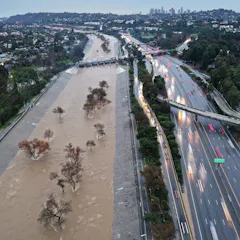
A new study connects early winter heat high up on the plateau to the jet stream and, ultimately, storms headed for the US coast. The results could mean better forecasts.
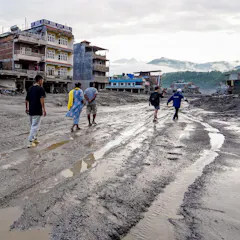
How do you warn people downstream about fast-moving hazards that can change form and cross borders?

Hindus know it as the dwelling place of Shiva, Tibetan Buddhists as the abode of Demchog, and Jains as the site where Rishabhanatha, their first spiritual teacher, achieved liberation.
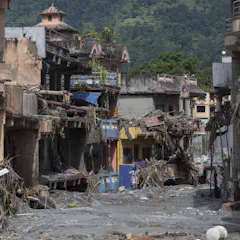
Early warnings and shared data will move only as fast as Beijing’s security concerns allow.
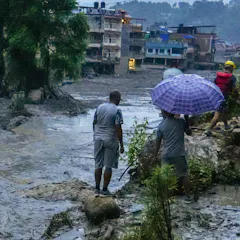
One disaster can create the conditions for the next.
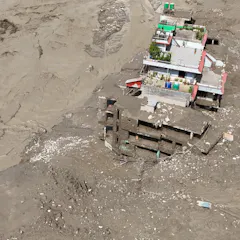
A group of 50 Himalayan hazard experts is providing rapid analysis of the event. Here’s what they’ve found so far.

What responsibilities do governments, researchers, humanitarian organizations, and corporations have for the conditions that repeatedly turn hazards into human catastrophes?
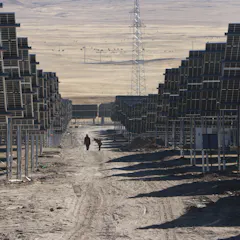
China’s national government policies on energy and economic development are changing pastoral life on the Tibetan Plateau.
The loss of the central role of people in today’s complex global systems is the greatest danger of all. In Kenya and Amdo Tibet, it can be rediscovered.
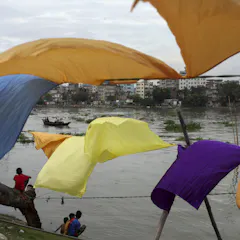
Bangladesh’s ratification of the UN Water Convention could increase the nation’s legal clout in transboundary water governance.
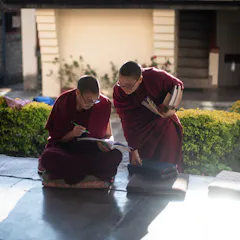
A 2012 change has seen scores of Tibetan Buddhist nuns achieve the highest degree in Tibetan Buddhist philosophy. The implications go beyond just higher learning.
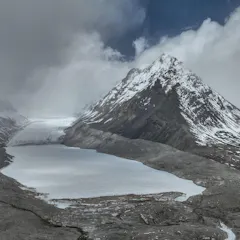
The Motuo hydropower project will be four times the size of the gigantic Three Gorges dam, the next biggest hydropower project in the world.
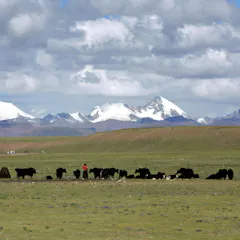
China’s climate policies aim for sustainability, but for ethnic minorities, they often bring displacement, economic strain and erosion of cultural traditions.

Access to water is one reason why China sees control over Tibet as increasingly important.
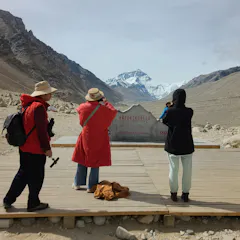
A century after the disappearance of explorer George Mallory, his photos and diary offer a valuable baseline for investigating impacts of tourism and climate change on the Tibet side of Everest.

Quake-ravaged Tibet has had to contend with censorship and political repression.
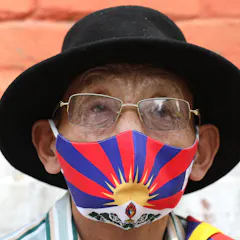
There are some 60 languages spoken on the Tibetan Plateau. But harsh Chinese policies mean many minority languages may not be passed down to future generations.
Top contributors
-

Lecturer in International Relations, University of Birmingham
-
Lecturer in International Relations, University of East London
-
Professor of Asian History & Health Humanities, Penn State
-
Professor of Anthropology, UCL
-
Senior Lecturer, Disasters and Global Health, Humanitarian and Conflict Response Institute, University of Manchester
-
Postdoctoral Fellow in Paleontology, American Museum of Natural History
-
Senior Lecturer in English and Literary Historian, The Open University
-
Senior Lecturer in History, La Trobe University
-
Deputy Head, School of Humanities, Language & Global Studies, University of Lancashire
-
Research Fellow, School of Earth, Atmospheric and Life Sciences (SEALS), University of Wollongong
-
Associate Professor, University of Hong Kong
-
Professor of English, Director of Fulbright College Honors Studies, University of Arkansas
-
Senior postdoctoral fellow in palaeoecology, Stockholm University
-
Associate Professor of Political Science, Brock University
-
Lecturer, Monash University