
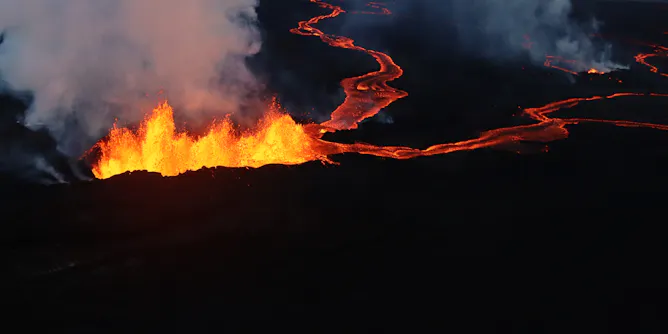
A scientist who led one of the first projects to map the Hawaiian Islands’ deep volcanic plumbing explains what’s going on under the surface as Mauna Loa erupts.
Articles on Tectonic plates
Displaying 21 - 40 of 49 articles
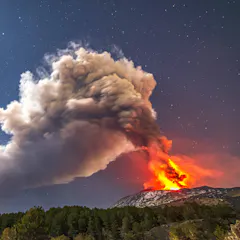
New modelling shows how tectonic plate movements, carbon-rich deep-sea sediment, and mountain weathering have regulated Earth’s climate.

When sea sediment melts inside the Earth, it helps tectonic plates slide over one another smoothly.
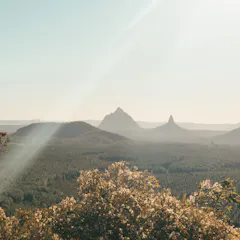
From far north Queensland to the southern tip of Tasmania, there is a common geological mechanism that links Eastern Australia’s volcanic history.
The Atlantic Ocean is still growing physically, but humans are over-harvesting its rich fisheries. The most famous one – North Atlantic cod – has become a textbook example of harmful overfishing.
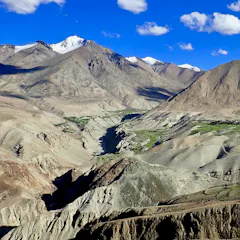
Earth’s magnetic field locks information into lava as it cools into rock. Millions of years later, scientists can decipher this magnetic data to build geologic timelines and maps.
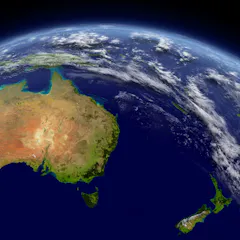
New research uncovers the fundamental factors that control the Earth’s surface, providing insights into how land levels will respond to the melting of ice sheets and sea level rise.
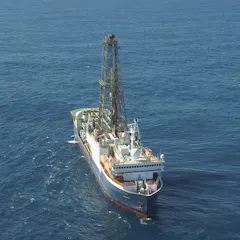
Our expedition drilled into the recently discovered underwater continent of Zealandia, revealing a new picture of the violent geological forces that created it.
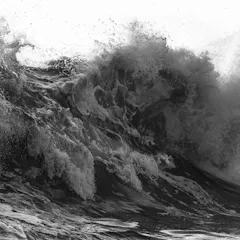
A tricky kind of earthquake that happens in the soft rock of the ocean floor causes much larger tsunamis than their magnitude would predict. New research pinpoints a way to identify the danger fast.
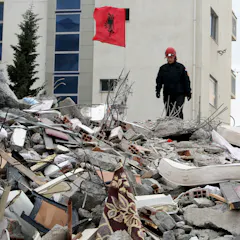
Post-earthquake aftershocks are often assumed to be less violent, but that’s not always the case.
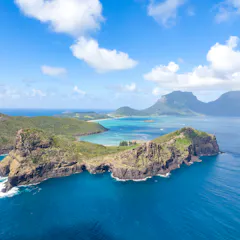
We undertook a 28-day voyage to explore a possible lost continent in a remote part of the Coral Sea, in an area off the coast of Queensland. Here’s what we found.
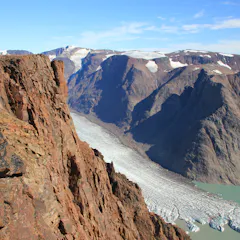
Exploration of ancient magma chambers in fossil volcanoes has the potential to provide new sources of metals that will facilitate environmentally friendly technologies.
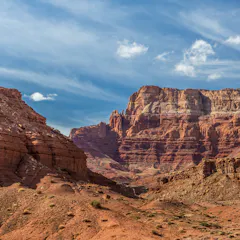
As strange as it sounds, rocks are made from stardust.
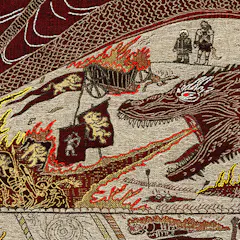
Even in this fantasy world, geological processes like tectonic plate movement, earthquakes and volcanic eruptions would have built the mountains, carved the rivers, and created vast oceans.
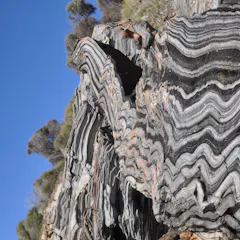
Giant forces slowly move continents across a viscous layer of the Earth, like biscuits gliding over a warm toffee ocean. This stresses the continents, and twists and contorts the crust.
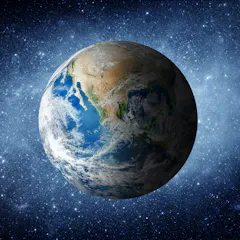
Scientists have predicted four supercontinent scenarios - but which is the most likely?

Setting the scene for ancient Silk Road trading and now China’s Belt and Road initiative, the Tianshan has changed humanity. Geological evidence shows us how this incredible mountain range formed.
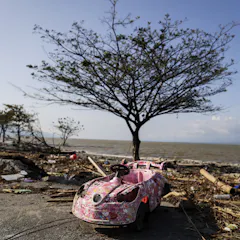
A combination of tectonic plates, geography and poor infrastructure make Indonesia vulnerable to deadly tsunamis.
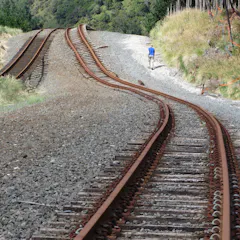
Research shows that satellite GPS measurements could provide a better tool for earthquake forecasting.
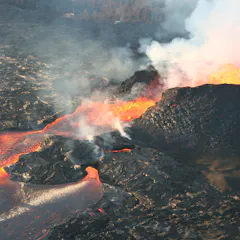
Melbourne lies at the eastern end of a volcanic province, but when’s it going to blow? Understanding the geology of Melbourne and comparing it to Hawaii is really helpful in calculating risk.
Top contributors
-

Professor of Geology, Adelaide University
-
Honorary researcher, The University of Melbourne
-
Professor of Geophysics, University of Sydney
-
ARC DECRA Fellow, School of Geosciences, University of Sydney
-
Associate Professor, School of Geosciences, University of Sydney
-
ARC Early Career Industry Fellow, School of Geography, Earth and Atmospheric Sciences, The University of Melbourne
-
Professor of Geology, West Virginia University
-
Senior Curator of Geosciences, Museums Victoria Research Institute; Monash University
-
Associate Professor in Geophysics, Te Herenga Waka — Victoria University of Wellington
-
Adjunct Research Fellow, Curtin University
-
Ph.D. Candidate in Earth and Planetary Sciences, Northwestern University
-
Assistant Lecturer in Volcanology, Monash University
-
Professor of Earth Sciences, University of Oregon
-
Professor, Australian National University
-
Postdoctoral Associate of Earth Sciences, University of Minnesota