
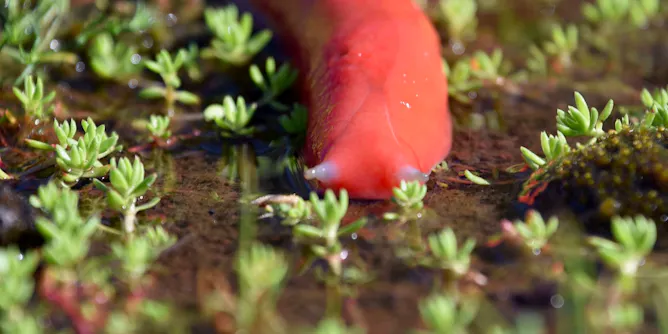
After more than 300 years of effort, scientists have documented fewer than one-third of Australia’s species. The remaining 70% are unknown, and essentially invisible, to science.
Articles on Taxonomy
Displaying 41 - 60 of 90 articles

There are too many little-understood species for scientists to study them all. A new approach helps decide which ones to tackle first.

Deep ocean trenches are home to extraordinary biodiversity waiting to be discovered.
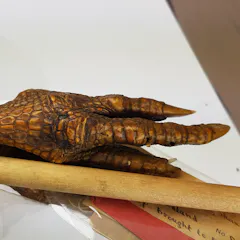
Māori treasure kiwi feathers for weaving cloaks for high-ranking people. But the bird’s first description by European scientists is quite recent, based on a specimen that arrived in London in 1812.
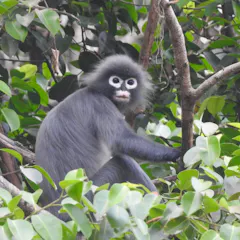
How scientists discovered the ‘Popa langur’ was a separate species of just 200 monkeys.

This stroke of serendipity shows how much there is still to be learned about the natural history of Australia. Surely more surprises are out there waiting for us.
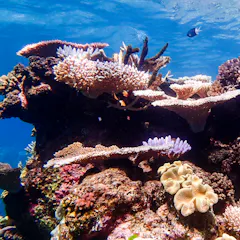
There are fundamental knowledge gaps around coral in the Great Barrier Reef, including how many species live there and where they’re found. Our new study finally starts to fill those gaps.

From a Hugh Jackman-esque spider to honouring traditional Indigenous words, these species have memorable names.
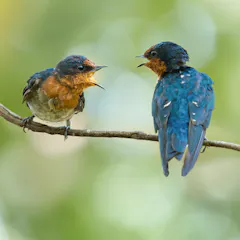
A public debate recently erupted among global taxonomists. Strongly-worded ripostes were exchanged. A comparison to Stalin was floated. But eventually, they worked it out.
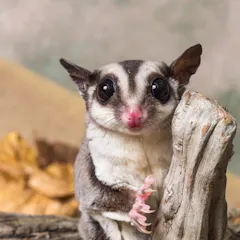
The sugar glider is an icon of the Australian bush. But discovering it’s actually three distinct species has big consequences for its conservation.
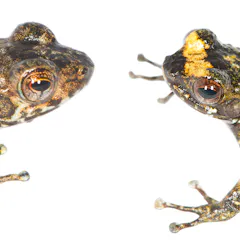
The Red List ranks species based on how threatened they are. But it can be inaccurate.
Scrapping the idea of a species is an extreme idea – but perhaps a good one.
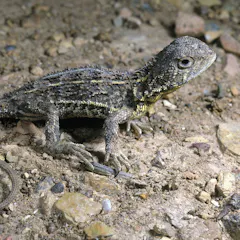
The Victorian grassland earless dragon may well be the first lizard species driven to extinction on Australia’s mainland. But conservationists aren’t ready to declare it dead just yet.

There are more than 850 different species of eucalypts in Australia, and possibly many more we don’t know about.
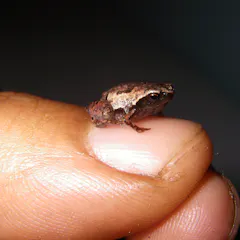
The largest of these frogs could sit happily on your thumbnail. The smallest is just longer than a grain of rice.
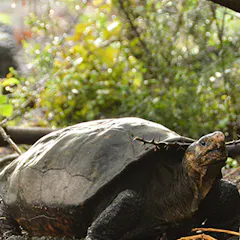
From the reappearance of giant bees to sightings of clouded leopards – can we ever be certain that a species has died out?
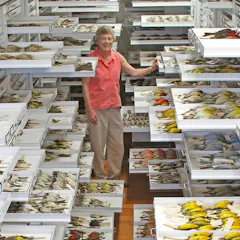
Taxonomists are becoming as rare as some of the species they work on, and this puts museum collections and conservation efforts under threat and increases the risk of biosecurity incursions.
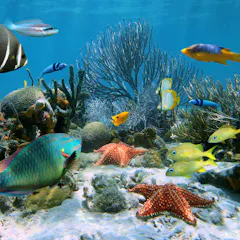
Most animal groups adopted their shapes quickly but some kept evolving.
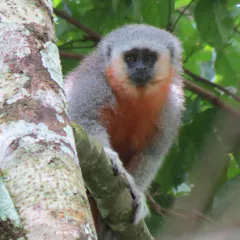
How can there be boom in new species discoveries while others are dying out at unprecedented rates?
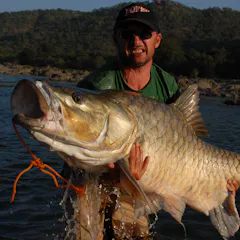
India’s hump-backed mahseer is one of the world’s most prized game fish, yet it was a scientific enigma.
Top contributors
-

Curator of Mammals, Western Australian Museum; Curtin University
-
Associate Professor in Ecology and Environmental Science, Queensland University of Technology
-
Adjunct Assoc. Professor, The University of Western Australia
-
Research associate, Western Australian Museum
-
Senior Curator, Terrestrial Vertebrates, Museums Victoria Research Institute
-
Senior lecturer, School of Biological Sciences, University of Bristol, University of Bristol
-
Associate Professor in Ancient DNA, University of Otago
-
Professor of Conservation and Sustainable Livelihoods, Charles Darwin University
-
Director, Environment Institute, Adelaide University
-
Curator Invertebrates, Museum of New Zealand Te Papa Tongarewa
-
Ecologist, School of Biological Sciences, Adelaide University
-
Curator of Herpetology, Associate Professor of Vertebrate Zoology, University of Copenhagen
-
Team Leader, Species Interactions, Atlas of Living Australia, UNSW
-
Emeritus Professor, University of Cape Town
-
Associate Professor, Earth and Planetary Sciences, Curtin University